The US uses ICD-10-CM and ICD-10-PCS. ICD-9 retired in 2015, and ICD-11 took effect at WHO in 2022 but is not adopted in the US. Here is how they compare.

The US uses ICD-10-CM and ICD-10-PCS. ICD-9 retired in 2015, and ICD-11 took effect at WHO in 2022 but is not adopted in the US. Here is how they compare.
F41.1 is generalized anxiety disorder and F33.2 is major depressive disorder, recurrent severe without psychotic features. See the F33 code table and coding tips.
The ICD-10-CM code for an encounter for palliative care is Z51.5. Learn how to report it with the condition being treated and what POA exempt means.
Dyspepsia NOS codes to R10.13, not K30. Learn when to use K30 functional dyspepsia, R12 heartburn, and F45.8 for psychogenic dyspepsia.
Knee pain ICD-10 codes are M25.561 for the right knee, M25.562 for the left knee, and M25.569 for unspecified. Learn how to code bilateral knee pain.

The ICD-10-CM code for a urinary tract infection, site not specified, is N39.0. Learn when to add an organism code like B96.20 and when a specific site code applies.
HCPCS modifiers explained for 2026: ABN, anatomic, anesthesia, ambulance, DMEPOS and drug wastage modifiers, plus a quick reference table for coders.
What is medical coding? Learn what a medical coder does each day, the code sets used, coding vs billing, and how to become a medical coder, from a CPC-I.
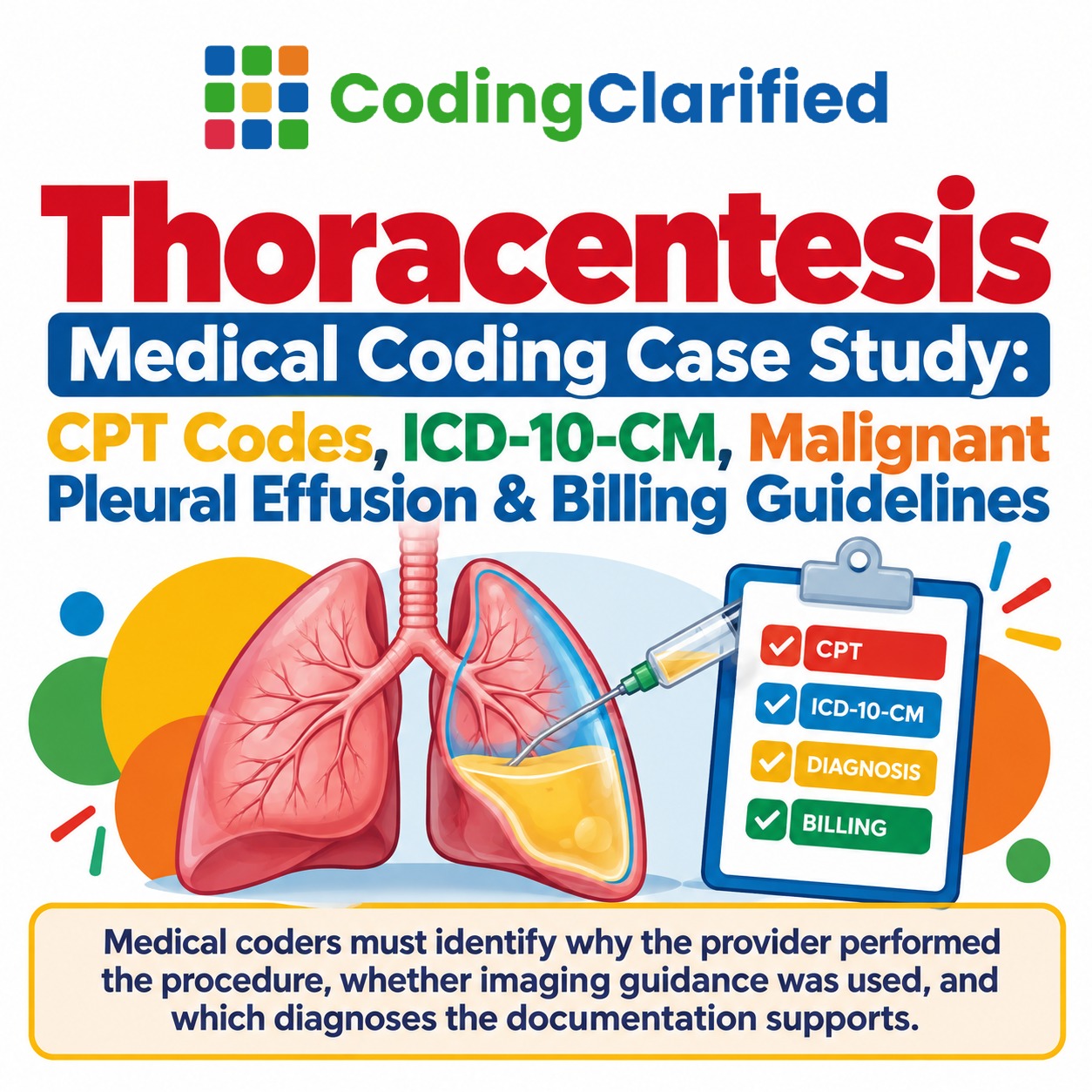
A thoracentesis case study for 2026: how to choose between CPT 32554 and 32555, code malignant pleural effusion in ICD-10-CM, and read the procedure note.
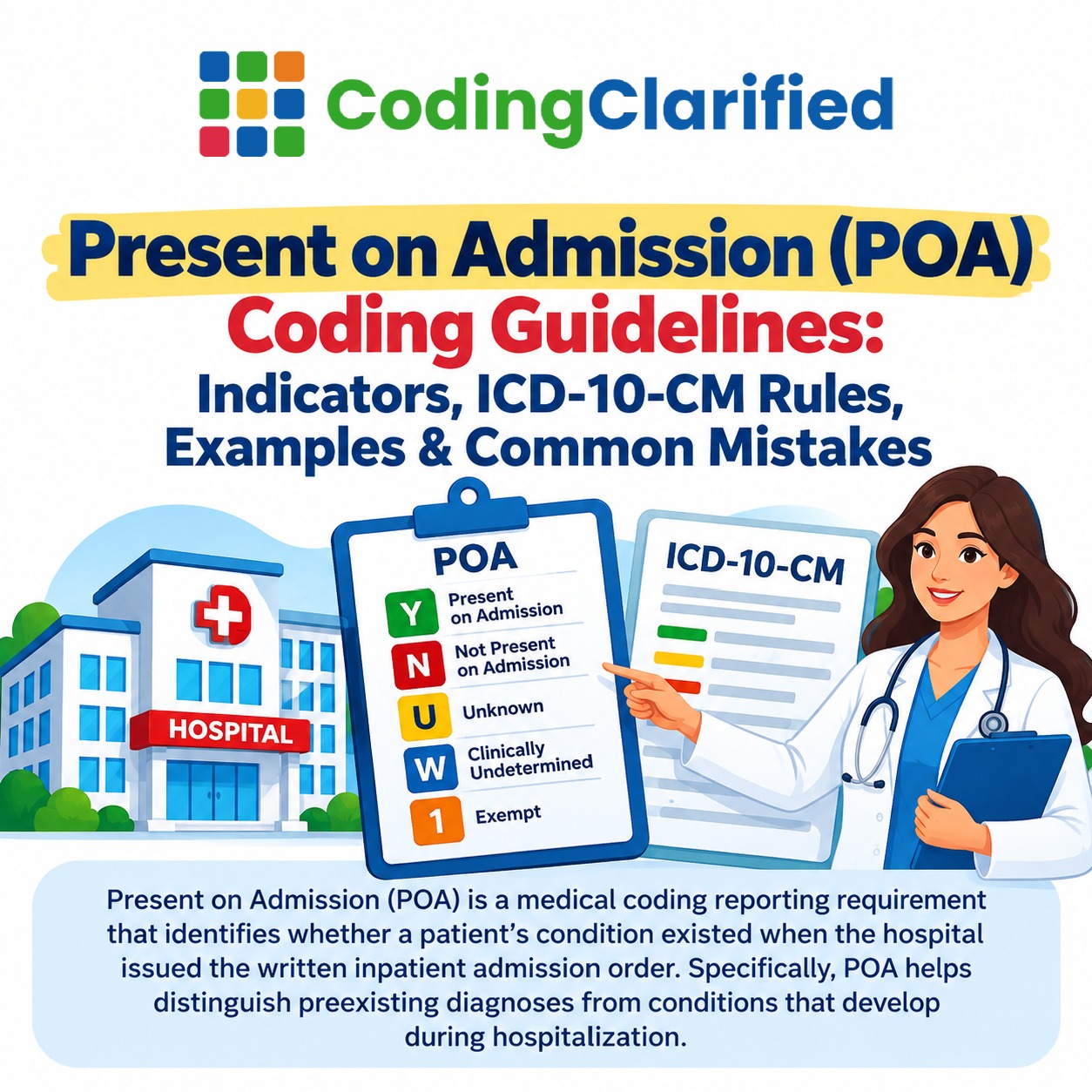
Learn the five POA indicators (Y, N, U, W and 1), when POA reporting applies, and the common mistakes coders make on inpatient claims in 2026.
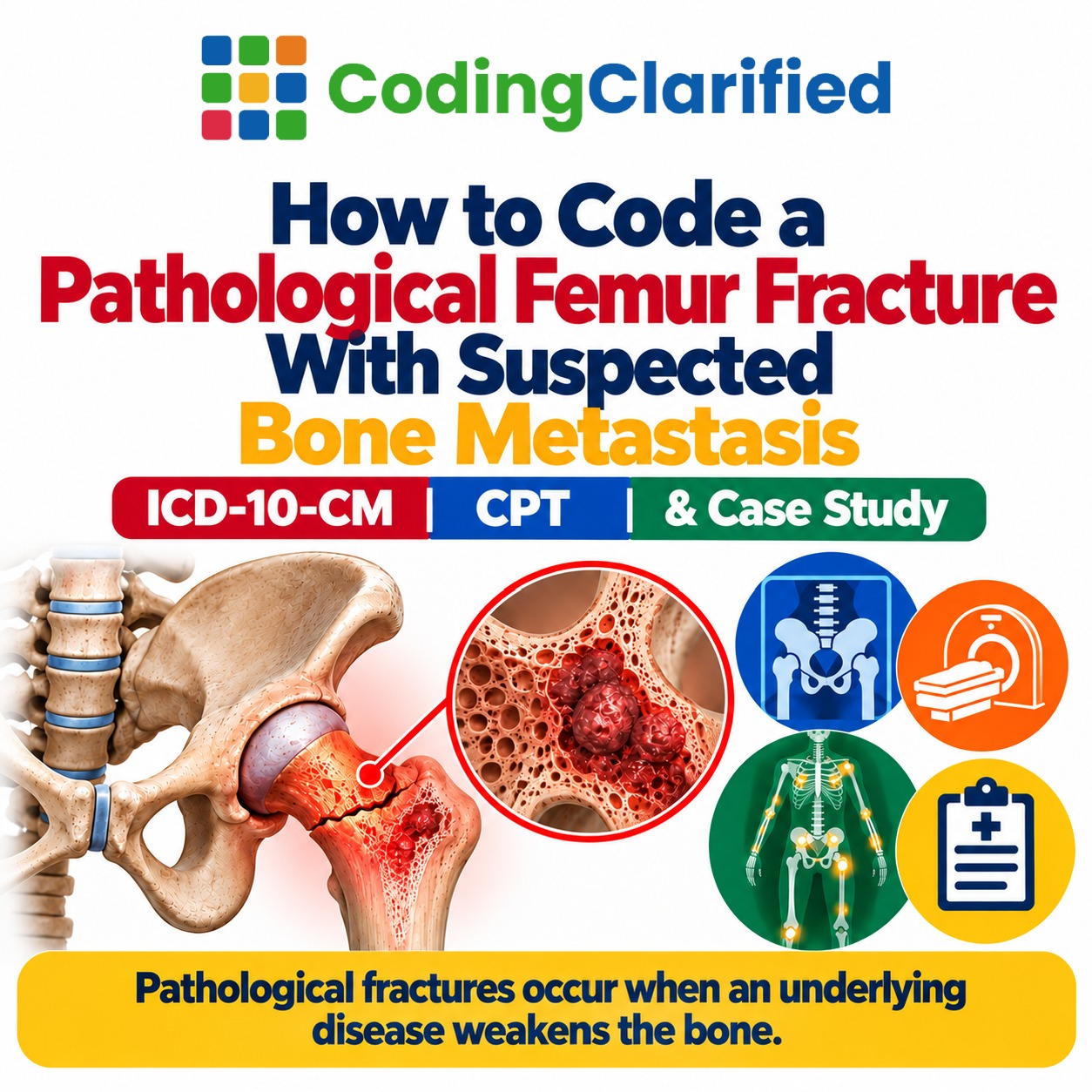
A 2026 case study on coding a pathological femur fracture with suspected metastasis, including M84.552A, why C79.51 needs confirmation, and CPT selection.

Who is responsible when a coding or billing error happens: the coder, the biller or the provider? A 2026 compliance guide to liability, audits and refunds.
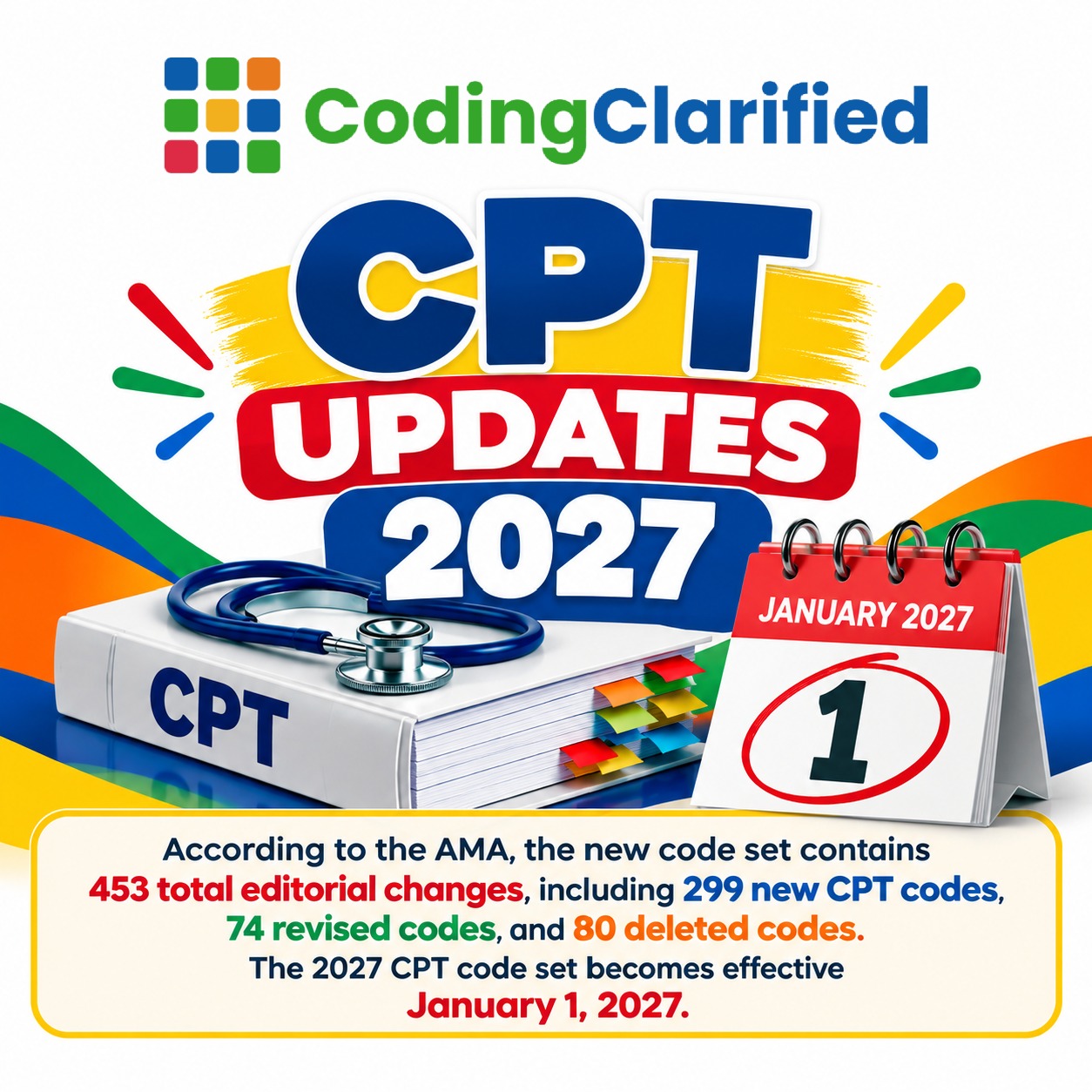
The CPT 2027 code set adds 299 codes, deletes 80 and revises 74. See the major changes coders and billers must prepare for before January 1, 2027.
The FY 2027 ICD-10-CM updates took effect October 1, 2026, bringing important diagnosis coding changes that medical coders, billers, providers, clinical
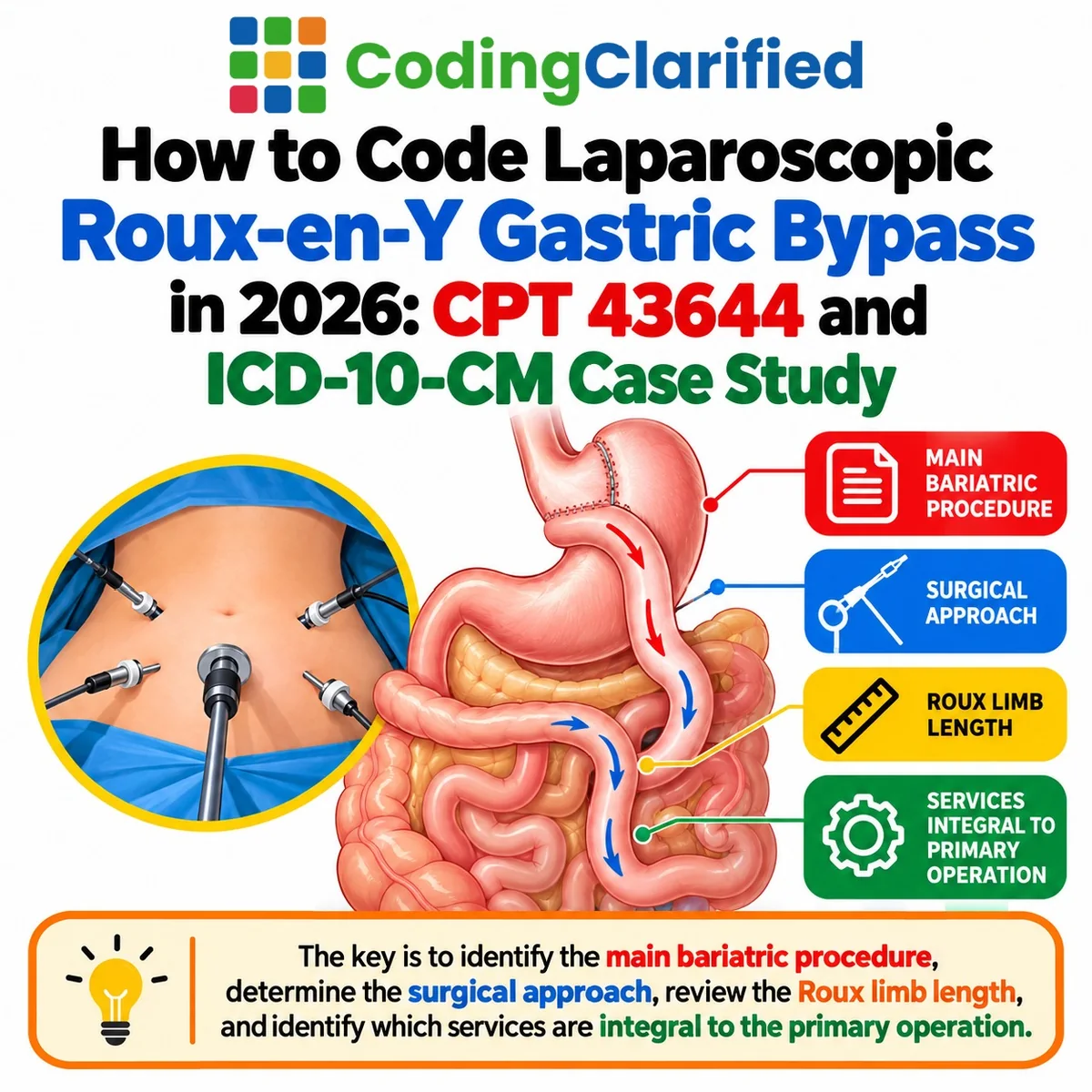
How to code a laparoscopic Roux-en-Y gastric bypass with CPT 43644, which steps are bundled, and how to support the ICD-10-CM diagnosis for obesity.

Dermatology coding for 2026: biopsies, lesion destruction, excision, Mohs surgery and diagnosis selection, explained lesion by lesion with billing tips.
Gastroenterology coding for 2026: colonoscopy and EGD codes, screening that turns diagnostic, biopsies, polyp removal, modifiers and ICD-10-CM diagnoses.
E/M coding made simple for 2026: how to level a visit by medical decision making or time, count problems and data, and judge risk with confidence.
HCC Coding plays a pivotal role in healthcare. Learn what it is and how it is used to predict future healthcare costs and assign risk scores.
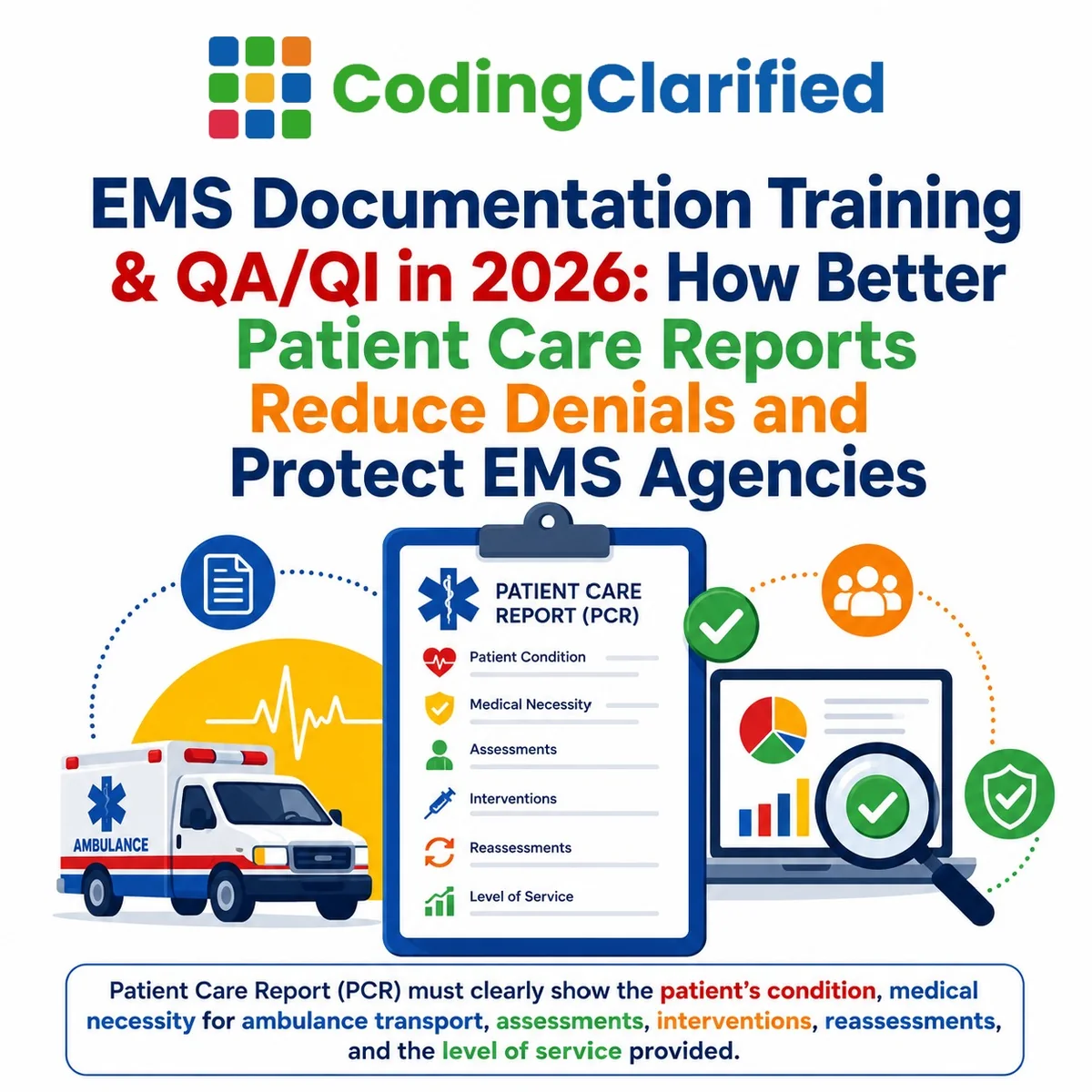
Improve EMS patient care report quality with structured documentation training and QA/QI review to reduce ambulance claim denials in 2026.
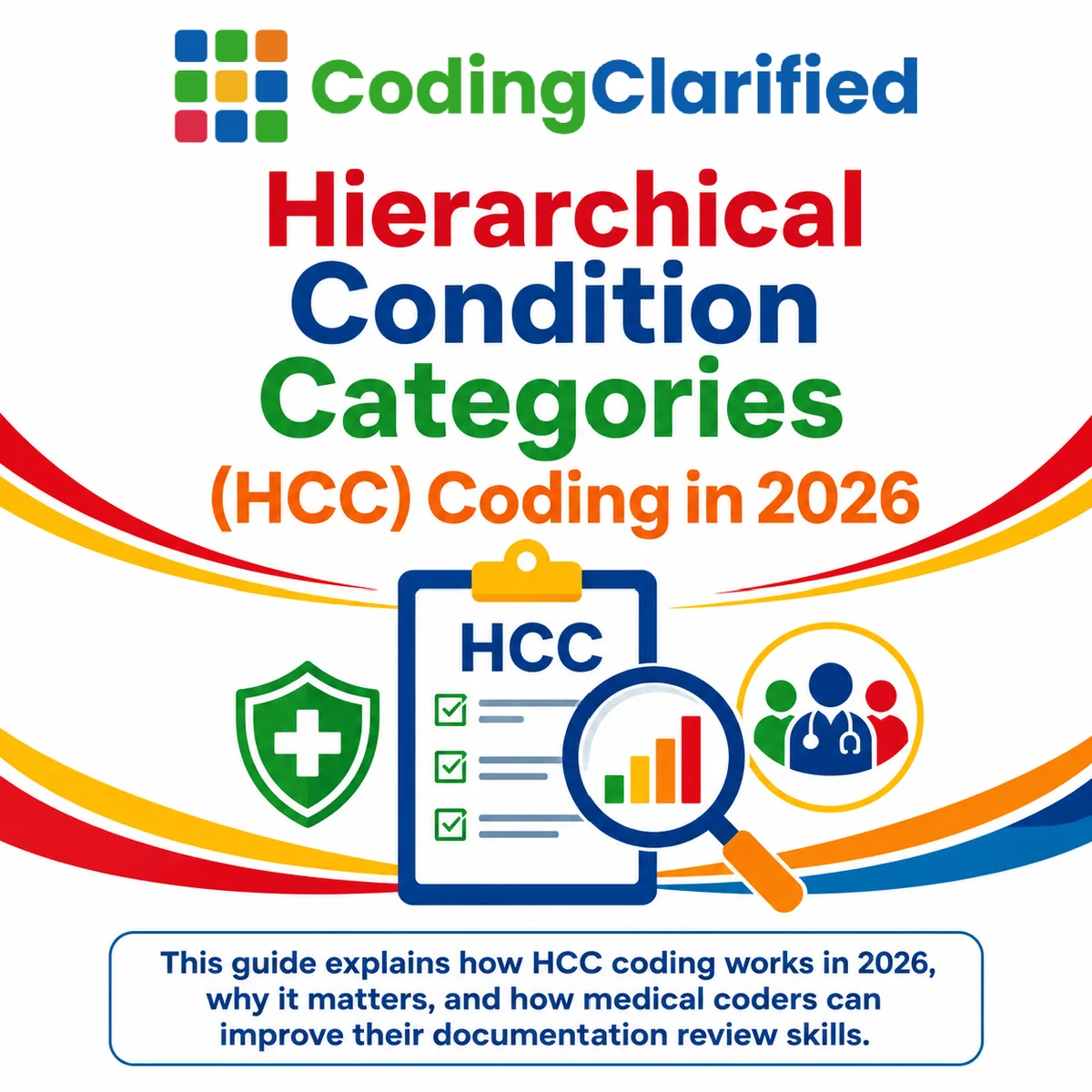
HCC includes specific codes for specific conditions/illnesses, groups of diagnosis codes. More than 9000 ICD-10-CM maps to 86 HCC codes are part of this.
A 2026 guide to ICD-10-CM pain coding, covering G89 chronic and cancer-related pain codes, R52, and proper diagnosis sequencing.
Learn about Computed Tomography (CT) CPT Coding, their role in accurate medical billing, and how they ensure proper reimbursement.
Learn about ICD-10-CM codes for concussions for accurate medical coding and billing, ensuring proper diagnosis, treatment, and reimbursement.

Explore breast cancer ICD-10 coding guidelines, ensuring accurate diagnosis, treatment, billing, and data collection in healthcare settings.
The ICD-10-CM coding for alcohol use related disorders fall under category F10. Specifically, the correct code depends on severity.
In medical coding, anatomical modifiers are tools used to specify the exact location where a medical procedure or service was performed.
The Evaluation and Management (E/M) coding system is used by providers to report and bill for services that involve patient management.
A 2026 guide to EKG and ECG medical coding, covering CPT codes 93000-93010, ICD-10-CM rules, and common billing pitfalls.
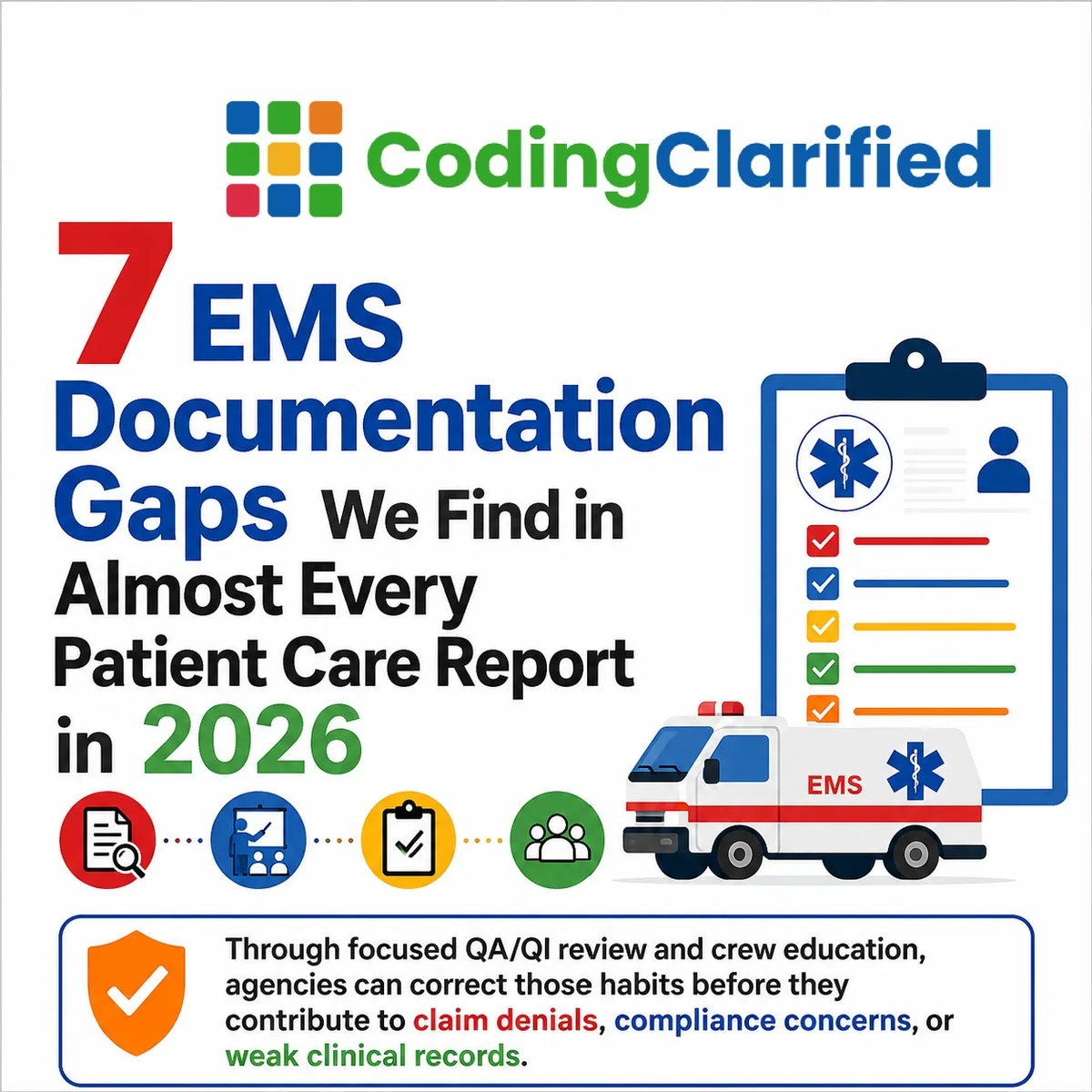
See the 7 most common EMS documentation gaps found in patient care reports, why they cause claim denials, and how to fix them in 2026.