
16-Week CPC Medical Coding Study Plan: A Complete Guide to Preparing for the CPC Exam
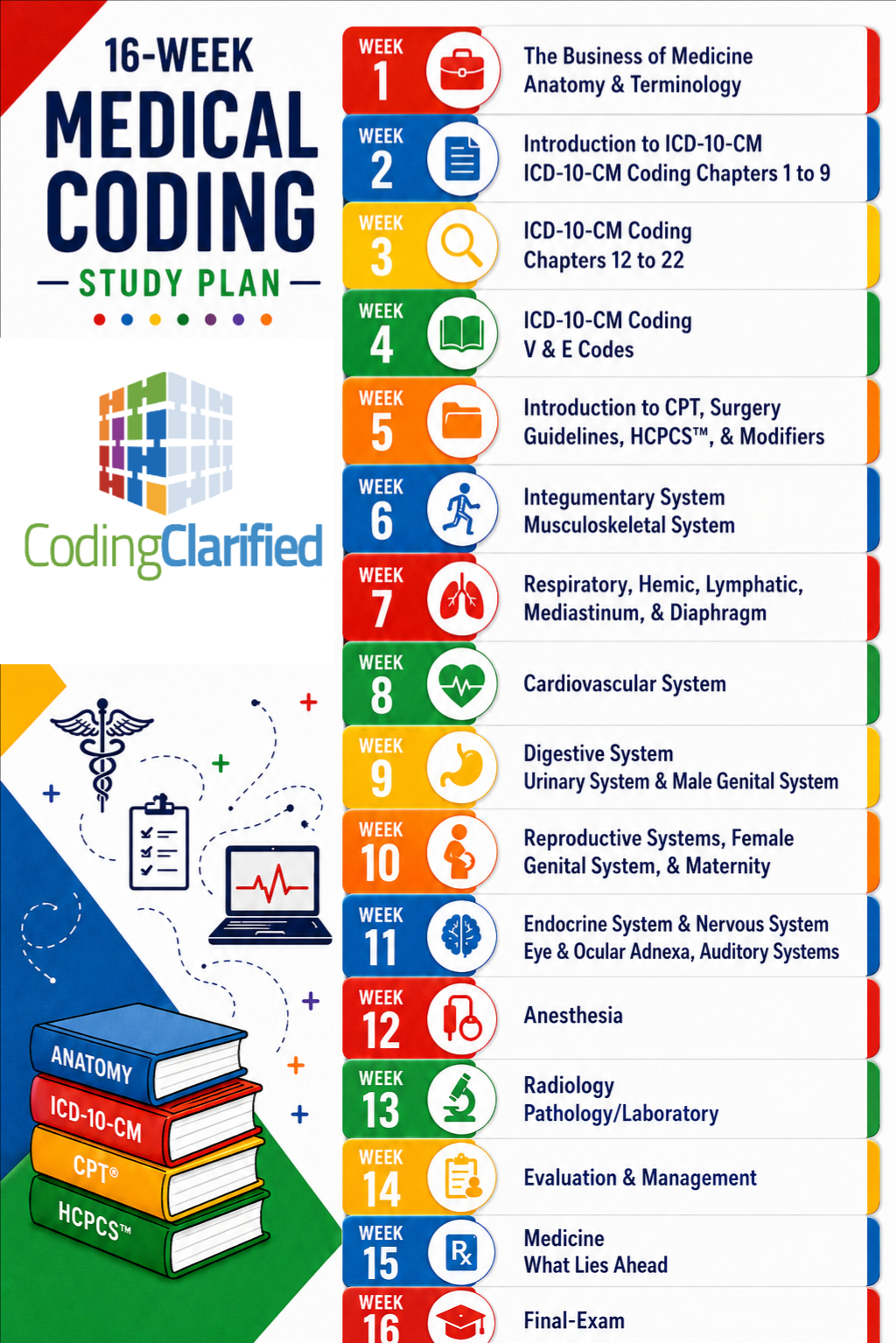
Medical coding students often feel overwhelmed when preparing for the CPC exam. However, with the right study plan, consistent practice, and strong manual coding skills, passing the CPC exam becomes much more achievable. At Coding Clarified, our structured 16-week medical coding course was designed to help students build coding knowledge step-by-step while preparing for real-world coding and CPC exam success.
Whether you are brand new to medical coding or reviewing concepts before your CPC exam, this study plan helps students gradually master ICD-10-CM, CPT®, HCPCS Level II, anatomy, modifiers, Evaluation and Management (E/M), and coding guidelines.
Why a Structured CPC Study Plan Matters
Many students struggle because they try to memorize codes instead of understanding coding logic. Therefore, a structured weekly plan helps students:
- Build strong coding fundamentals
- Learn medical terminology and anatomy gradually
- Improve coding speed and accuracy
- Develop CPT® and ICD-10-CM manual navigation skills
- Practice CPC-style testing strategies
- Reduce exam anxiety through consistent preparation
Additionally, following a weekly roadmap keeps students accountable and focused throughout the course.
Week 1: The Business of Medicine & Anatomy and Terminology
The first week focuses on understanding the healthcare industry while building a strong foundation in anatomy and medical terminology.
What to Pay Extra Attention To
- Prefixes, suffixes, and root words
- Directional terms
- Body systems and organ functions
- Common medical abbreviations
- Insurance terminology
- Healthcare provider roles
CPC Study Tips
- Create flashcards for terminology
- Learn body systems before memorizing codes
- Practice breaking down complex medical words
- Study anatomy diagrams daily
Time Management Tips
During this stage, avoid rushing. Instead, spend short study sessions reviewing terminology multiple times throughout the day. Repetition improves long-term retention.
Week 2: Introduction to ICD-10-CM & Chapters 1–9
Students begin learning diagnosis coding and ICD-10-CM guidelines.
Key Areas to Focus On
- Alphabetic Index navigation
- Tabular List verification
- Placeholder “X”
- Laterality
- “Code First” notes
- “Use Additional Code” notes
Common Beginner Mistakes
Many students code directly from the Index without verifying the Tabular List. However, the CPC exam tests your ability to confirm instructional notes and coding guidelines.
Process of Elimination Strategy
If you are unsure of the correct diagnosis code:
- Eliminate codes with incorrect laterality
- Remove codes with incorrect encounter types
- Look for missing instructional notes
- Compare specificity levels
As a result, even if you are uncertain, you increase your odds of selecting the correct answer.
Week 3: ICD-10-CM Coding Chapters 12–22
This section introduces more advanced diagnosis coding concepts.
Areas That Require Extra Attention
- Pregnancy coding
- Injury coding
- External cause codes
- Poisonings and adverse effects
- Burns
- Mental health conditions
CPC Prep Tips
- Pay close attention to sequencing rules
- Learn the difference between poisoning and adverse effect
- Watch for trimester-specific pregnancy codes
- Practice injury coding scenarios repeatedly
Additionally, students should begin timing themselves on coding exercises to improve exam pacing.
Week 4: ICD-10-CM Coding V & E Codes
Students continue strengthening diagnosis coding fundamentals while reviewing supplementary classifications.
Important Topics
- External cause coding
- Social determinants of health (SDOH)
- History codes
- Screening codes
- Follow-up visits
- Status codes
Manual Coding Tips
Always review:
- Excludes 1 notes
- Excludes 2 notes
- Includes notes
- Coding conventions
These details frequently appear on the CPC exam.
Week 5: Introduction to CPT®, Surgery Guidelines, HCPCS™, & Modifiers
This is one of the most important sections of CPC preparation.
What Students Should Focus On
- CPT® code structure
- Category I, II, and III codes
- Surgical package rules
- HCPCS Level II supplies
- Modifier usage
Modifier Tips
Pay close attention to:
- Modifier 25
- Modifier 59
- Modifier 51
- Modifier 26
- Modifier TC
Because modifiers are heavily tested on the CPC exam, students should practice scenarios daily.
Manual Preparation Tips
Highlight or tab:
- CPT® guidelines
- Modifier sections
- Surgical subsection rules
- Parenthetical notes
Proper manual preparation saves valuable exam time.
Week 6: Integumentary & Musculoskeletal Systems
Students begin procedural coding by body system.
Areas That Require Extra Practice
- Lesion measurements
- Fracture coding
- Arthroscopy
- Casts and splints
- Debridement depth
CPC Exam Strategy
Read every operative note carefully. Frequently, the correct code depends on:
- Size
- Depth
- Location
- Approach
- Number of lesions treated
Therefore, students should slow down and underline important documentation details.
Week 7: Respiratory, Hemic, Lymphatic, Mediastinum, & Diaphragm
This week introduces complex surgical coding concepts.
Important Coding Areas
- Bronchoscopy
- Thoracentesis
- Laryngoscopy
- Respiratory endoscopy
- Biopsy versus excision
Coding Tips
Watch for wording differences such as:
- Diagnostic vs. surgical
- Open vs. endoscopic
- Simple vs. complicated
Small wording changes often completely change the code selection.
Week 8: Cardiovascular System
Cardiology coding is one of the largest CPC exam sections.
Areas to Study Carefully
- Cardiac catheterization
- Coronary arteries
- Pacemaker
- EKG coding
- Vein procedures
CPC Success Tips
Students should:
- Learn coronary anatomy
- Understand selective vs. nonselective catheterization
- Practice reading operative reports
- Memorize common cardiovascular terminology
Additionally, many CPC students struggle with bundled procedures, so reviewing NCCI edits is extremely important.
Week 9: Digestive, Urinary, & Male Genital Systems
This week focuses heavily on endoscopy coding and procedural terminology.
Topics Requiring Extra Attention
- Colonoscopy coding
- Biopsy vs. removal
- Hernia repairs
- Cystoscopy
- Lithotripsy
Process of Elimination Tips
When comparing CPT® codes:
- Eliminate codes with incorrect approach
- Remove codes with incorrect anatomy
- Verify whether the procedure was diagnostic or therapeutic
This strategy helps narrow down difficult answer choices quickly.
Week 10: Reproductive Systems, Female Genital System, & Maternity
OBGYN coding can be challenging due to trimester and procedural rules.
Important Topics
- Global maternity package
- Delivery coding
- Hysterectomy procedures
- Pregnancy complications
- Infertility procedures
Study Tips
Create comparison charts for:
- Vaginal vs. cesarean delivery
- Complete vs. partial hysterectomy
- Antepartum vs. postpartum care
Visual study tools improve retention significantly.
Week 11: Endocrine, Nervous System, Eye, Ocular Adnexa, & Auditory Systems
This section introduces detailed anatomy and microscopic procedures.
Areas Students Should Review Closely
- Thyroid procedures
- Carpal tunnel surgery
- Cataract coding
- Ear procedures
- Neurology terminology
CPC Manual Prep Tips
Add notes in your CPT® manual for:
- Surgical approaches
- Anatomy reminders
- Common coding pitfalls
Well-organized manuals improve speed during the exam.
Week 12: Anesthesia
Many students underestimate anesthesia coding. However, anesthesia questions often appear on the CPC exam.
Key Areas
- ASA physical status modifiers
- Qualifying circumstances
- Time reporting
- Surgical field recognition
Important Exam Tip
Always identify:
- The surgical site
- The anesthesia type
- The correct ASA section
These details are critical for proper code selection.
Week 13: Radiology & Pathology/Laboratory
Students learn diagnostic testing and imaging coding.
Areas Requiring Extra Focus
- Contrast vs. non-contrast studies
- Professional vs. technical components
- Pathology specimen handling
- Laboratory panels
Coding Tip
Pay close attention to documentation phrases like:
- “With contrast”
- “Without contrast”
- “Complete”
- “Limited”
These terms significantly affect code assignment.
Week 14: Evaluation & Management (E/M)
E/M coding is one of the most tested CPC exam topics.
Major Areas to Study
- Medical Decision Making (MDM)
- Time-based coding
- New vs. established patients
- History and examination requirements
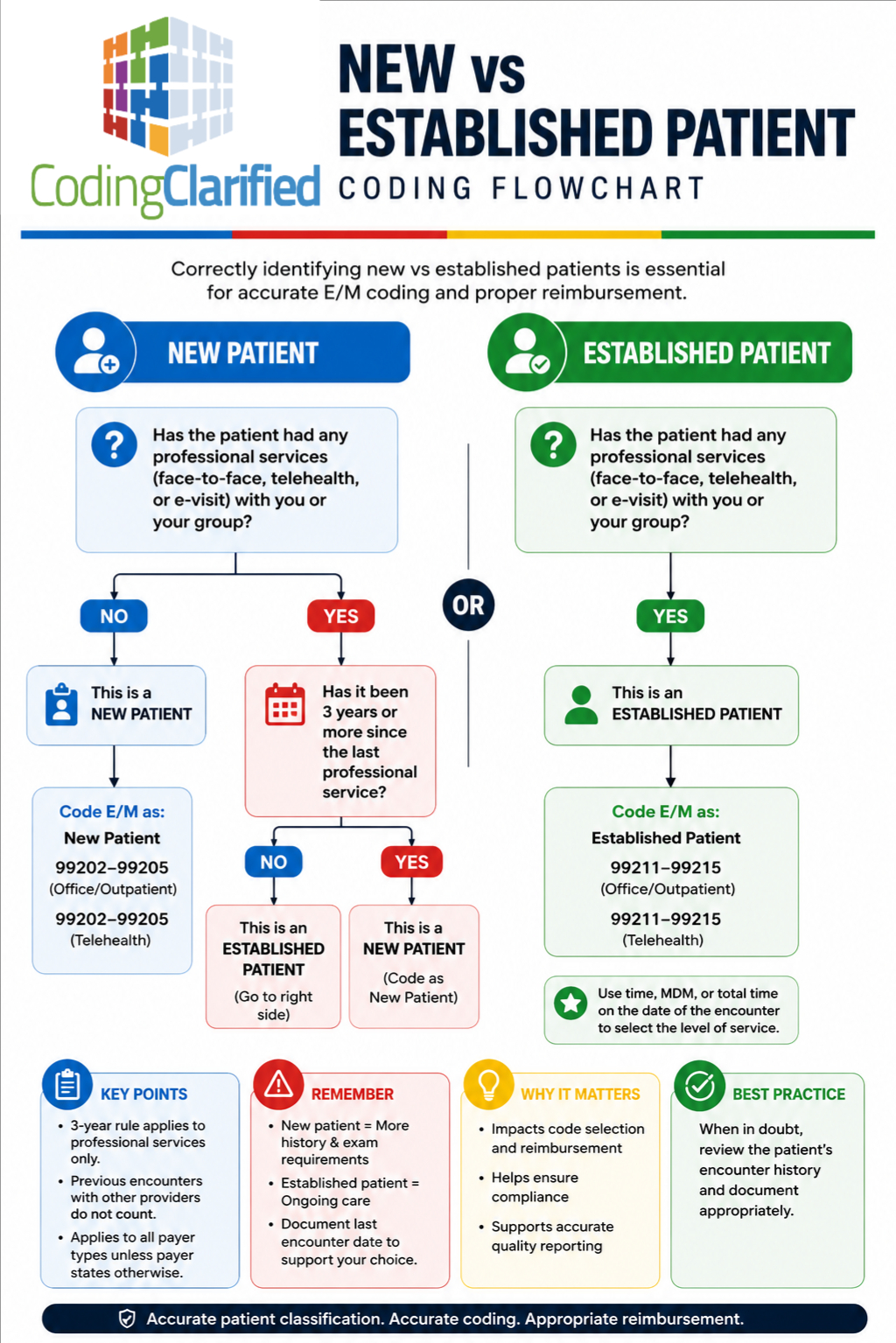
E/M Study Strategy
Create quick-reference charts for:
- MDM levels
- Risk categories
- Time thresholds
Additionally, students should practice multiple E/M scenarios daily to improve confidence.
Week 15: Medicine & What Lies Ahead
Students review medicine section procedures while preparing for career readiness.
Important Topics
- Immunizations
- IInfusions and injections
- Physical therapy
- Pulmonary testing
Career Preparation Tips
Students should also:
- Practice mock CPC exams
- Improve coding speed
- Review weak areas
- Prepare resumes and LinkedIn profiles
Consistency is critical during the final weeks before testing.
Week 16: Final Exam Preparation
The final week focuses on review, confidence building, and test-taking strategy.
CPC Exam Time Management Tips
The CPC exam requires strong time management skills. Therefore, students should:
- Average approximately 2 minutes per question
- Skip long operative notes initially
- Answer easier questions first
- Mark difficult questions for review later
Process of Elimination Strategy
If you do not know an answer:
- Eliminate incorrect anatomy
- Remove incompatible modifiers
- Compare documentation wording carefully
- Look for bundled services
Even narrowing answers from four choices to two greatly improves success rates.
Manual Preparation Checklist
Before the exam:
- Tab your manuals neatly
- Highlight important CPT® guidelines
- Add quick-reference notes
- Review modifier usage
- Practice finding codes quickly
However, avoid overloading your books with excessive notes that slow you down.
Final CPC Success Tips
Preparing for the CPC exam takes dedication, consistency, and strategy. Nevertheless, students who follow a structured study plan often feel more confident and organized on exam day.
To improve your chances of passing:
- Study consistently every week
- Practice coding daily
- Use your manuals regularly
- Learn anatomy thoroughly
- Focus on coding guidelines
- Complete practice exams under timed conditions
- CPC exam tips
Most importantly, remember that CPC success is built through repetition and practice—not memorization alone.
At Coding Clarified, our goal is to help students gain both exam confidence and real-world coding knowledge through structured CPC preparation, coding practice, and step-by-step guidance.
This article is part of our CPC exam prep study hub, with everything you need to prepare for and pass the CPC exam.