
Which Medical Coding Certification Pays the Most? (2026 Edition)
Key Takeaways
- The Certified Inpatient Coder (CIC) and Certified Coding Specialist (CCS) often earn the highest salaries in medical coding due to the complexity of inpatient hospital coding.
- The Certified Professional Coder (CPC) remains the most recognized and widely requested certification for outpatient coding jobs.
- Adding specialty credentials such as CPMA, CDEO, CRC, or CIC can increase earnings by 20% or more.
- Hospital inpatient coding generally pays more than physician office coding.
- Remote coding, auditing, compliance, and CDI-related roles often offer higher salaries than entry-level coding positions.
- In 2026, employers increasingly seek coders with multiple certifications and specialty expertise.
Overview Summary
Which medical coding certification pays the most?
In 2026, the Certified Inpatient Coder (CIC) and Certified Coding Specialist (CCS) typically command the highest salaries, often exceeding $70,000–$85,000 annually due to the complexity of hospital inpatient coding. Meanwhile, the Certified Professional Coder (CPC) remains the most popular entry-level credential and provides strong earning potential. Furthermore, adding specialty certifications such as CPMA (Certified Professional Medical Auditor) or CDEO (Certified Documentation Expert Outpatient) can significantly increase compensation and open doors to leadership, auditing, and compliance positions.
Why Medical Coding Certification Matters in 2026
Medical coding continues to be one of the most accessible healthcare careers for remote workers and career changers. However, certification plays a major role in determining salary, advancement opportunities, and employer preference.
Today, healthcare organizations face increased scrutiny regarding reimbursement accuracy, documentation compliance, and risk adjustment reporting. Consequently, certified coders often receive higher salaries than non-certified coders.
Additionally, hospitals, physician groups, insurance companies, and consulting firms frequently require certification before considering applicants.
According to employer job postings across the industry, certified coders remain significantly more competitive than candidates without credentials.
Salary Comparison by Certification (AAPC vs. AHIMA)
One of the most common questions aspiring coders ask is whether AAPC or AHIMA certifications pay more.
The answer depends largely on the type of coding work performed.
AAPC Certifications (Primarily Outpatient Coding)
AAPC certifications typically focus on physician-based, outpatient, auditing, compliance, and specialty coding.
| Certification | Typical Focus | Estimated Salary Range |
|---|---|---|
| CPC | Outpatient Physician Coding | $55,000–$75,000 |
| CPC-A | Entry-Level Outpatient Coding | $45,000–$60,000 |
| CPMA | Auditing & Compliance | $70,000–$95,000+ |
| CRC | Risk Adjustment Coding | $65,000–$90,000 |
| CDEO | Documentation Improvement | $70,000–$95,000 |
| CIC | Inpatient Hospital Coding | $70,000–$95,000+ |
AHIMA Certifications (Primarily Hospital Coding)
AHIMA certifications are often associated with hospital coding, CDI, and health information management.
| Certification | Typical Focus | Estimated Salary Range |
|---|---|---|
| CCA | Entry-Level Coding | $45,000–$60,000 |
| CCS | Inpatient & Hospital Coding | $70,000–$90,000+ |
| CCS-P | Physician-Based Coding | $60,000–$85,000 |
As a result, the highest salaries generally belong to professionals holding CCS, CIC, CPMA, or advanced specialty credentials.
CPC Medical Coding Salary in 2026
In 2026, the Certified Professional Coder (CPC) remains the gold standard for physician-office coding. In fact, employers consistently request the CPC credential because it demonstrates competency in CPT coding, HCPCS Level II coding, and ICD-10-CM coding. Additionally, the certification validates knowledge of E/M services, medical terminology, and anatomy and physiology. As a result, CPC-certified professionals often enjoy broader employment opportunities and stronger earning potential.
Employers consistently request the CPC credential because it demonstrates competency in:
- CPT coding
- HCPCS Level II coding
- ICD-10-CM coding
- E/M coding
- Medical terminology
- Anatomy and physiology
Furthermore, the CPC is often the fastest path into the medical coding profession.
Average CPC Salary
Most CPC-certified coders earn:
- Entry-Level: $45,000–$60,000
- Experienced: $60,000–$75,000
- Senior/Specialized: $75,000–$90,000+
Although CPC salaries are strong, inpatient coders frequently earn more because of the complexity of hospital reimbursement systems.
For more information on becoming a CPC, read:
Ultimate Medical Coding AAPC CPC Certufucatuon Guide
CCS Medical Coder Salary in 2026
By comparison, the CCS is often considered AHIMA’s gold standard.
Because CCS professionals frequently code inpatient records, they must understand:
- MS-DRGs
- Hospital reimbursement
- Clinical documentation
- Severity of illness
- Risk of mortality
- Inpatient coding guidelines
Consequently, many healthcare systems pay CCS-certified coders premium salaries.
Average CCS Salary
- Entry-Level CCS: $60,000–$70,000
- Experienced CCS: $75,000–$90,000
- Senior CCS: $90,000–$110,000+
Therefore, CCS remains one of the highest-paying certifications in the coding industry.
CIC Salary: One of the Highest-Paying Certifications
The Certified Inpatient Coder (CIC) from AAPC specializes in hospital inpatient coding.
Unlike outpatient coding, inpatient coding requires mastery of:
- ICD-10-PCS
- DRG assignment
- Hospital reimbursement methodologies
- Clinical documentation review
- Complex surgical procedures
Because of these requirements, experienced CIC professionals often command impressive salaries.
Average CIC Salary
- New CIC: $65,000–$75,000
- Experienced CIC: $80,000–$95,000
- Senior Inpatient Specialist: $95,000–$120,000+
As healthcare organizations continue focusing on reimbursement accuracy, demand for inpatient coders remains strong in 2026.
CCA Certification Salary
The Certified Coding Associate (CCA) is AHIMA’s entry-level credential.
Although the CCA can help candidates enter the field, employers generally prefer CPC, CCS, or CIC credentials for higher-paying positions.
Average CCA Salary
- Entry-Level: $45,000–$55,000
- Experienced: $55,000–$65,000
For that reason, many coders eventually pursue a CCS after gaining experience.
Highest-Paying Specialty Certifications
While CPC, CCS, and CIC receive the most attention, specialty certifications can dramatically increase earnings.
CPMA (Certified Professional Medical Auditor)
Medical auditors often review coding accuracy, documentation compliance, and reimbursement integrity.
Salary range:
- $70,000–$100,000+
CRC (Certified Risk Adjustment Coder)
Risk adjustment coding continues to expand due to Medicare Advantage growth.
Salary range:
- $65,000–$95,000+
CDEO (Certified Documentation Expert Outpatient)
Documentation specialists help providers improve clinical documentation quality.
Salary range:
- $70,000–$100,000+
As a result, many experienced coders pursue these certifications after obtaining a CPC.
Factors That Affect Medical Coding Salary
Although certification plays a significant role in salary potential, several additional factors can influence earnings. For example, experience, specialty expertise, geographic location, and remote-work capabilities frequently affect compensation levels. Furthermore, coders who earn multiple certifications often position themselves for higher-paying opportunities.
Experience
Experienced coders almost always earn more than newly certified coders.
Specialty Knowledge
Coders specializing in:
- Cardiology
- Orthopedics
- Oncology
- Risk Adjustment
- Inpatient Coding
typically command higher salaries.
Remote Work Experience
Many employers now seek coders with proven remote productivity and compliance experience.
Geographic Location
Certain regions offer higher compensation due to labor market demand and healthcare system size.
Multiple Certifications
Coders holding CPC + CPMA, CPC + CRC, or CIC + CCS often earn substantially more than professionals with only one credential.
Career Path: Maximizing Your Medical Coding Income
If your goal is maximizing your earning potential, then it is important to follow a strategic certification pathway. First, earn a foundational credential such as the CPC. Next, gain practical coding experience in a healthcare setting. Afterward, pursue specialty certifications that align with your career goals. Ultimately, this progression can help you qualify for some of the highest-paying medical coding positions available in 2026.
Step 1: Earn the CPC
The CPC remains the most practical starting point for most students.
Step 2: Gain Real-World Experience
Focus on outpatient coding, E/M services, surgical coding, and payer guidelines.
Step 3: Add a Specialty Credential
Choose certifications such as:
- CPMA
- CRC
- CDEO
- CIC
Step 4: Move Into Advanced Roles
Eventually, consider positions in:
- Auditing
- Compliance
- CDI
- Risk Adjustment
- Revenue Cycle Management
This progression often produces significantly higher earnings than remaining in entry-level coding roles.
CPC Student Tips
Learn Anatomy Thoroughly
Strong anatomy knowledge improves coding accuracy and exam performance.
Master Coding Guidelines
Coding guidelines appear throughout certification exams and daily coding work.
Practice Real Coding Scenarios
The more charts you code, the stronger your coding skills become.
Focus on Documentation
Documentation deficiencies frequently lead to coding errors and claim denials.
Build Specialty Knowledge Early
Cardiology, orthopedics, risk adjustment, and inpatient coding often provide excellent growth opportunities.
Common Mistakes to Avoid
Choosing a Certification Solely Based on Salary
Higher-paying certifications often require advanced knowledge and experience.
Ignoring Career Goals
A hospital-focused coder may benefit more from CCS or CIC, while physician-office coders may prefer CPC.
Delaying Specialty Certifications
Many coders wait too long before pursuing higher-paying specialty credentials.
Overlooking Documentation Skills
Strong documentation knowledge frequently separates average coders from top earners.
Failing to Maintain Continuing Education
Employers value coders who stay current with annual coding updates.
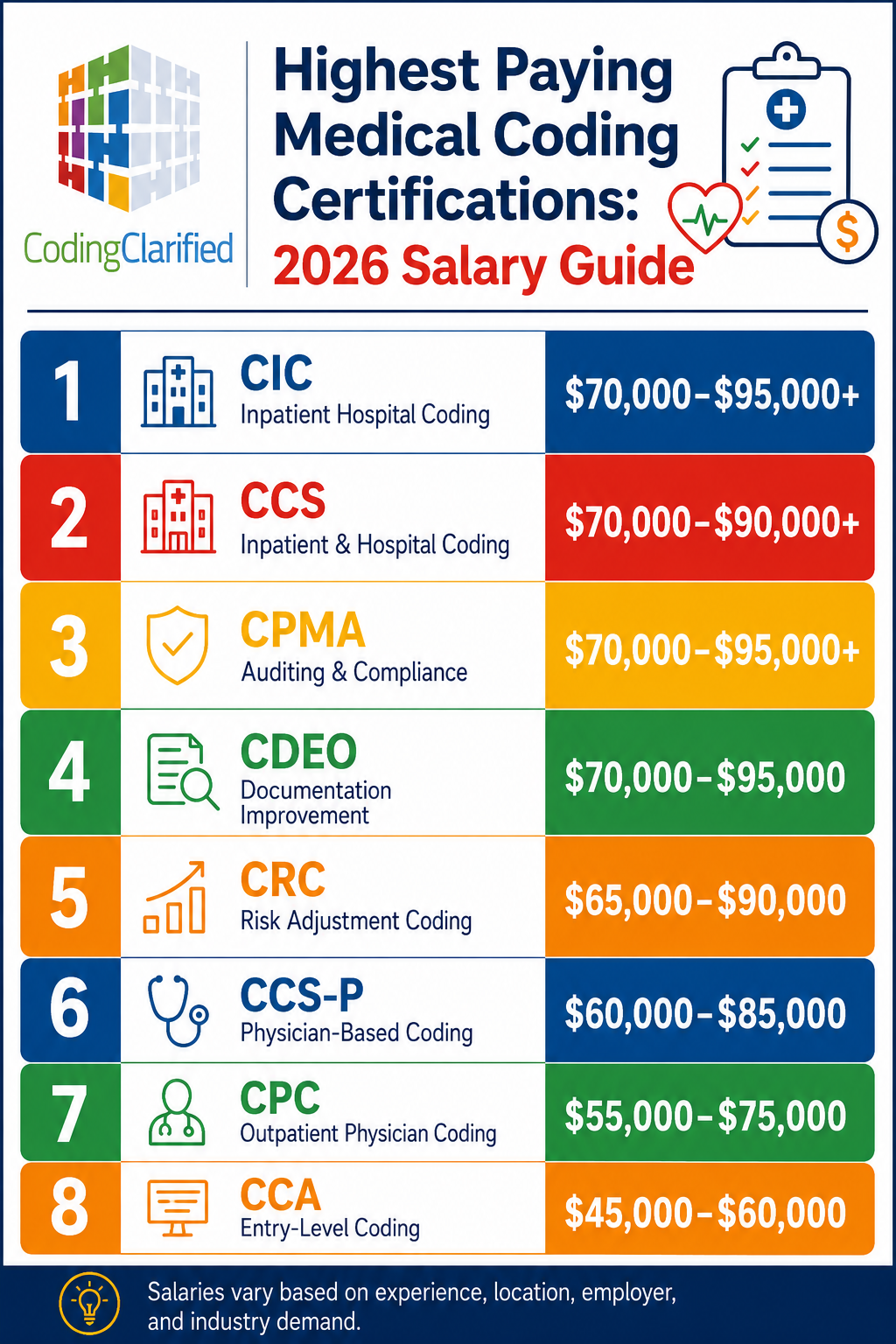
2026 Medical Coding Certification Salary Rankings
Based on current industry demand, salary trends, and specialization requirements, the certifications generally rank as follows:
- CIC
- CCS
- CPMA
- CDEO
- CRC
- CCS-P
- CPC
- CCA
Keep in mind that actual salaries vary based on experience, employer type, specialty, and geographic location.
Additional Coding Clarified Resources
Continue your certification journey with these helpful guides:
- Coding Clarified Medical Coding Scholarships
- Will AI Take Over Medical Coding
- Comparing Medical Coding Courses
- Comparing AAPC CPC vs AHIMA CCA
- Coding Clarified Is MyCAA Approved
Authoritative Resources
- AAPC 2025 Salary Survey
- U.S. Bureau of Labor Statistics
- Centers for Medicare & Medicaid Services (CMS)
- AHIMA website
Frequently Asked Questions
Which medical coding certification pays the most?
In most cases, the CIC and CCS certifications offer the highest earning potential because they focus on complex inpatient hospital coding.
Is CCS better than CPC?
Neither certification is universally better. The CCS focuses primarily on hospital coding, while the CPC focuses on physician and outpatient coding. However, CCS salaries are often higher.
What is the average CPC medical coding salary in 2026?
Most CPC-certified coders earn between $55,000 and $75,000 annually, although experienced specialists can exceed $90,000.
Does a CIC certification increase salary?
Yes. Many coders see meaningful salary growth after earning a CIC because inpatient coding skills remain highly specialized and in demand.
Is the CCA certification worth it?
The CCA can help candidates enter the profession. Nevertheless, many coders later pursue CCS, CPC, or CIC credentials for greater advancement opportunities.
What coding specialty pays the most?
Inpatient coding, auditing, clinical documentation improvement, and risk adjustment coding typically offer some of the highest salaries.
Can I work remotely with a CPC certification?
Yes. Many physician-office, payer, and consulting organizations hire CPC-certified coders for remote positions.
Should I get multiple certifications?
Absolutely. Multiple certifications often improve job opportunities, increase credibility, and lead to higher compensation.
Final Thoughts
Ultimately, the answer to “Which medical coding certification pays the most?” depends on your career path, experience level, and area of specialization. Nevertheless, the CIC and CCS certifications consistently rank among the highest-paying credentials because they require advanced inpatient coding expertise. Meanwhile, the CPC remains the most popular entry point into the profession and provides a strong foundation for long-term career growth. Furthermore, coders who add specialty certifications such as CPMA, CRC, or CDEO often increase their earning potential even further. Therefore, rather than focusing solely on salary, aspiring coders should consider long-term career goals, preferred work settings, and advancement opportunities. In the end, a thoughtful certification strategy can lead to greater job satisfaction, stronger job security, and higher income throughout your medical coding career.
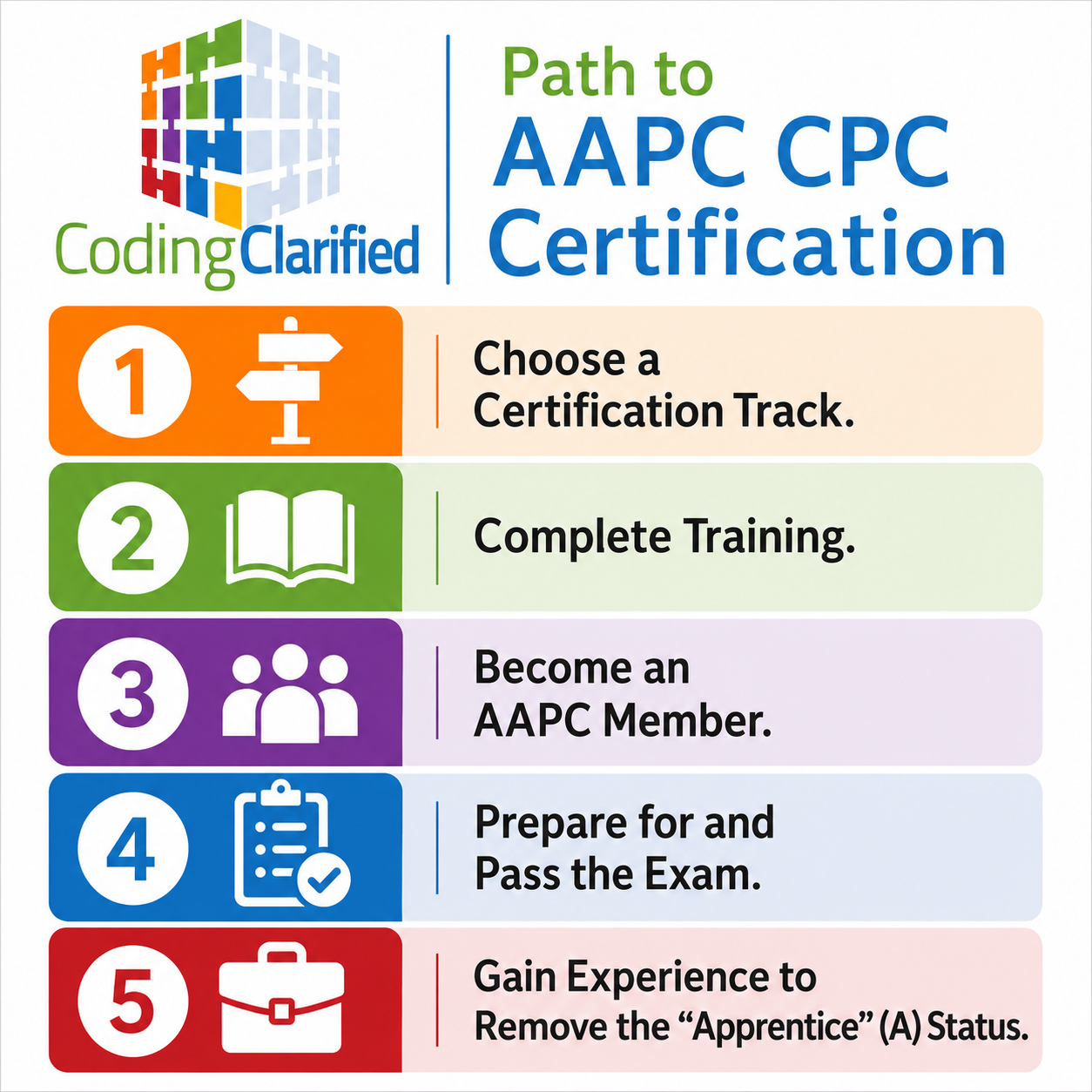
Ready to become a certified medical coder? Our online CPC certification training prepares you for the AAPC CPC exam with a credentialed instructor. Many students train at little or no cost through medical coding scholarships and WIOA grants available in 30+ states.