
Medical Coding for Immunizations in 2026: Complete CPT®, ICD-10-CM & Vaccine Administration Guide
Vaccines remain one of the most common preventive services performed in physician offices, pediatric practices, pharmacies, urgent care centers, and public health clinics. However, coding immunizations correctly requires more than selecting a vaccine product code. Coders must also choose the appropriate administration code, assign the correct diagnosis code, review payer requirements, and verify documentation supports every reported service.
As healthcare continues to emphasize preventive care in 2026, accurate immunization coding helps providers receive proper reimbursement while ensuring patients’ vaccine records remain complete. Consequently, medical coders who understand vaccine coding guidelines become valuable members of every healthcare team.
Whether you are preparing for the CPC® exam, beginning your medical coding career, or looking to strengthen your preventive medicine coding skills, this guide explains the essential rules you need to know.
Key Takeaways
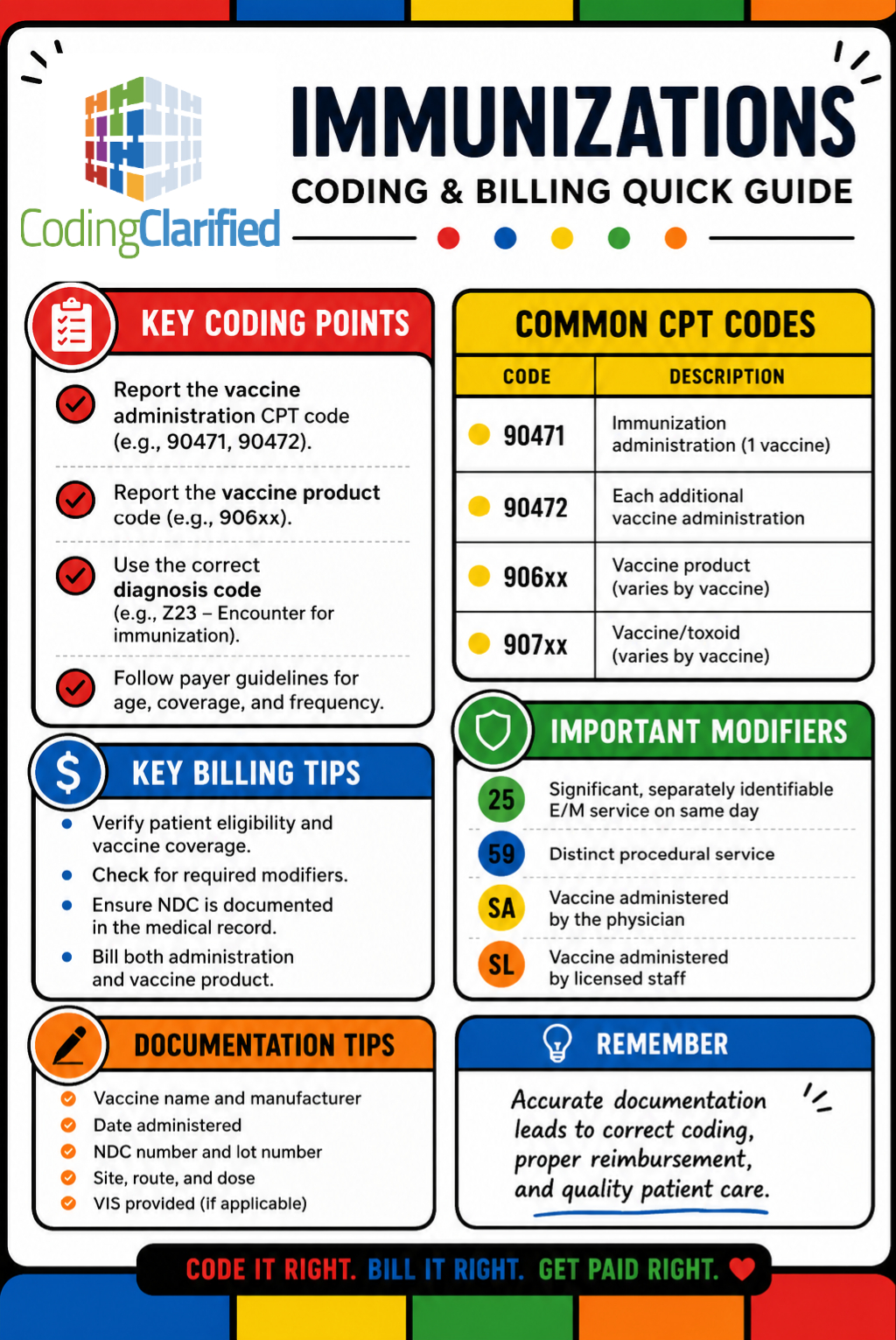
- Always report the vaccine product code and the appropriate administration code when billing immunizations.
- Diagnosis coding often begins with Z23 for routine immunizations.
- Documentation should identify the vaccine administered, manufacturer, lot number, expiration date, route, site, dosage, and provider.
- Pediatric vaccine administration differs from adult administration because counseling may change the administration code selection.
- Medicare, Medicaid, and commercial insurance plans each have unique vaccine coverage rules.
- Proper documentation reduces denials and improves reimbursement.
- Understanding vaccine coding is an important skill for CPC® exam success.
Why Immunization Coding Matters in 2026
Preventive medicine continues to receive increased attention throughout the United States. Vaccination programs help reduce hospitalizations, prevent disease outbreaks, and improve long-term public health outcomes. Therefore, healthcare organizations expect medical coders to understand both vaccine coding and payer-specific billing requirements.
Incorrect coding can result in:
- Claim denials
- Lost reimbursement
- Duplicate billing
- Compliance concerns
- Incorrect patient immunization records
- Delayed payment
Additionally, many providers administer multiple vaccines during the same visit. Each vaccine may require separate product codes, administration codes, and diagnosis coding. Consequently, attention to detail becomes critical.
Because immunizations are performed across nearly every healthcare specialty, vaccine coding frequently appears on certification exams, including the CPC® examination.
Understanding the Two Parts of Immunization Coding
One of the biggest mistakes new coders make is believing that only one code is reported for a vaccine. In reality, immunization coding usually involves at least two separate components.
These include:
- Vaccine Product Code
- Vaccine Administration Code
Each serves a different purpose.
The vaccine product code identifies the medication itself.
The administration code reports the work involved in administering the vaccine.
As a result, both codes are generally required unless payer policy states otherwise.
Part One: CPT Vaccine Product Codes
The vaccine product code identifies the actual vaccine supplied to the patient.
Most immunization product codes are located in the CPT® Medicine section.
Examples include vaccines for:
- Influenza
- COVID-19
- Pneumococcal disease
- Hepatitis A
- Hepatitis B
- HPV
- MMR
- Varicella
- Tdap
- RSV
- Meningococcal disease
- Rotavirus
- Polio
Every vaccine has its own unique CPT® code based on factors such as:
- Manufacturer
- Antigen
- Dosage
- Patient age
- Formulation
- Number of components
For example, influenza vaccines have multiple CPT® codes because formulations vary by age group, dosage, preservative status, and manufacturing process.
Instead of memorizing every vaccine code, professional coders should learn how to navigate the Immunization subsection within the CPT® manual. This approach improves coding accuracy while reducing coding errors.
Vaccine Product Code Selection Tips
Before selecting a vaccine product code, verify:
- Manufacturer
- Vaccine name
- Patient age
- Dosage administered
- Number of antigens
- Route of administration
- Current year’s vaccine formulation
Likewise, always compare the documentation against the vaccine package information when available.
Many coding errors occur because similar vaccines have different CPT® codes.
Part Two: CPT Vaccine Administration Codes
After assigning the vaccine product code, coders must determine the correct administration code.
Administration codes report the professional service of giving the vaccine—not the vaccine itself.
Correct coding for administration depends on several factors, including:
- Patient age
- Whether counseling was provided
- Number of vaccine components
- Additional vaccine administrations during the same encounter
Administration Codes With Physician or Qualified Healthcare Professional Counseling
When counseling is provided to the patient or guardian for patients through 18 years of age, use:
- 90460 – Immunization administration through 18 years of age with counseling by physician or other qualified healthcare professional; first or only component of each vaccine or toxoid administered
- 90461 – Each additional vaccine or toxoid component (add-on code)
These codes are commonly reported in pediatric practices because providers frequently educate parents about vaccine risks, benefits, and recommendations before administration.
Counseling documentation should clearly support the use of these codes.
Administration Codes Without Counseling
When counseling requirements are not met, administration coding changes.
Common administration codes include:
- 90471 – Immunization administration (one vaccine)
- 90472 – Each additional injectable vaccine
- 90473 – Oral or intranasal vaccine administration
- 90474 – Each additional oral or intranasal vaccine
Selecting the wrong administration code is one of the most common immunization coding errors. Consequently, coders should always verify whether provider counseling occurred before assigning the administration code.
Documentation Required for Accurate Coding
Complete documentation supports both reimbursement and compliance.
Medical records should include:
- Vaccine name
- Manufacturer
- Lot number
- Expiration date
- Dose administered
- Administration route
- Injection site
- Date of administration
- Name and credentials of the individual administering the vaccine
- Vaccine Information Statement (VIS) publication date, when applicable
- VIS date provided to the patient or guardian, when applicable
- Patient or guardian consent, according to facility policy
- Counseling documentation, when required
Incomplete documentation may lead to coding errors, payment delays, or audit findings.
CPC Student Tip
When answering CPC® exam questions about immunizations, first identify whether the question is asking for:
- The vaccine product,
- The administration service,
- Or both.
Next, determine whether physician or qualified healthcare professional counseling was documented for a patient through age 18. This single detail often determines whether 90460–90461 or 90471–90474 should be reported.
Finally, remember that coding guidelines change over time. Always verify the current year’s CPT® code descriptors and payer instructions rather than relying on memory alone.
ICD-10-CM Diagnosis Coding for Immunizations
Choosing the correct diagnosis code is just as important as selecting the proper CPT® vaccine and administration codes. The diagnosis tells the payer why the vaccine was given and helps support medical necessity when required.
Fortunately, routine immunizations often use one primary diagnosis code. However, certain clinical situations require additional diagnosis codes to fully explain the encounter.
Z23 – Encounter for Immunization
The most commonly reported diagnosis code for routine vaccinations is Z23 – Encounter for immunization.
Use Z23 when the primary purpose of the visit is administering one or more routine immunizations, regardless of the number of vaccines given.
Examples include:
- Annual influenza vaccine
- COVID-19 vaccination
- Tdap booster
- Pneumococcal vaccination
- HPV vaccine
- Childhood immunization schedule
- Adult catch-up vaccinations
If multiple vaccines are administered during the same encounter, Z23 is generally reported once on the claim unless payer instructions indicate otherwise.
When Additional Diagnosis Codes May Be Needed
Although Z23 is common, it does not replace diagnosis codes that explain an existing illness or condition evaluated during the same visit.
For example, a patient may receive:
- A preventive examination
- Evaluation of an acute illness
- Management of a chronic disease
- An immunization during the same encounter
In these situations, report the appropriate diagnosis codes for the evaluation and management service in addition to Z23, when supported by documentation.
Always follow the Official ICD-10-CM Guidelines and payer-specific billing policies.
Diagnosis Coding for Exposure Situations
Sometimes vaccines are administered because a patient has been exposed to a disease rather than as part of routine preventive care.
Examples may include:
- Rabies exposure
- Tetanus-prone injuries
- Occupational exposure
- Travel-related immunizations
- Post-exposure prophylaxis
Documentation should clearly identify:
- The reason for vaccination
- The exposure or injury
- Whether the vaccine is preventive or post-exposure
- Any associated medical conditions
In these situations, additional diagnosis codes may accompany Z23, depending on the clinical circumstances.
Childhood vs. Adult Immunization Coding
Although the coding principles remain similar, pediatric and adult vaccinations differ in several important ways.
Understanding these differences helps coders select the correct administration codes.
| Pediatric Patients | Adult Patients |
|---|---|
| Counseling frequently documented | Counseling less commonly affects administration coding |
| Multiple vaccines often administered during one visit | Usually fewer vaccines per encounter |
| Routine well-child schedule | Age- or risk-based recommendations |
| Parents or guardians receive counseling | Patient typically receives education directly |
Because pediatric preventive visits often include counseling, coders should carefully review documentation before assigning administration codes.
Medicare Vaccine Billing in 2026
Medicare covers several vaccines, but coverage depends on the vaccine type and the patient’s benefits.
Generally covered vaccines include:
- Influenza
- COVID-19
- Pneumococcal
- Hepatitis B (for qualifying risk categories)
Additionally, many adult vaccines are covered under Medicare Part D rather than Part B.
Since coverage rules continue to evolve, coders should always verify:
- Current CMS guidance
- Local payer policies
- Medicare Administrative Contractor (MAC) instructions
Verifying coverage before claim submission reduces denials and improves reimbursement.
Commercial Insurance Considerations
Commercial insurers often follow recommendations from the Advisory Committee on Immunization Practices (ACIP), but benefit coverage varies between plans.
Before billing, verify:
- Patient eligibility
- Covered vaccines
- Frequency limitations
- Age requirements
- Prior authorization requirements, if applicable
- Network restrictions
Checking benefits early helps providers avoid unexpected patient balances.
Vaccine Counseling Requirements
Counseling plays an important role in selecting the correct administration code.
Documentation should include discussion of:
- Vaccine benefits
- Potential risks
- Possible side effects
- Contraindications
- Questions from the patient or parent
- Informed consent according to organizational policy
If counseling is not documented, coders should avoid assigning counseling-based administration codes.
Remember:
Documentation drives code selection.
Multiple Vaccines During the Same Visit
Many patients receive more than one immunization during a single appointment.
Examples include:
- Influenza plus COVID-19
- Tdap plus HPV
- MMR plus Varicella
- Hepatitis A plus Hepatitis B
- Multiple childhood vaccines during a well-child examination
Each vaccine product receives its own CPT® code.
Administration codes are then assigned according to:
- Number of vaccines
- Number of components (when applicable)
- Counseling status
- Route of administration
Carefully count each reportable administration service before submitting the claim.
Coding Example 1 – Pediatric Well Visit
Scenario
A 6-year-old child presents for a routine preventive examination.
The physician reviews the recommended immunization schedule with the parent, discusses benefits and possible adverse effects, answers questions, and administers:
- DTaP-IPV combination vaccine
- MMR vaccine
Coding Considerations
The documentation supports:
- Preventive medicine service
- Vaccine product codes
- Administration codes with counseling
- Diagnosis code Z23
Because counseling occurred and the patient is younger than 19 years, administration coding follows the counseling guidelines.
Coding Example 2 – Adult Influenza Vaccine
Scenario
A 67-year-old patient visits the clinic for an annual influenza vaccine.
The nurse administers the vaccine following standing orders. No physician counseling is documented.
Coding Considerations
The claim includes:
- Influenza vaccine product code
- Appropriate administration code without counseling
- Diagnosis code Z23
Since counseling requirements were not met, administration codes requiring counseling would not be appropriate.
Coding Example 3 – Multiple Adult Vaccines
Scenario
A patient preparing for international travel receives:
- Hepatitis A vaccine
- Typhoid vaccine
The provider reviews travel recommendations and documents vaccine education.
Coding Considerations
The coder should determine:
- Individual vaccine product codes
- Appropriate administration codes
- Diagnosis code(s), including Z23 and any additional codes supported by documentation
Travel medicine encounters often involve payer-specific coverage requirements, making benefit verification especially important.
Documentation Checklist
Before assigning codes, verify that the record includes:
- Vaccine name
- Manufacturer
- National Drug Code (NDC), when required by the payer
- Lot number
- Expiration date
- Dosage
- Route
- Injection site
- Administration date
- VIS publication date, when applicable
- VIS date provided to the patient
- Patient or guardian consent according to facility policy
- Counseling documentation, when applicable
- Name and credentials of the individual administering the vaccine
Complete documentation supports coding accuracy and helps protect providers during audits.
CPC Student Tips
Immunization coding appears frequently on certification exams because it tests multiple coding concepts at once.
Keep these strategies in mind:
- Read the entire scenario before looking at the answer choices.
- Determine whether the question asks for the vaccine product, administration service, or both.
- Look for documentation of counseling before choosing administration codes.
- Pay close attention to the patient’s age.
- Confirm whether one or multiple vaccines were administered.
- Don’t overlook the diagnosis code Z23 when the encounter is for immunization.
- Practice locating vaccine product codes in the Immunization subsection of the CPT® manual instead of memorizing every code.
Developing these habits will improve both exam performance and real-world coding accuracy.
Common Mistakes to Avoid
Even experienced coders occasionally make mistakes when coding immunizations. Fortunately, many of these errors are preventable with careful documentation review and a solid understanding of the CPT® and ICD-10-CM guidelines.
Avoid these common coding mistakes:
Reporting Only the Vaccine Product
One of the most frequent errors is reporting the vaccine product code without the appropriate administration code. In most situations, both services are separately reportable when supported by documentation.
Selecting the Wrong Administration Code
Administration codes depend on several factors, including the patient’s age, whether counseling occurred, and how many vaccines or vaccine components were administered. Therefore, always review the documentation before assigning the administration code.
Forgetting Z23
Routine immunizations generally require ICD-10-CM Z23 – Encounter for immunization. Omitting this diagnosis code may result in claim denials or delayed reimbursement.
Billing Counseling Codes Without Documentation
Codes 90460 and 90461 require physician or other qualified healthcare professional counseling for patients through 18 years of age. If counseling is not documented, report the appropriate non-counseling administration code instead.
Missing Additional Vaccine Administrations
When multiple vaccines are administered during the same visit, additional administration services may also be reportable. Carefully count each vaccine and review the applicable administration guidelines.
Failing to Verify Payer Policies
Coverage for adult vaccines varies by payer. Medicare, Medicaid, and commercial insurers may each have different billing rules, frequency limitations, or benefit requirements.
Incomplete Documentation
Missing information such as the vaccine lot number, manufacturer, administration site, VIS date (when applicable), or counseling documentation can create compliance concerns and increase audit risk.
2026 Immunization Coding Updates
Preventive medicine continues to evolve, making it important for coders to stay current each year.
For 2026, coders should remember to:
- Review the annual CPT® code updates before January billing.
- Verify current vaccine product codes each season, especially for influenza and COVID-19 vaccines.
- Follow the latest CDC and ACIP immunization recommendations.
- Monitor CMS guidance for Medicare vaccine coverage.
- Review payer bulletins for commercial insurance policy updates.
- Confirm whether new vaccine formulations or products require different CPT® codes.
Rather than relying on previous years’ coding practices, always verify the current code descriptors and payer instructions before submitting claims.
CPC Student Review Checklist
Before coding an immunization encounter, ask yourself these questions:
- Did I assign the correct vaccine product code?
- Did I report the correct administration code?
- Was counseling documented?
- Is the patient’s age important for code selection?
- Did I report Z23 when appropriate?
- Were multiple vaccines administered?
- Does documentation support every code reported?
- Have I reviewed any payer-specific requirements?
Using a consistent checklist can improve coding accuracy during both the CPC® exam and everyday coding practice.
Why Accurate Immunization Coding Matters
Correct immunization coding benefits everyone involved in patient care.
Accurate coding helps providers:
- Receive appropriate reimbursement
- Reduce claim denials
- Improve documentation quality
- Maintain complete vaccine records
- Support compliance during audits
- Improve preventive healthcare reporting
Likewise, patients benefit from accurate vaccine documentation because complete records help ensure recommended immunizations are administered on schedule throughout life.
Additional Coding Clarified Resources
Continue building your coding knowledge with these helpful articles from Coding Clarified:
- Pediatric Medical Coding and Billing in 2026
- ICD-10-CM Excludes 1 Notes
- Medical Coding ICD-10-CM Excludes 2
- Types of Injections in Medical Coding
These resources provide additional guidance for CPC® students, new medical coders, and experienced professionals looking to strengthen their coding skills.
Authoritative Resources
For the most current coding guidance, vaccine recommendations, and payer policies, consult these trusted sources:
American Academy of Professional Coders (AAPC)
- Centers for Medicare & Medicaid Services (CMS)
- National Correct Coding Initiative (NCCI)
- ICD-10-CM Official Guidelines for Coding and Reporting
- Centers for Disease Control and Prevention
- Advisory Committee on Immunization Practices
Always refer to the latest official publications before assigning codes, as coding guidance and vaccine recommendations may change.
Frequently Asked Questions
What diagnosis code is commonly reported for routine immunizations?
The most common diagnosis code is ICD-10-CM Z23 – Encounter for immunization. This code is reported when the primary reason for the visit is vaccine administration.
Do I bill both the vaccine and the administration?
Yes. In most situations, the vaccine product and the administration service are separately reportable when documentation supports both services.
What is the difference between 90460 and 90471?
90460 is used for patients through 18 years of age when physician or other qualified healthcare professional counseling is provided for the first or only vaccine component. 90471 is used for the administration of one vaccine when counseling requirements for 90460 are not met.
Can multiple vaccines be reported during the same visit?
Absolutely. Each vaccine product is coded separately, and the appropriate administration code(s) are assigned based on the number of vaccines, components, route of administration, and counseling documentation.
Does Medicare cover all vaccines?
No. Medicare coverage depends on the vaccine and the patient’s benefits. Some vaccines are covered under Medicare Part B, while others may be covered under Medicare Part D. Always verify current payer policies before billing.
What documentation is required for vaccine coding?
Documentation should include the vaccine name, manufacturer, lot number, expiration date, dosage, administration route, injection site, administration date, VIS information (when applicable), patient consent according to organizational policy, counseling documentation when appropriate, and the name and credentials of the individual administering the vaccine.
Why is immunization coding tested on the CPC® exam?
Immunization coding combines CPT®, ICD-10-CM, preventive medicine guidelines, documentation review, and administration coding concepts. Because it tests multiple coding skills at once, it is a common CPC® examination topic.
How can I improve my vaccine coding skills?
Practice coding real-world scenarios, become familiar with the Immunization subsection of the CPT® manual, review the Official ICD-10-CM Guidelines annually, and stay current with updates from the AAPC, CMS, and CDC.
Coding Clarified Final Thoughts
Immunization coding may seem straightforward, but it requires careful attention to documentation, payer rules, and current coding guidelines. Reporting both the appropriate vaccine product and administration codes, selecting the correct ICD-10-CM diagnosis code, and understanding counseling requirements all contribute to accurate reimbursement and regulatory compliance.
For CPC® students, mastering immunization coding strengthens foundational skills that are tested on the certification exam and used daily in physician offices, pediatric practices, public health clinics, pharmacies, and many other healthcare settings. As vaccine recommendations and payer policies continue to evolve in 2026, staying informed through trusted resources and annual code updates remains essential for coding success.
Ready to become a certified medical coder? Our online CPC certification training prepares you for the AAPC CPC exam with a credentialed instructor. Many students train at little or no cost through medical coding scholarships and WIOA grants available in 30+ states.