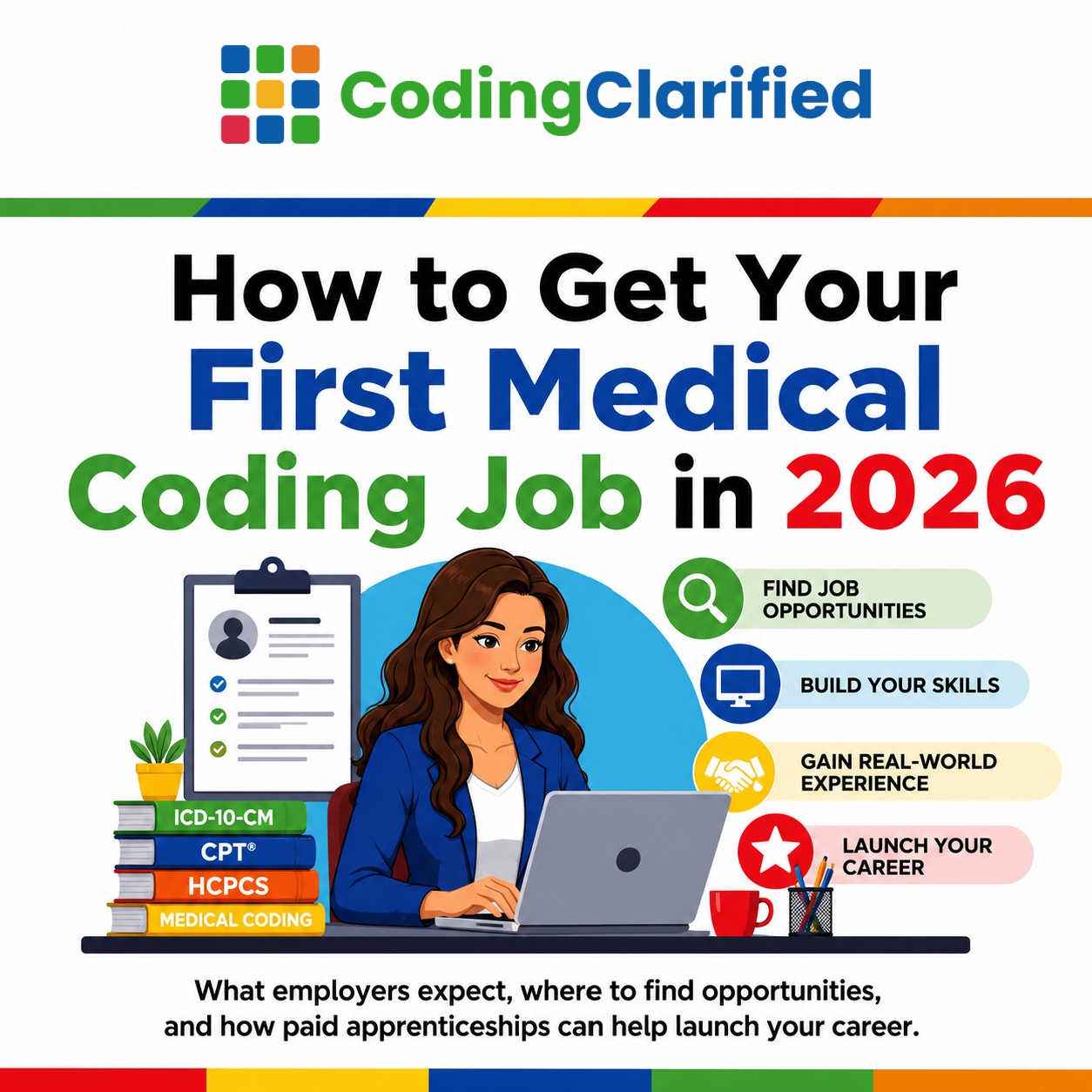
How to Get Your First Medical Coding Job in 2026
Becoming a Certified Professional Coder (CPC®) is a major accomplishment. However, many newly certified coders quickly discover that passing the certification exam is only the first step. Employers often ask for experience, yet every new coder starts without it.
Fortunately, the medical coding job market has changed significantly in 2026. Healthcare organizations continue to face staffing shortages, apprenticeship programs are expanding, and more employers recognize the value of structured training over years of prior experience.
Therefore, if you’re wondering how to get your first medical coding job with a CPC-A, this guide will walk you through exactly what employers expect, where to find opportunities, and how paid apprenticeships can help launch your career.
Key Takeaways
- Earning your CPC certification is only the beginning of your career.
- Many employers now hire new coders through apprenticeship programs.
- Experience can be gained through internships, Practicode, apprenticeships, and supervised coding.
- Your resume and interview skills matter just as much as your certification.
- Coding Clarified offers a paid Registered Medical Coding Apprenticeship that helps bridge the gap between certification and employment.
- 2026 hiring trends continue to favor candidates with structured training and demonstrated competency.
Why Is It So Hard to Get Your First Medical Coding Job?
Almost every new coder asks the same question:
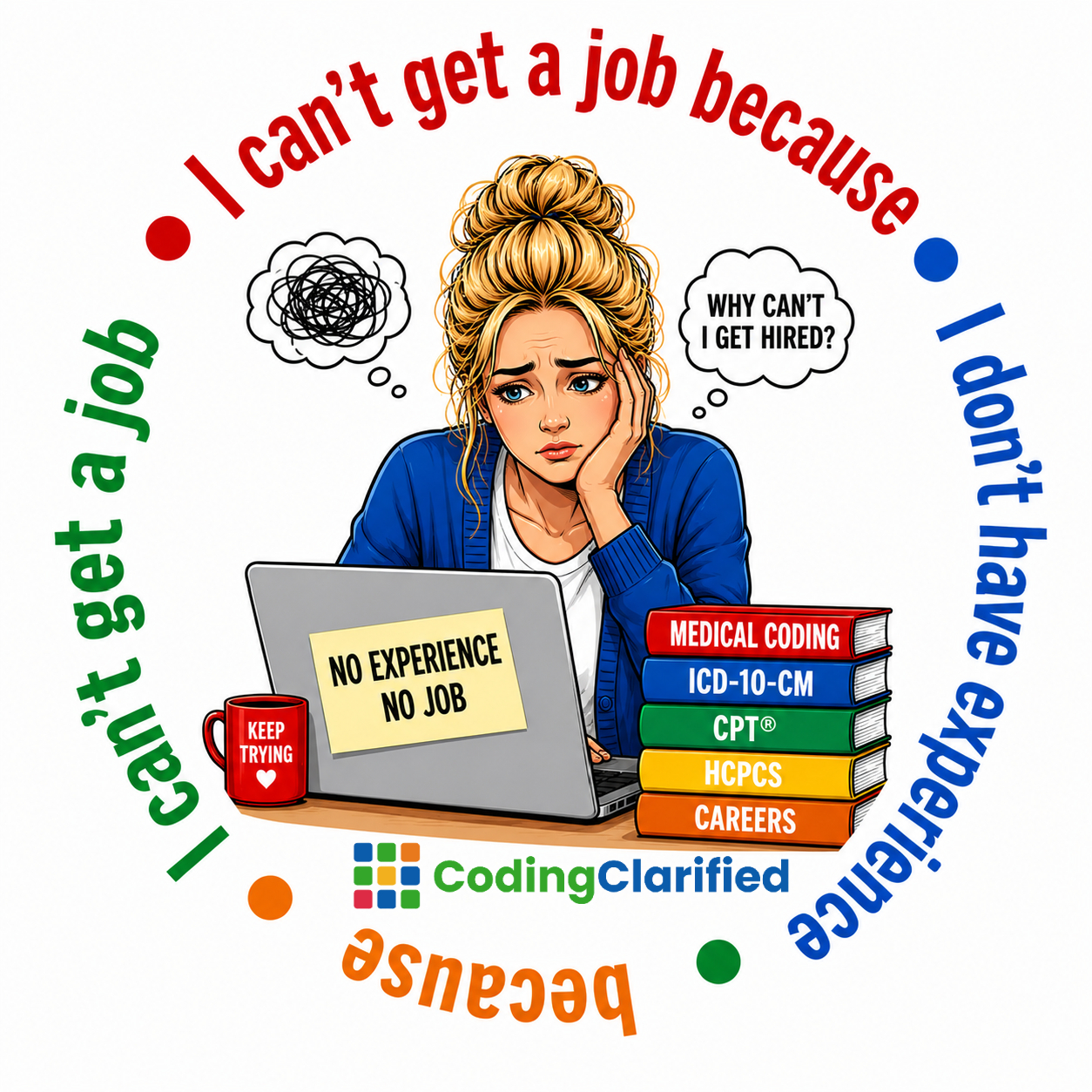
“How can I get experience if no one will hire me?”
Fortunately, employers are beginning to recognize this challenge. Many organizations no longer expect new coders to arrive with years of experience. Instead, they want candidates who have:
- Strong coding fundamentals
- Good documentation review skills
- Knowledge of coding guidelines
- Professional communication
- A willingness to learn
In other words, employers often value trainability over years of bad habits.
Additionally, healthcare organizations increasingly understand that investing in new coders creates a stronger long-term workforce.
What Does the CPC-A Mean?
The CPC-A designation stands for Certified Professional Coder – Apprentice.
The apprentice status simply means you have demonstrated coding knowledge by passing the certification exam but have not yet met the experience requirements to remove the “A.”
This designation does not mean you are unqualified.
Instead, it tells employers you have:
- Passed a nationally recognized certification exam
- Learned CPT®, ICD-10-CM, and HCPCS Level II coding
- Demonstrated coding competency
- Need supervised work experience
Many employers actively hire CPC-A coders.
Where Can New Medical Coders Gain Experience?
There are several legitimate ways to gain coding experience.
1. Registered Apprenticeships
One of the fastest-growing options in 2026 is a Registered Medical Coding Apprenticeship.
Unlike unpaid internships, apprenticeships combine:
- Paid employment
- Structured education
- Mentorship
- Progressive skill development
- Documented work experience
As a result, apprentices earn income while building the experience employers want.
Coding Clarified offers a Registered Medical Coding Apprenticeship that helps new coders transition into the workforce while completing required training and on-the-job learning.
Learn more here:
Coding Clarified Apprenticeship FAQs
2. Practicode
AAPC Practicode provides simulated coding experience that allows new coders to practice reviewing medical records and assigning codes.
Although Practicode is valuable, employers typically view actual employment or apprenticeship experience more favorably.
Coding Clarified Facebook Practicode group
3. Internships
Some educational programs offer coding internships that expose students to real healthcare environments.
Although not every internship leads directly to employment, they strengthen resumes and improve interviewing confidence.
4. Volunteer Opportunities
Some nonprofit clinics and healthcare organizations may allow supervised coding assistance.
Although these opportunities are less common, they can still provide valuable exposure.
Why Paid Apprenticeships Are Becoming More Popular
Healthcare organizations continue to struggle with coder shortages.
Therefore, many employers now prefer developing their own workforce instead of competing for experienced coders.
Paid apprenticeships allow employers to:
- Train coders using their own workflows
- Reduce recruiting costs
- Improve employee retention
- Develop higher-quality coders
- Expand their workforce responsibly
Meanwhile, new coders receive valuable experience while earning a paycheck.
It truly benefits both employers and apprentices.
What Is Coding Clarified’s Registered Medical Coding Apprenticeship?
Coding Clarified partners with employers through a Registered Apprenticeship Program designed specifically for new medical coders.
The program includes:
- Paid employment
- Related Technical Instruction (RTI)
- Employer mentorship
- Structured competency tracking
- Progressive skill development
- Documentation of work experience
Apprentices complete:
- Approximately 2,000 hours of On-the-Job Training (OJT)
- 144 hours of Related Technical Instruction (RTI)
Consequently, graduates finish with meaningful experience that employers recognize.
Learn more about the program here:
Coding Clarified Apprenticeship FAQs
What Employers Want Besides Certification
Certification opens the door.
Professional skills help you walk through it.
Most hiring managers also look for candidates who demonstrate:
Professionalism
Employers want dependable team members.
Show up prepared.
Respond professionally.
Communicate clearly.
Strong Coding Knowledge
Continue practicing:
- CPT coding
- ICD-10-CM coding
- HCPCS Level II coding
- Official Coding Guidelines
- Medical terminology
- Anatomy and physiology
The stronger your foundation, the easier your transition into production coding becomes.
Attention to Detail
Medical coding requires precision.
Small documentation errors can affect:
- Reimbursement
- Compliance
- Data reporting
- Quality measures
Therefore, careful review is essential.
Willingness to Learn
Healthcare changes every year.
Successful coders continue learning throughout their careers.
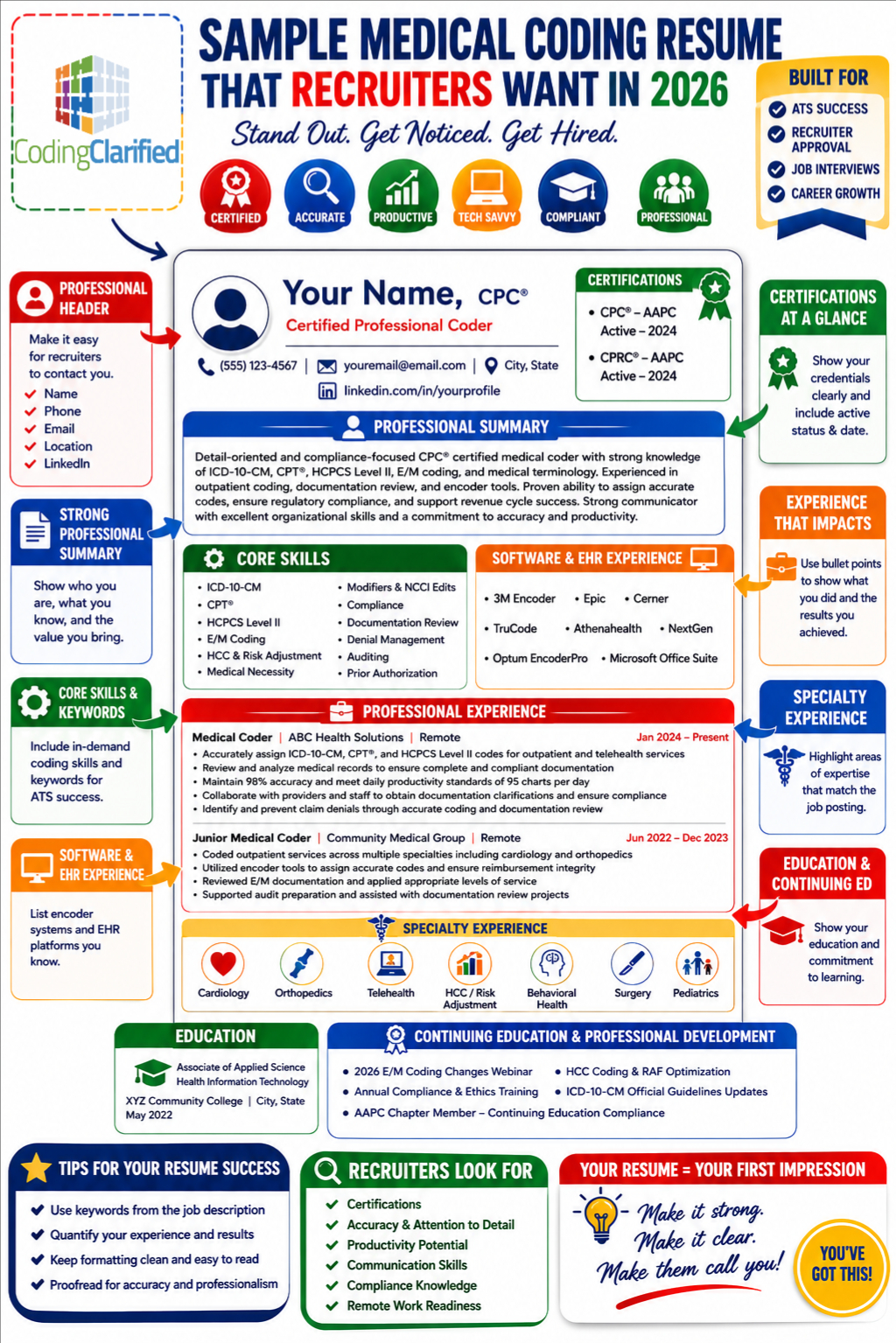
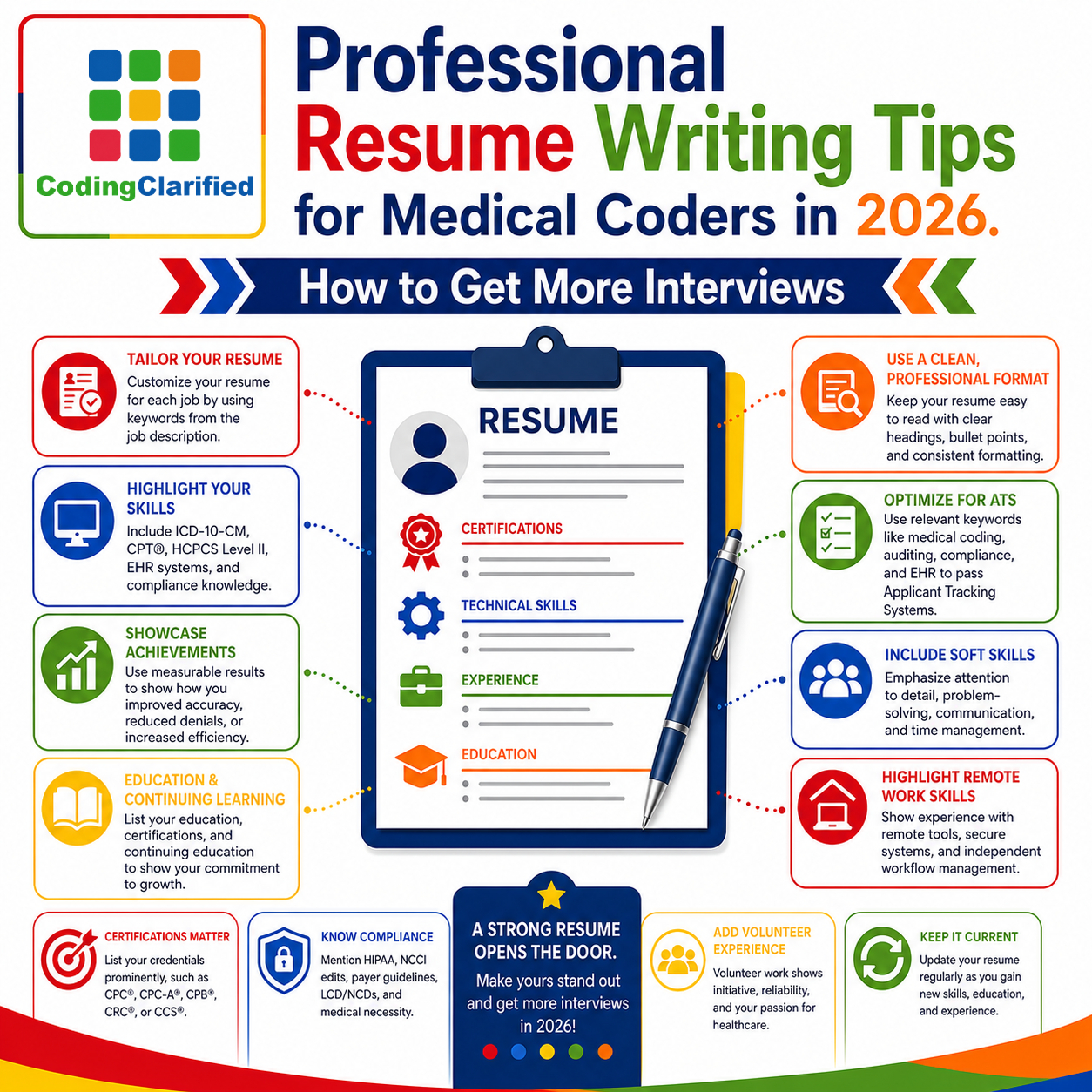
Build a Resume That Gets Interviews
Your first coding resume should emphasize skills—not just work history.
Include:
- CPC certification
- Education
- Coding software familiarity
- Medical terminology
- Anatomy knowledge
- Coding coursework
- Practicode (if completed)
- Internship experience
- Apprenticeship participation
- Transferable healthcare experience
Even customer service, billing, scheduling, or insurance experience can strengthen your resume.
For more resume advice, read:
What Medical Coding Recruiters Are Looking for on a Resume in 2026
Prepare for Medical Coding Interviews
Interviewers often ask:
- Why did you choose medical coding?
- How do you research coding guidelines?
- What coding resources do you use?
- How do you stay current?
- Describe a difficult coding scenario.
- How do you handle constructive feedback?
Practice answering confidently.
Additionally, demonstrate enthusiasm for learning rather than pretending to know everything.
Continue Learning While Job Searching
Don’t stop coding after passing your exam.
Instead:
- Practice coding records weekly.
- Review Official Coding Guidelines.
- Study payer policies.
- Read Coding Clinic guidance when applicable.
- Stay current on annual updates.
- Follow CMS changes.
Continuous learning makes interviews much easier.
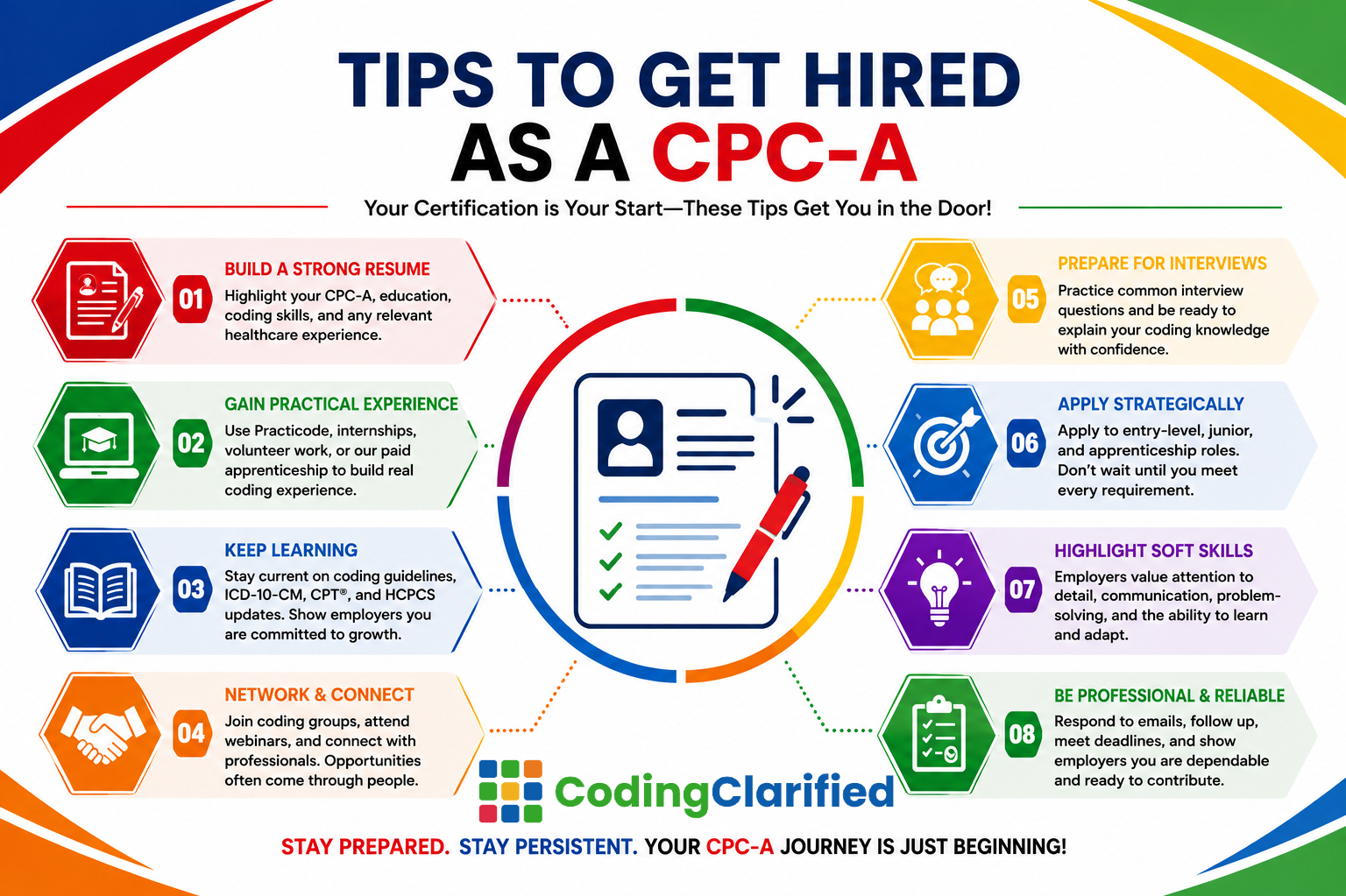
CPC & CPC-A Tips
Practice Every Week
Coding is a skill.
Like any skill, consistent practice improves speed and accuracy.
Stay Current
Every October, ICD-10-CM updates become effective.
Likewise, CPT and HCPCS updates occur annually.
Employers appreciate candidates who stay informed.
Join Professional Communities
Networking can uncover opportunities before they appear on job boards.
Professional associations, coding forums, and local chapter meetings remain excellent resources.
Apply Even If You Don’t Meet Every Requirement
Many job postings request experience.
Nevertheless, employers often interview motivated candidates who demonstrate strong coding knowledge and professionalism.
Don’t eliminate yourself before the employer has the chance to evaluate your qualifications.
Common Mistakes to Avoid
Many new coders unintentionally slow their job search.
Avoid these common mistakes:
- Waiting until after certification to build your resume.
- Applying only to remote positions.
- Failing to tailor your resume for each employer.
- Ignoring apprenticeship opportunities.
- Stopping coding practice after passing the CPC exam.
- Not preparing for interviews.
- Expecting immediate employment without networking.
- Forgetting to keep certification and continuing education current.
Instead, remain active, continue learning, and apply consistently.
2026 Medical Coding Hiring Trends
Several hiring trends continue shaping the medical coding profession in 2026.
Healthcare employers increasingly value:
- Apprenticeship experience
- Practical coding competency
- Strong documentation review skills
- Adaptability
- AI-assisted coding knowledge
- Compliance awareness
- Communication skills
Rather than replacing coders, artificial intelligence continues to increase demand for professionals who can validate coding accuracy, review documentation, and ensure regulatory compliance.
Consequently, trained medical coders remain essential members of the healthcare revenue cycle.
Coding Clarified Additional Resources
You may also find these articles helpful:
Medical Coding Resume Tips for 2026 | Get More Interviews
Using LinkedIn AI To Boost CPC Job Search
Why AI Is Not Ready to Take Over All Medical Coding Jobs
Will AI Take Over Medical Coding
Frequently Asked Questions
Can I get a medical coding job with a CPC-A?
Yes. Many employers hire CPC-A coders, especially through apprenticeship programs, internships, and entry-level coding positions. Demonstrating strong coding skills and a willingness to learn often matters more than extensive experience.
Is a paid medical coding apprenticeship worth it?
Absolutely. Paid apprenticeships allow you to earn income while gaining real-world coding experience under experienced mentors. They also help satisfy experience requirements that many employers seek.
How long does it take to remove the CPC-A designation?
The timeframe varies depending on how you earn your qualifying experience. Completing approved work experience, educational pathways, or programs recognized by AAPC can help remove the apprentice designation. AAPC Remove CPC A Status
Should I apply for jobs that require one or two years of experience?
Yes. Many employers list preferred qualifications rather than strict requirements. If you meet most qualifications and demonstrate strong coding knowledge, you may still receive an interview.
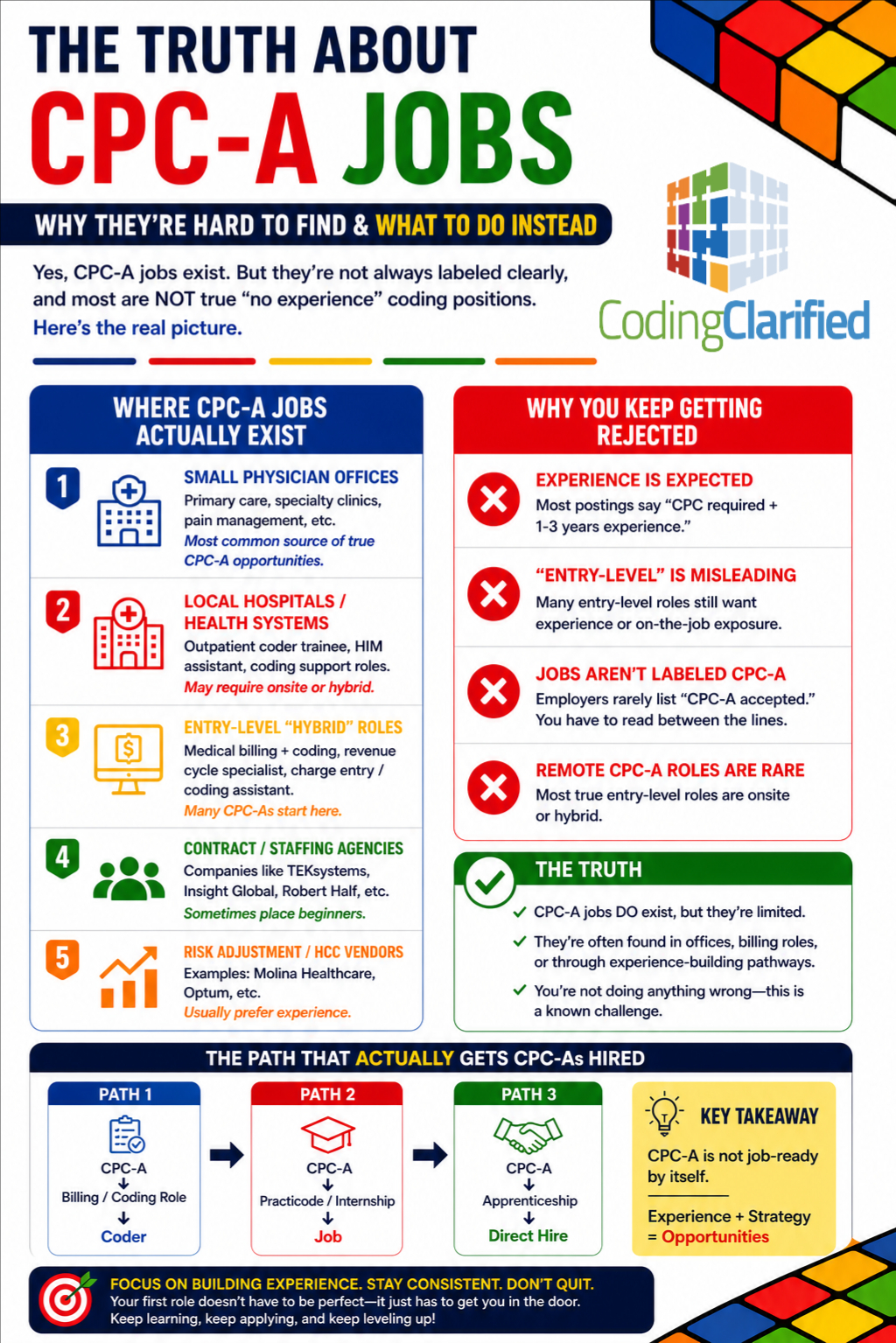
The Truth About CPC-A Jobs 2026
Can I work remotely as a new medical coder?
Some entry-level remote positions exist. However, many employers prefer new coders to gain experience in supervised or hybrid environments before transitioning to fully remote work.
What should I do while waiting for interviews?
Continue coding practice, update your resume, network with professionals, attend educational webinars, review coding guidelines, and stay current with annual coding changes.
What makes Coding Clarified’s apprenticeship different?
Coding Clarified’s Registered Medical Coding Apprenticeship combines paid employment, structured education, employer mentorship, and documented on-the-job training. This approach helps new coders gain valuable experience while preparing for long-term career success.
Authoritative Resources