The Truth About CPC-A Jobs: What New Medical Coders Need to Know (2026 Guide)
If you recently earned your AAPC Certified Professional Coder Apprentice (CPC-A) credential, you may already be facing a frustrating reality:
You’re certified—but employers still want experience.
So what’s really going on with CPC-A jobs?
Are companies actually hiring entry-level medical coders?
This guide breaks down the truth about CPC-A jobs, the types of companies that hire new coders, and exactly what you should do to land your first position.
Do CPC-A Jobs Actually Exist?
Yes—but not in the way most people expect.
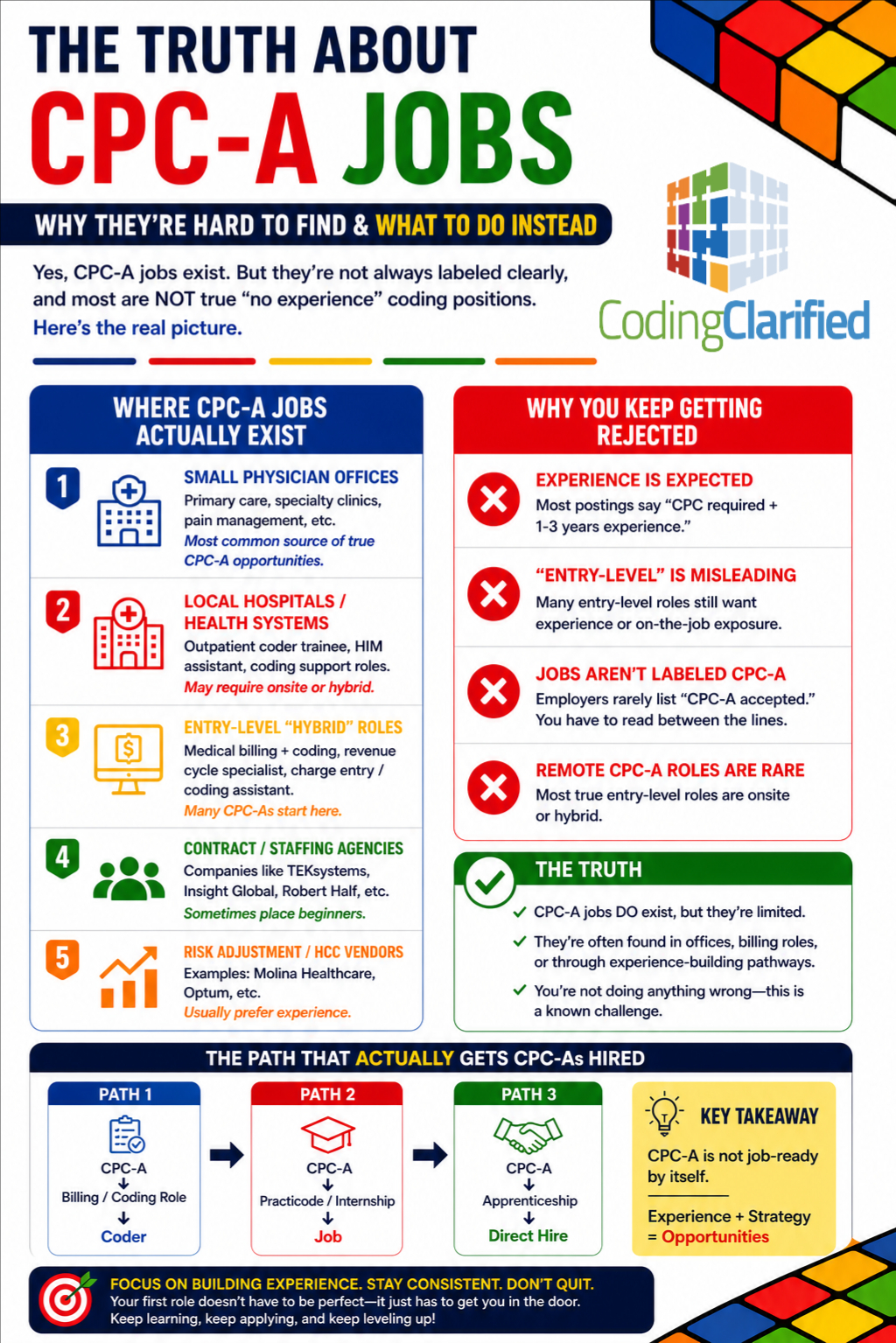
There is no large pool of remote, no-experience CPC-A jobs waiting for new coders. Most job postings require:
- CPC certification
- AND 1–3 years of experience
This creates what many call the “experience gap” in medical coding.
However, entry-level opportunities do exist—you just need to know where to look. CPC-A
Why CPC-A Job Listings Are So Hard to Find
1. Jobs Are Not Labeled “CPC-A”
Most employers do not list “CPC-A accepted” in job postings.
Instead, you’ll see:
- “Certified coder required”
- “Entry-level preferred”
- “Experience preferred”
This means CPC-A candidates can apply, but it’s not explicitly stated.
2. “Entry-Level” Doesn’t Always Mean No Experience
Many “entry-level” roles still expect:
- Prior coding exposure
- Internship experience
- Familiarity with real charts
3. Remote Roles Are Extremely Competitive
Remote coding jobs typically go to:
- Experienced coders
- High-productivity professionals
- Specialized coders (HCC, auditing, surgical)
4. Employers Want Job-Ready Coders
Certification proves knowledge—but employers want:
- Speed
- Accuracy
- Real-world application
Companies That Hire New or Inexperienced Medical Coders
Instead of focusing only on big-name companies, successful CPC-A job seekers target these types of employers:
1. Small Physician Offices (Best Starting Point)
These are the most common employers of new coders.
Examples include:
- Primary care clinics
- Cardiology offices
- Orthopedic practices
- Pain management clinics
Why they hire CPC-A:
- Willing to train
- Smaller teams
- Flexible role responsibilities
2. Local Hospitals & Health Systems
Look for roles such as:
- Outpatient coder trainee
- HIM assistant
- Coding support specialist
These positions may:
- Accept CPC-A
- Provide structured training
- Require onsite or hybrid work
3. Entry-Level Revenue Cycle Roles
Many CPC-A coders start in hybrid roles like:
- Medical billing and coding
- Charge entry specialist
- Revenue cycle analyst
- Coding assistant
These roles help you:
- Build experience
- Learn payer guidelines
- Transition into full coding positions
4. Staffing & Contract Agencies
Companies like:
Sometimes place beginner coders in:
- Contract roles
- Short-term projects
- Entry-level coding assignments
Note: These still may require some hands-on experience.
5. Risk Adjustment & HCC Coding Vendors
Examples include:
- Molina Healthcare
- Optum
These roles:
- Focus on chronic conditions and risk scoring
- Often prefer experience
- Occasionally consider strong entry-level candidates with training
The Biggest Mistake CPC-A Job Seekers Make
The most common mistake is applying only to:
- Remote coding jobs
- Large healthcare corporations
- Jobs requiring experience
This leads to repeated rejection and frustration.
What CPC-A Coders Should Do Instead
1. Focus on Experience First—Not Job Title
Your first role may not be a “pure coding” job—and that’s okay.
Prioritize:
- Exposure to charts
- Coding workflow
- Documentation review
2. Apply Strategically (Not Broadly)
Target:
- Local clinics
- Entry-level roles
- Hybrid billing/coding positions
Avoid:
- High-level remote coding jobs early on
3. Build Hands-On Experience
Options include:
- Practicode
- Internships
- Volunteer coding experience
- Apprenticeships
4. Network Within the Industry
Join:
- Coding forums
- Local AAPC chapters
- Online coding communities
Many CPC-A jobs are never publicly posted. Network
The Coding Clarified Pathway: Bridging the CPC-A Gap
At Coding Clarified, we recognized this gap early:
Certification alone does not equal employment
That’s why we created a structured pathway to help CPC-A coders become job-ready and hireable.
Step 1: Earn Your CPC Credential
Complete your training and pass the CPC exam through AAPC.
Step 2: Gain Real Coding Experience
Through:
- Practicode
- Hands-on coding practice
- Real-world case scenarios
Step 3: Enter the Coding Clarified Apprenticeship
Our Registered Apprenticeship Program provides:
- 2,000 hours of on-the-job training
- 144 hours of related technical instruction
- Real employer partnerships
- Paid work opportunities (depending on employer)
This program helps you:
- Remove the CPC-A designation
- Build real coding experience
- Transition directly into the workforce
Coding Clarified Apprenticeship
Step 4: Connect with Hiring Employers
We partner with:
- Health systems
- Revenue cycle organizations
- Physician groups
- Coding vendors
Employers gain access to trained, job-ready coders—while you gain access to real opportunities.
Key Takeaways for CPC-A Job Seekers
- CPC-A jobs DO exist—but they are limited and not always labeled
- Most entry-level roles require some form of experience
- Your first job may be a stepping stone—not your final coding role
- Experience-building pathways are essential to getting hired
Final Thoughts
If you’re struggling to find a CPC-A job, you are not alone—and you are not doing anything wrong.
This is a known challenge in the medical coding industry.
The key is understanding that:
Certification is just the beginning
Experience is what gets you hired
Stay consistent, stay strategic, and focus on building real-world coding skills.