
The Medical Coding Hiring Process: Why It Takes So Long (and Why It Feels So Frustrating)
If you’ve ever applied for a medical coding job and wondered what is actually happening behind the scenes, you’re not alone. Many coders—especially new CPCs—are left confused, discouraged, and frustrated by a long medical coding hiring process timeline, lack of communication, low pay offers, and job postings that seem to stay open forever.
Let’s break down what the medical coding hiring process really looks like, why it works the way it does, and what coders can do to improve their chances.
What Is the Medical Coding Hiring Process?
The medical coding hiring process is rarely fast or straightforward. Unlike many other industries, healthcare hiring is layered with compliance, revenue-cycle risk, and credential verification.
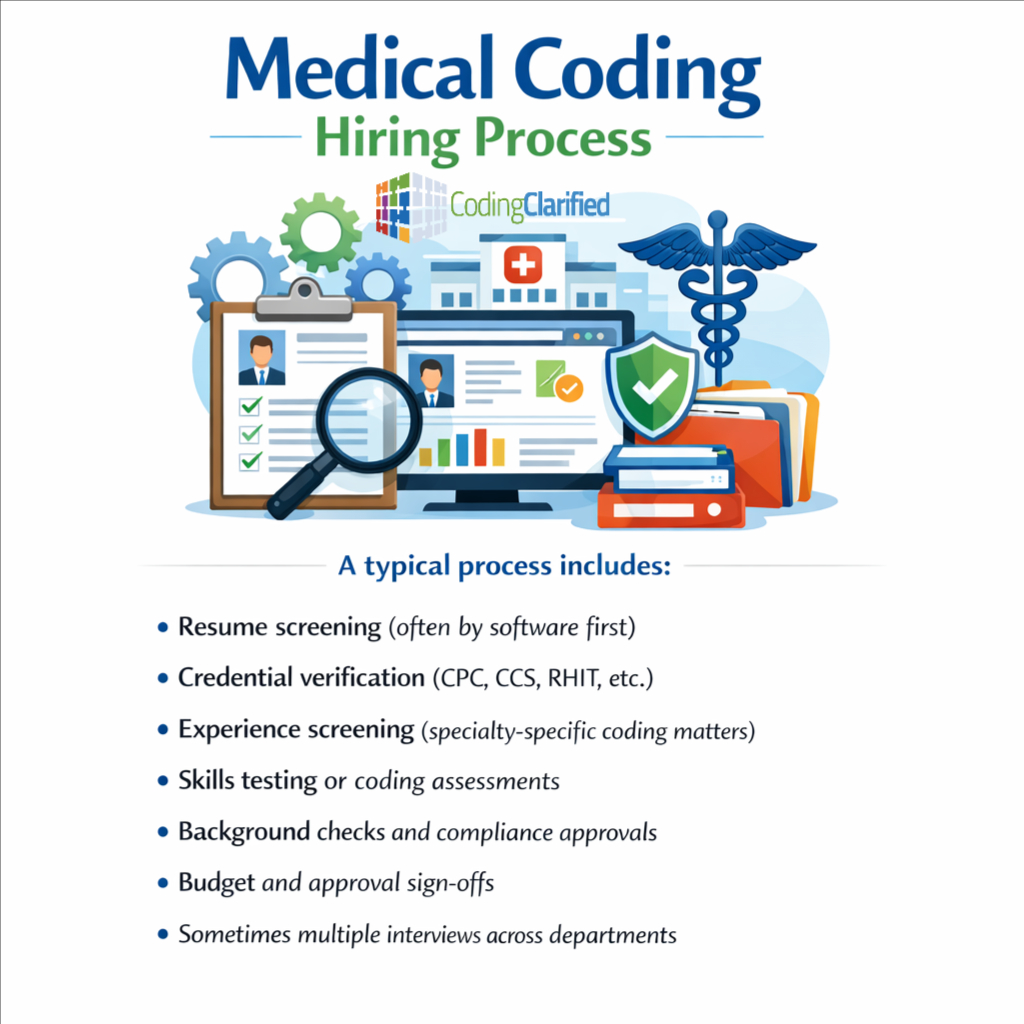
A typical process includes:
-
Resume screening (often by software first)
-
Credential verification (CPC, CCS, RHIT, etc.)
-
Experience screening (specialty-specific coding matters)
-
Skills testing or coding assessments
-
Background checks and compliance approvals
-
Budget and approval sign-offs
-
Sometimes, multiple interviews across departments
This alone can take weeks or months, even when a department urgently needs coders.
Why Does It Take So Long to Get Hired?
Medical coding is tied directly to revenue and compliance
A single coding error can lead to:
-
Claim denials
-
Payer audits
-
Recoupments
-
Compliance risk
Because of this, employers move slowly and cautiously. Hiring the wrong coder costs far more than waiting longer to hire the right one.
Multiple departments are involved
Coding managers rarely hire alone. HR, compliance, revenue integrity, finance, and sometimes legal all have a say. Each step adds delays.
Internal candidates often exist
Many organizations are required to:
-
Post jobs publicly, even if they expect to promote internally
-
Consider internal transfers before external hires
This is one reason you may see a job posted but never receive an update.
Hiring freezes and budget delays
Healthcare organizations frequently:
-
Pause hiring due to budget shifts
-
Lose approval mid-process
-
Delay onboarding until the next fiscal cycle
The job may remain posted even if hiring is temporarily stalled.
Why Is There So Little Communication?
This is one of the biggest frustrations coders face.
Common reasons include:
-
HR manages hundreds of applicants per role
-
Automated systems send few updates
-
Recruiters are not allowed to provide detailed feedback
-
Silence often means the role is still under review—not that you were rejected
Unfortunately, no communication does not mean no interest—it usually means no final decision yet.
Why Is the Job Still Listed If They’re Not Hiring?
This is extremely common in medical coding.
Reasons include:
-
Legal or internal posting requirements
-
Resume pipeline building
-
High turnover roles
-
Evergreen job postings used to collect candidates year-round
Many coding jobs are listed continuously even when positions are filled intermittently.
Why Is the Pay So Low for Medical Coding Jobs?
Several factors drive lower pay offers:
Oversupply of entry-level coders
The number of newly certified coders far exceeds the number of true entry-level roles.
Employers want experience without training
Organizations often want coders who:
-
Can code independently on day one
-
Require minimal auditing
-
Understand payer rules and specialty nuances
This reduces training costs—but also limits opportunities for new coders.
Remote work has changed salary structures
Remote coding expanded applicant pools nationwide. Employers may:
-
Offer pay based on regional averages
-
Use lower salaries to offset remote flexibility
Productivity expectations are high
Pay is often tied to:
-
Charts per hour
-
Accuracy thresholds
-
Audit outcomes
Entry-level pay may increase only after productivity benchmarks are met.
Why New Coders Struggle to Get Hired
This is the hardest truth to hear—but it’s important.
The certification alone is not enough
A CPC proves foundational knowledge, not job-ready performance.
Employers want:
-
Real-world chart experience
-
Specialty knowledge
-
Familiarity with EHR systems
-
Understanding of payer guidelines
-
Audit feedback history
New coders often lack exposure to these areas.
“Entry-Level” rarely means zero experience
Many “entry-level” coding jobs still expect:
-
1–2 years of practical coding
-
Internship, practicum, or externship experience
-
Specialty coding exposure
What Coders Can Do to Improve Hiring Success
Build experience intentionally
-
Coding internships or practicums
-
Practicode or similar programs
-
Auditing sample cases
-
Specialty-focused education
Strengthen your resume for ATS systems
-
Use coding keywords correctly
-
Match job descriptions closely
-
Highlight measurable skills, not just certification
Network aggressively
Many coding jobs are filled through:
-
Referrals
-
Internal recommendations
-
Professional groups
-
LinkedIn visibility
Your network truly is your job pipeline.
Be strategic with expectations
-
First roles may not be ideal
-
Pay may start lower and increase with experience
-
Contract or hybrid roles often lead to permanent positions
The Bottom Line
The medical coding hiring process is slow, competitive, and often frustrating—but it is not broken. It is cautious by design.
Understanding why employers move slowly, why communication is limited, and why experience matters allows coders to approach the job market strategically rather than emotionally.
Success in medical coding hiring comes from:
-
Patience
-
Persistence
-
Visibility
-
Experience-building
-
Strategic networking
The coders who understand the system—and work within it—are the ones who eventually break through.