
Medical Coding for the Male Reproductive System: Guidelines and Tips
Medical coding for the male reproductive system requires a strong understanding of anatomy, clinical conditions, and procedural terminology. Coders must accurately translate provider documentation into ICD-10-CM diagnosis codes and CPT/HCPCS procedure codes to ensure proper reimbursement and compliance.
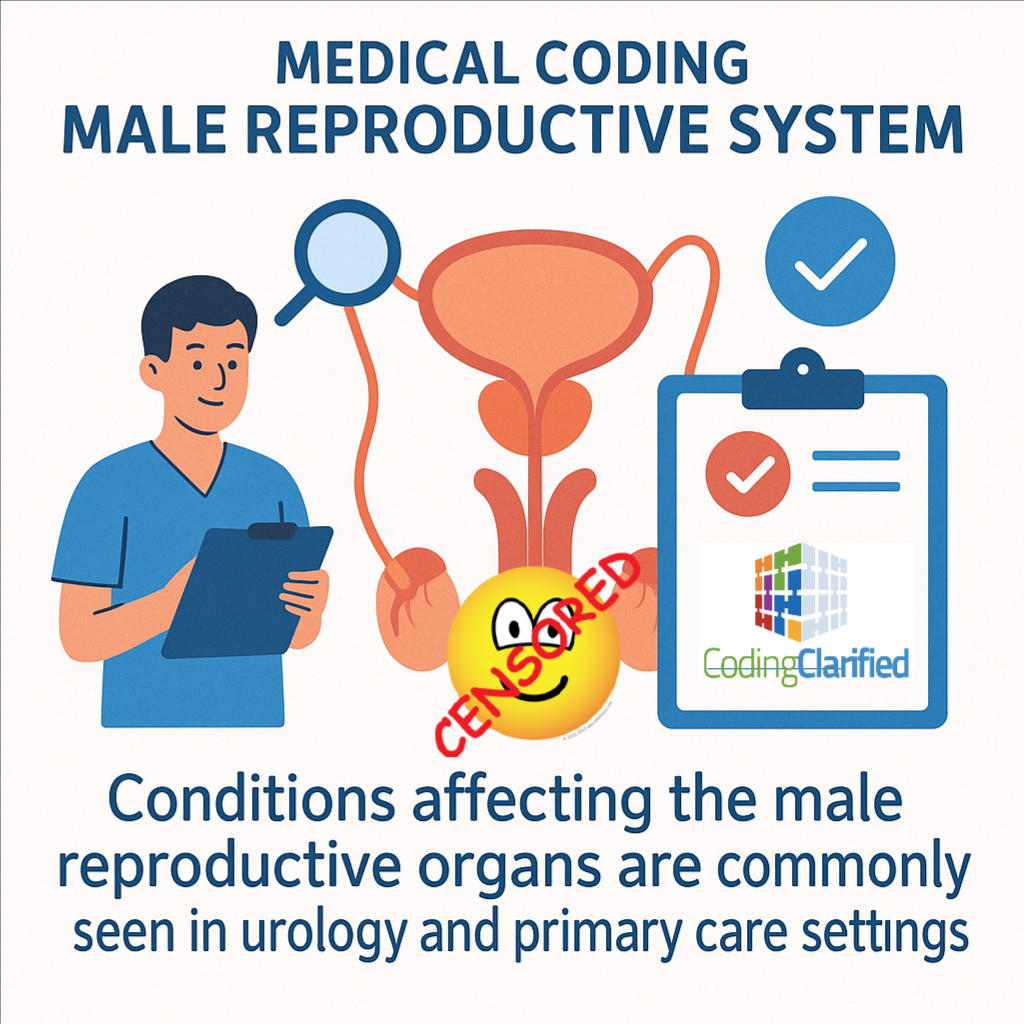
The male reproductive system includes the penis, testes, scrotum, epididymis, vas deferens, seminal vesicles, prostate gland, and urethra. Conditions affecting these organs are commonly seen in urology and primary care settings, making accuracy and attention to detail essential for coders.
Common ICD-10-CM Diagnosis Code Categories
Coders frequently assign diagnosis codes from the following categories:
N40–N53: Diseases of male genital organs
-
N40.0 – Benign prostatic hyperplasia (BPH) without lower urinary tract symptoms
-
N41.0 – Acute prostatitis
-
N45.1 – Epididymitis
-
N48.1 – Balanitis
-
N50.819 – Testicular pain
C60–C63: Male reproductive system neoplasms
-
C61 – Malignant neoplasm of prostate
-
C62.9 – Malignant neoplasm of testis, unspecified
Z codes for screening and history
-
Z12.5 – Encounter for screening for malignant neoplasm of prostate
-
Z80.42 – Family history of malignant neoplasm of prostate
Common CPT® Procedure Code Ranges
Male reproductive procedures are most often reported with CPT codes from the 54000–55899 range:
Urologic and male genital procedures
-
54150 – Circumcision (using clamp or other device)
-
54500 – Biopsy of testis
-
54640 – Orchiopexy (undescended testicle repair)
-
54800–54840 – Hydrocelectomy procedures
-
55100 – Vasectomy
-
55801–55845 – Prostatectomy procedures
Common imaging and diagnostic services
-
76870 – Scrotal and testicular ultrasound
-
51798 – Measurement of post-void residual urine
Documentation Requirements for Accurate Coding
To code these services correctly, documentation should clearly include:
-
Specific anatomical site involved (left, right, bilateral)
-
Type of condition (acute, chronic, infectious, traumatic, neoplastic)
-
Severity and associated symptoms (pain, swelling, urinary issues)
-
Relevant history (family history of prostate cancer, prior surgeries)
-
Procedure details, including approach and technique
Insufficient documentation often leads to denials or downcoding.
Coding Guidelines and Best Practices
Code to the Highest Specificity
Always select the most specific ICD-10-CM code available. Avoid unspecified codes unless medical record documentation truly lacks detail.
Use Laterality When Required
Many testicular and scrotal conditions require laterality. Ensure the record identifies left, right, or bilateral involvement.
Follow Medical Necessity Rules
Payers require diagnosis codes that support the medical need for the procedure performed. Make sure CPT codes are properly linked to the appropriate ICD-10-CM codes.
Apply Global Surgery Rules
Procedures like vasectomy and prostate surgery may have global periods. Be aware of preoperative, intraoperative, and postoperative service bundling.
Medical Coding and Billing and the Global Period
Watch for Bundling and NCCI Edits
Use the National Correct Coding Initiative edits to identify services that may be bundled and determine when modifiers (such as -59 or X modifiers) are appropriate.
Medical Coding Bundling and Upcoding
Distinguish Between Diagnostic and Therapeutic Services
Clearly identify whether procedures were performed for diagnostic evaluation (such as biopsy) or treatment (such as excision or repair).
Common Coding Errors to Avoid
-
Using unspecified codes when documentation supports more specificity
-
Missing laterality for testicular or scrotal diagnoses
-
Incorrectly unbundling procedures
-
Failing to link CPT codes to supporting diagnosis codes
-
Overlooking global period restrictions
Helpful Tips for Medical Coders
-
Stay updated on annual ICD-10-CM and CPT changes affecting urology.
-
Always review operative notes in full, not just summaries.
-
Query the provider when documentation is unclear or missing key details.
-
Cross-check NCCI edits before submitting claims.
-
Keep payer-specific policies for prostate and testicular procedures readily available.
Medical coding for the male reproductive system demands precision, strong anatomical knowledge, and careful review of clinical documentation. When coders follow official guidelines, ensure medical necessity, and apply correct procedural rules, they help reduce denials, ensure compliance, and improve revenue cycle efficiency.
MDC 12 Diseases and Disorders of the Male Reproductive System