
Medical Coding “Clarified”: AMA Mid-Year CPT Updates (Effective July 1)
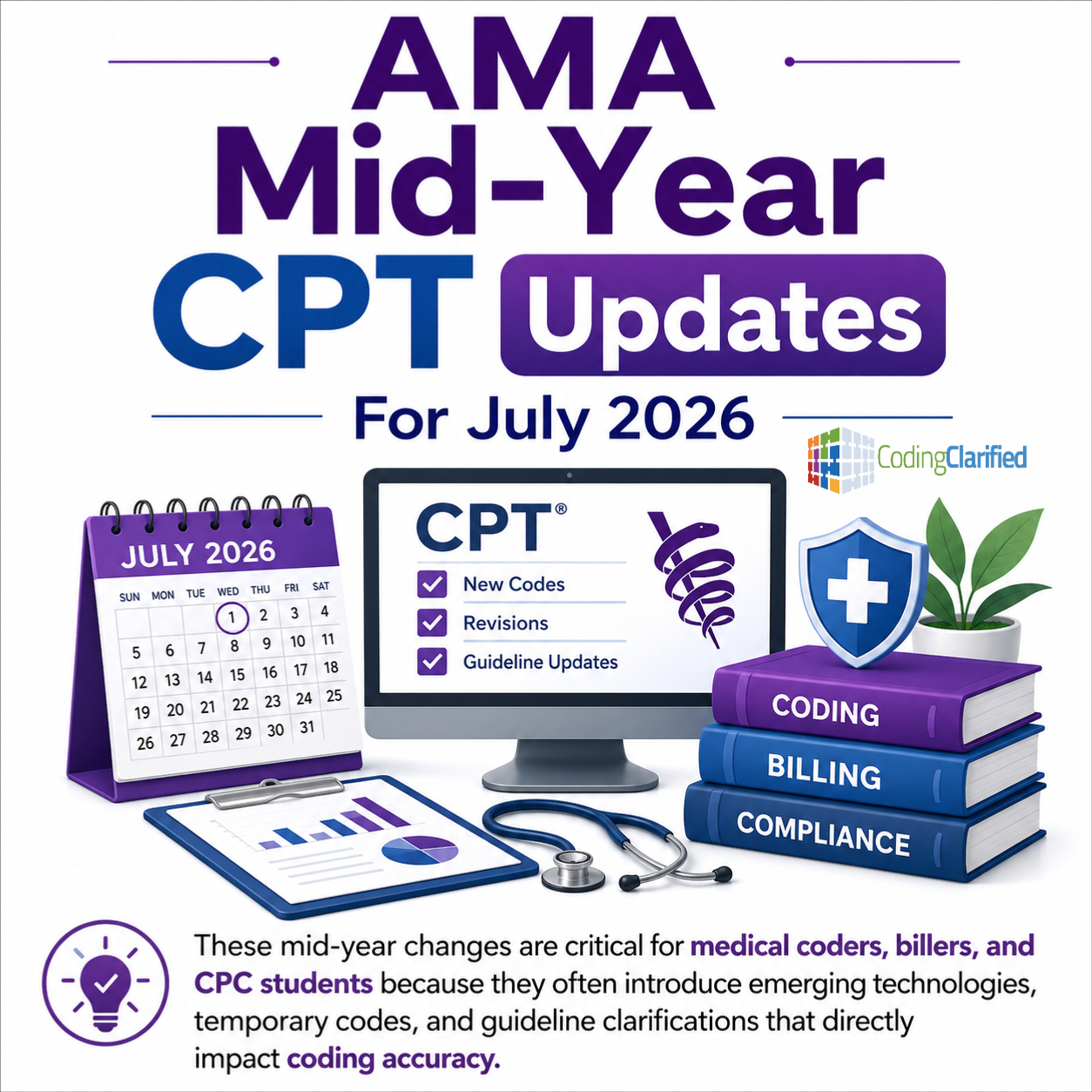
The American Medical Association (AMA) periodically releases mid-year CPT code updates effective July 1, in addition to the major annual updates each January. These mid-year changes are critical for medical coders, billers, and CPC students because they often introduce emerging technologies, temporary codes, and guideline clarifications that directly impact coding accuracy.
Understanding these updates is essential to avoid claim denials, ensure compliance, and stay current with evolving healthcare services.
What Are Mid-Year CPT Updates?
CPT updates effective July 1 are typically focused on:
- Category III Codes (Temporary Codes)
- New technology and emerging procedures
- Guideline revisions or clarifications
- Occasional code deletions or descriptor changes
Unlike January updates, mid-year changes are usually more targeted and innovation-driven, rather than large-scale revisions.
Why These Updates Matter for Coders
The CPT code set is the foundation of reporting medical procedures and services in the U.S.
Mid-year updates matter because:
- They capture new medical technologies early
- They help providers receive reimbursement for emerging services
- They ensure coding reflects current clinical practice
- They support data tracking and research for new procedures
Failure to implement July updates can lead to:
- Claim denials
- Incorrect reporting
- Compliance risks
Key Areas Impacted by Recent CPT Updates
Even though July updates are smaller than annual releases, they often align with broader trends seen in the latest CPT changes.
Emerging Technology (Category III Codes)
- Category III codes are used for:
- New procedures
- Experimental treatments
- Advanced diagnostics
- These codes allow:
- Data collection
- Future transition to Category I codes
Example trends:
- AI-assisted diagnostics
- Advanced imaging techniques
- New surgical technologies
The AMA continues expanding these areas to reflect modern medicine.
Digital Health & Remote Monitoring
Recent CPT updates show strong growth in:
- Remote physiologic monitoring (RPM)
- Short-duration monitoring services
- Virtual care reporting
New codes now allow reporting for shorter monitoring periods (2–15 days) instead of requiring a full 30 days.
This reflects a major shift toward technology-driven patient care.
Artificial Intelligence (AI) in Healthcare
The AMA has introduced codes for:
- AI-assisted imaging analysis
- Cardiac risk assessment tools
- Algorithm-driven diagnostics
These updates recognize AI as a standard part of clinical decision-making, not just experimental technology.
Surgical and Procedural Updates
Although most surgical changes occur annually, mid-year updates may include:
- New techniques or device-based procedures
- Clarifications to existing code descriptors
- Add-on or bundled services
For example, recent updates include:
- Expanded vascular procedures
- Device-based interventions
- Minimally invasive techniques
CPC Exam & Real-World Coding Tips
Always Check Effective Dates
- Not all CPT codes are effective January 1
- Mid-year codes begin July 1
- Using a code before its effective date = automatic denial
Watch Category III Codes Closely
- Frequently tested concept on the CPC exam
- Often confused with Category I codes
Remember:
- Category III = temporary + emerging tech
- May not always be reimbursed
Review CPT Guidelines First
Before assigning a new code:
- Check section guidelines
- Review parenthetical notes
- Look for bundling rules
Stay Updated in Your Manuals
For accuracy:
- Update CPT books or eBooks mid-year
- Use tools like:
- AAPC Codify
- Encoder software
Missing an update can impact:
- Compliance
- Revenue cycle
- Audit outcomes
Common Mistakes Coders Make
- Using outdated CPT codes after July 1
- Ignoring Category III codes
- Missing guideline changes
- Assuming all updates occur January 1
Coding Clarified Final Thoughts
The AMA’s mid-year CPT updates may be smaller than annual releases, but they are high-impact for innovation and compliance.
For medical coders and CPC students, these updates represent:
- The future of coding
- The evolution of healthcare technology
- A critical opportunity to stay ahead professionally
Staying current with CPT changes is not optional—it is essential for accurate coding, proper reimbursement, and long-term success in the field. AMA CPT® Assistant