
What to Do With Old, Outdated Medical Coding Manuals
Medical coding manuals are essential tools—but they don’t stay current forever. Each year, CPT, ICD-10-CM, and HCPCS Level II code sets are updated with new codes, deleted codes, and revised guidelines. Using outdated manuals can lead to coding errors, claim denials, compliance risks, and exam failures.
So what should medical coders do with old coding books once a new edition is released?
Why You Should Not Use Outdated Coding Manuals
Old manuals should never be used for:
-
Current claim submission
-
Exam preparation (CPC, CCS, etc.)
-
Coding audits or compliance reviews
-
Workplace production coding
Code changes occur annually, and even one deleted or revised code can significantly impact reimbursement and compliance.
Smart Ways to Use Old Medical Coding Books
While outdated manuals shouldn’t be used for live coding, they still have value.
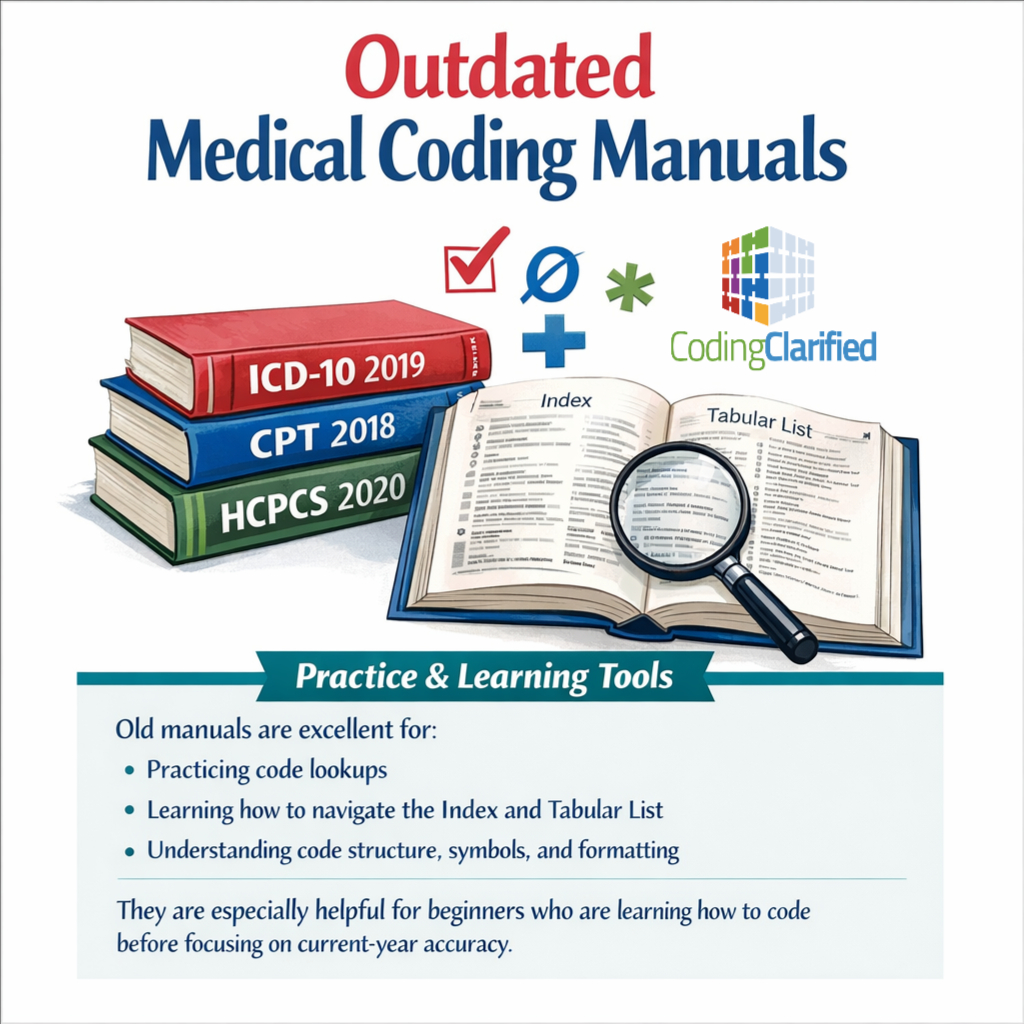
Practice & Learning Tools
Old manuals are excellent for:
-
Practicing code lookups
-
Learning how to navigate the Index and Tabular List
-
Understanding code structure, symbols, and formatting
They are especially helpful for beginners who are learning how to code before focusing on current-year accuracy.
Reference for Historical Claims
Occasionally, coders may need to review documentation or claims from prior years. Older manuals can help confirm:
-
Codes that were valid during a specific date of service
-
Historical guidelines that applied at that time
Always match the manual year to the date of service.
Teaching & Classroom Use
Instructors and study groups often use old manuals for:
-
Demonstration purposes
-
Coding exercises
-
Group discussions
This prevents wear and tear on current books and keeps newer manuals clean.
Notes, Highlights, and Learning Examples
Your older books may contain:
-
Helpful handwritten notes
-
Color-coded highlights
-
Mnemonics and reminders
These can still serve as learning aids, even if the codes themselves are outdated.
What to Do If You No Longer Need Them
If you’re truly done with your old manuals, here are responsible options:
Donate Them
Consider donating to:
-
Medical coding students or study groups
-
Community colleges or training programs
-
Libraries or workforce development centers
Be clear that the books are outdated and for educational use only.
Recycle When Appropriate
If the manuals are damaged, heavily marked, or no longer useful:
-
Remove plastic covers, tabs, or bindings if required
-
Recycle according to local guidelines
This is often the best choice for very old editions.
Repurpose Creatively
Some coders use old manuals to:
-
Create personal study binders
-
Cut out sections for flashcards or worksheets
-
Use for anatomy or terminology references
Best Practice: Always Code With the Correct Year
Professional medical coders should:
-
Use the coding manuals that match the date of service
-
Stay current with annual updates
-
Verify guidelines, parenthetical notes, and instructional changes
Keeping at least the current year manuals is essential for accuracy and compliance.
Old medical coding manuals are not useless—but they do have limits. When used appropriately, they can support learning, teaching, and historical reference. When used incorrectly, they can lead to costly mistakes.
The key is knowing when to use them—and when not to.
Staying current isn’t just about passing exams—it’s about protecting your professional credibility as a medical coder.
AAPC CPC EXAM CODING MANUALS BUNDLE 2026
Using Old manuals on AAPC Exams
How to prep your medical coding manuals for the AAPC CPC exam