
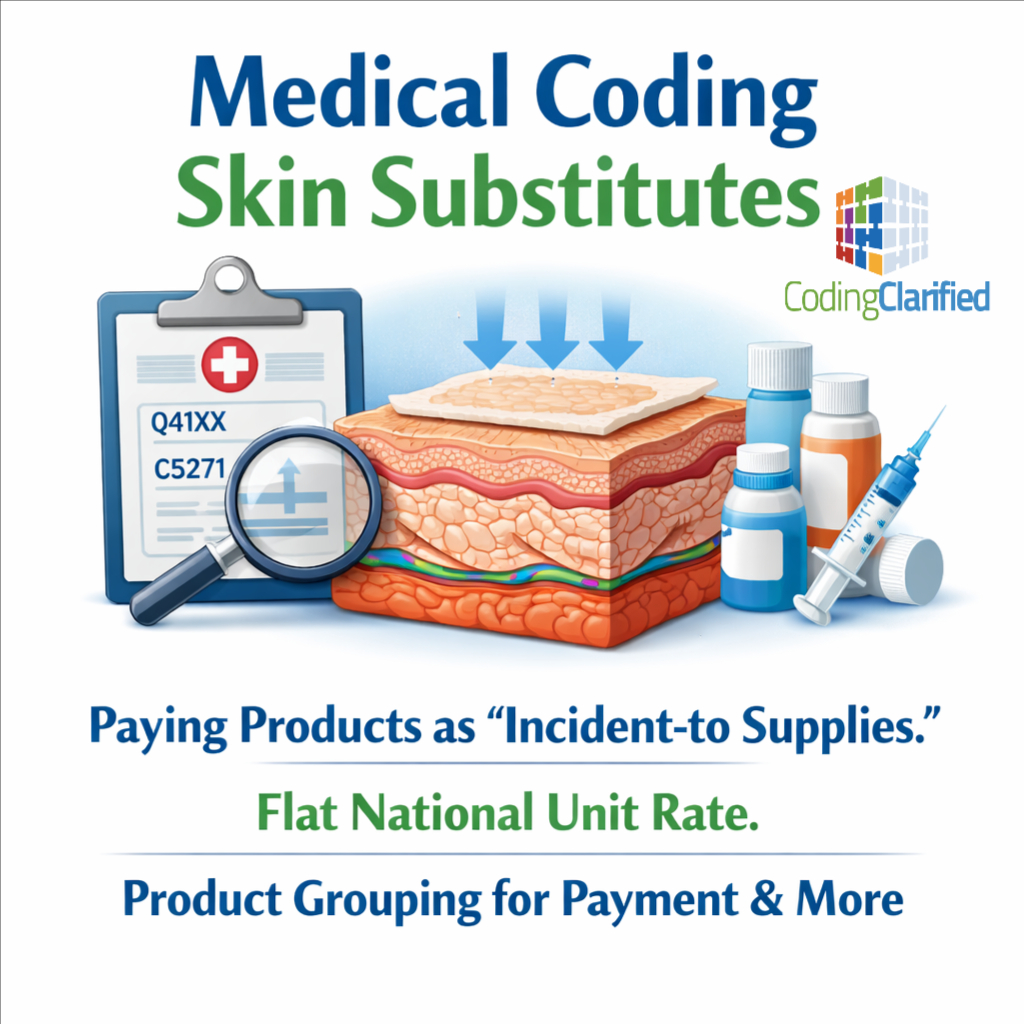
Medical Coding Skin Substitutes in 2026 Guide
Guidelines, Tips, and Payment Policy Changes**
What Are Skin Substitutes?
Skin substitutes — also called cellular and tissue-based products (CTPs) or wound care grafts — are biologic or synthetic products used to treat chronic wounds such as diabetic foot ulcers (DFUs) and venous leg ulcers (VLUs). They are coded and reported alongside application procedures (e.g., CPT codes 15271–15278). These products historically had high Medicare spending and inconsistent reimbursement practices under Part B, which triggered significant reform by CMS.
2026 Medicare Payment Policy Changes for Skin Substitutes
Major Overhaul Effective January 1, 2026
Paying Products as “Incident-to Supplies”
For CY 2026, CMS has changed how Medicare reimburses skin substitutes:
-
CMS no longer reimburses most skin substitutes under the ASP + 6% model previously used for biologics.
-
Instead, most products are now treated as “incident-to supplies” when used as part of a covered application service, both in physician offices and hospital outpatient departments.
Flat National Unit Rate
-
Payment for the vast majority of skin substitutes will be a standardized rate of approximately $127.14-$127.28 per square centimeter for CY 2026.
-
This replaces individually priced HCPCS codes that could vary widely.
Product Grouping for Payment
CMS will align skin substitute payment with FDA regulatory pathways by grouping products into:
-
Human Cells, Tissues, and Cellular and Tissue-based Products (361 HCT/Ps)
-
510(k) Cleared Devices
-
Premarket Approval (PMA) Devices
For 2026, all groups share the same flat rate. Future years may see differentiated rates per category.
Exceptions
-
Products licensed under Section 351 of the Public Health Service Act (“true biologics”) will continue with ASP-based reimbursement and are not subject to the flat-rate model.
Coverage and Local Coverage Determinations (LCDs)
While payment methodology has changed, coverage rules (when Medicare will pay) remain governed by LCDs:
-
MACs (Medicare Administrative Contractors) have developed updated Skin Substitute Grafts/CTP LCDs for DFUs and VLUs effective January 1, 2026.
-
These outline covered products and clinical criteria such as standard care failure and documentation requirements.
-
Some products are “covered,” others “not covered,” with a third list at MAC discretion.
Note: CMS temporarily withdrew updated LCDs that were scheduled to take effect January 1, 2026, indicating possible future refinements. Current LCDs may remain in place until finalized.
Coding and Billing Tips for 2026
Here are practical coder and biller tips to comply with the policy changes:
Check Product Classification
-
Verify the product’s FDA category (361 HCT/P, 510(k), PMA, or Section 351 biologic) to know whether the flat-rate applies or an ASP methodology remains valid.
Use Correct Application CPT Codes
-
Continue reporting CPT 15271–15278 for skin substitute application services. Older HCPCS codes (e.g., C5271–C5278) may be phased out or deleted.
Modifiers & Waste Reporting
Use the appropriate modifiers when applicable:
-
JW — For the discarded (unused) portion of the graft product.
-
JZ — If the entire graft was used with zero waste.
Accurate modifier use prevents underpayments or denials.
Frequency & Medical Necessity Documentation
-
LCDs often allow up to 4 applications over a typical treatment window (12 weeks), with allowances up to 8 applications under documented medical necessity.
-
Detailed documentation (wound assessments, failure of standard care, vascular studies) is critical and frequently audited.
Provider Enrollment & Training
Ensure your facility and providers are properly enrolled to bill Medicare Part B for these services, including up-to-date skin substitute product lists and coverage criteria.
What This Means for Practices
Financial Impact
-
The shift to a standardized flat rate is expected to significantly reduce Medicare spending on skin substitutes in 2026 (CMS estimates up to ~90% savings).
-
Practices that previously relied on higher ASP-linked payments may see lower reimbursement for comparable products.
Fraud & Compliance
-
The policy reduces incentives for overpricing and abusive billing, a key target of CMS enforcement actions.
-
Coders must be vigilant with accurate wound measurements, applicable modifiers, and proper documentation to mitigate audit risk.
Coding Accuracy Is Essential
-
Incorrect coding can lead to denials, refund requests, or higher audit scrutiny. Remaining current with LCDs and payment policy documents is essential.
Final Takeaways
Skin substitute coding and billing in 2026 involves three key pillars:
-
Understanding the new flat-rate payment model for most skin substitute products.
-
Complying with LCD coverage and documentation requirements to support claims.
-
Using accurate CPT/HCPCS coding and modifiers along with proper medical necessity documentation to sustain reimbursement.
Staying informed with CMS policy releases, MAC LCDs, and payer guidance will help reduce claim denials, strengthen compliance, and improve revenue cycle performance as these significant 2026 changes take effect.
Medical Coding for Skin Grafts
Medical Coding and Billing and the Global Period
Federal Registrar 2026 Fee Schedule