
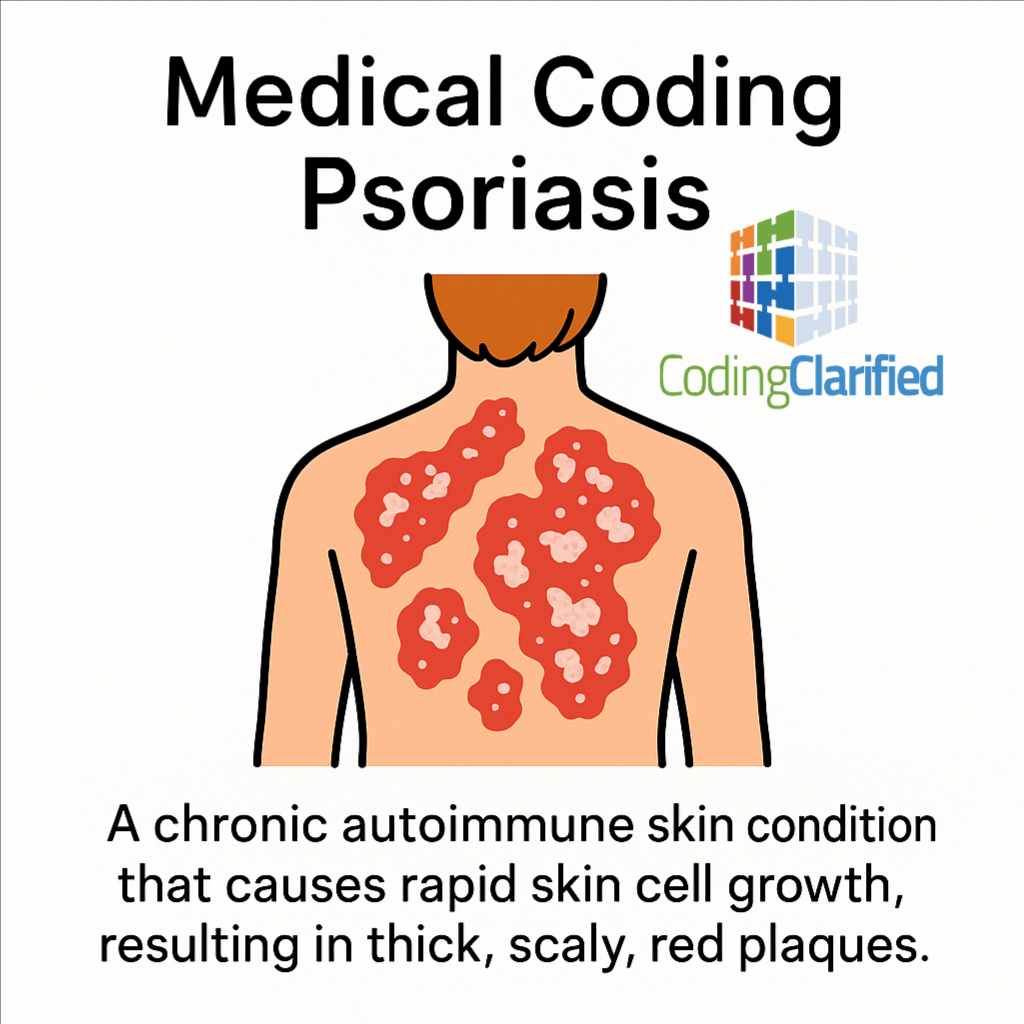
What Is Psoriasis?
Psoriasis is a chronic autoimmune skin condition that causes rapid skin cell growth, resulting in thick, scaly, red plaques. It is often associated with itching, pain, and inflammation. Accurate coding of psoriasis is essential for proper reimbursement, tracking disease severity, and supporting medical necessity.
ICD-10-CM Codes for Psoriasis
Psoriasis is reported using codes from the L40 category in ICD-10-CM. Common codes include:
-
L40.0 – Psoriasis vulgaris (plaque psoriasis)
-
L40.1 – Generalised pustular psoriasis
-
L40.2 – Acrodermatitis continua
-
L40.3 – Pustulosis palmaris et plantaris
-
L40.4 – Guttate psoriasis
-
L40.50–L40.59 – Arthropathic psoriasis (with joint involvement)
-
L40.8 – Other psoriasis
-
L40.9 – Psoriasis, unspecified
Always code to the highest level of specificity supported by the provider documentation.
Key Coding Guidelines
Review Provider Documentation Carefully
Look for details such as:
-
Type of psoriasis
-
Location of affected areas
-
Severity (mild, moderate, severe)
-
Body surface area involved
-
Presence of complications like infection or bleeding
Use Combination Codes When Appropriate
For psoriatic arthritis, use codes from L40.5x and also report applicable M07.- codes when documented and supported.
Avoid Unspecified Codes When Possible
Use L40.9 (unspecified) only when documentation does not support a more specific code.
Medical Coding Unlisted and Unspecified Codes
Link Diagnosis to Medical Necessity
Make sure the ICD-10-CM code clearly supports services such as:
-
Biologic drug therapy
-
Phototherapy
-
Office procedures
-
Infusions or injections
What Is Medical Necessity in Medical Coding & Billing
CPT® Coding for Psoriasis-Related Services
Common CPT codes used in psoriasis care include:
-
Office Visits
-
99202–99215 – E/M services
-
-
Phototherapy
-
96910 – UV-B phototherapy
-
96912 – UV-B with tar preparation
-
96913 – PUVA therapy
-
-
Biologic and Injection Services
-
96372 – Therapeutic injection administration
-
J-codes for injected or infused biologic medications
-
Common Coding Mistakes to Avoid
-
Using unspecified psoriasis codes when the type is clearly documented
-
Failing to code associated psoriatic arthritis
-
Missing body area or severity details
-
Not linking diagnosis codes to procedures and medications
Tips for Accurate Psoriasis Coding
-
Always verify the type and severity in the provider’s note
-
Watch for terms such as plaque, guttate, pustular, or arthropathic
-
Ensure that documentation supports medical necessity for biologics and phototherapy
-
Stay updated with annual ICD-10-CM and CPT code changes
Accurate medical coding for psoriasis improves claim approval, supports proper reimbursement, and ensures compliance with payer guidelines. By coding to the highest level of specificity and following official ICD-10-CM and CPT guidelines, coders can reduce denials and improve claim accuracy.
2023 MIPS Measure #485: Psoriasis – Improvement in Patient-Reported Itch Severity