Medical Coding for Podiatry: Guidelines & Tips for Coders and CPC Students
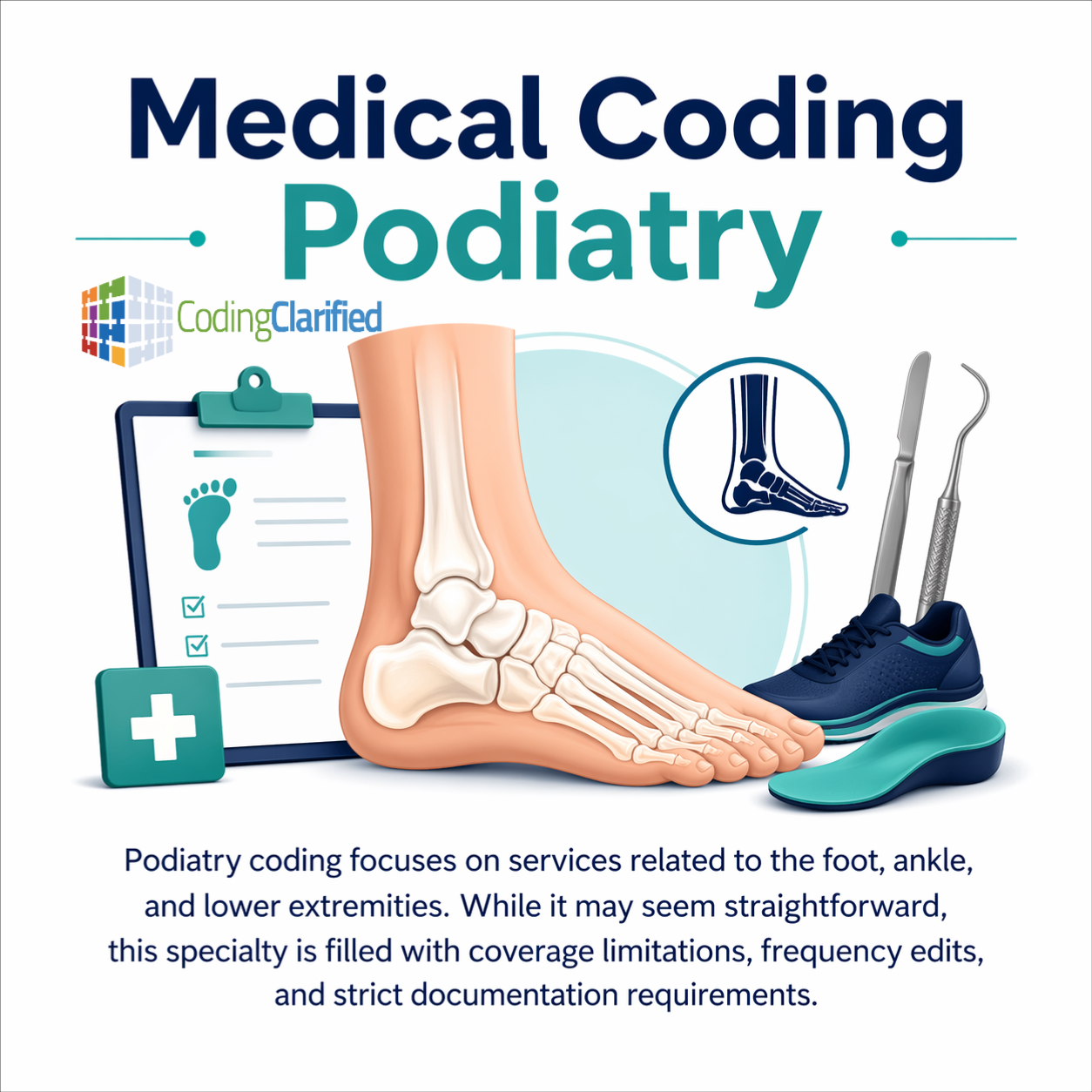
Podiatry coding focuses on services related to the foot, ankle, and lower extremities. While it may seem straightforward, this specialty is filled with coverage limitations, frequency edits, and strict documentation requirements—making it a common trouble spot for new coders and even experienced professionals.
This guide breaks down key podiatry coding concepts, common pitfalls, and practical tips to help you succeed in both real-world coding and on the CPC exam.
What is Podiatry Coding?
Podiatry involves diagnosing and treating conditions such as:
- Nail disorders (onychomycosis, ingrown nails)
- Calluses and corns
- Foot deformities (bunions, hammertoes)
- Diabetic foot care
- Wounds and ulcers
Coders must apply CPT®, ICD-10-CM, and HCPCS Level II codes correctly while ensuring medical necessity and payer guidelines are met.
Common CPT Codes in Podiatry
Here are some frequently used CPT codes:
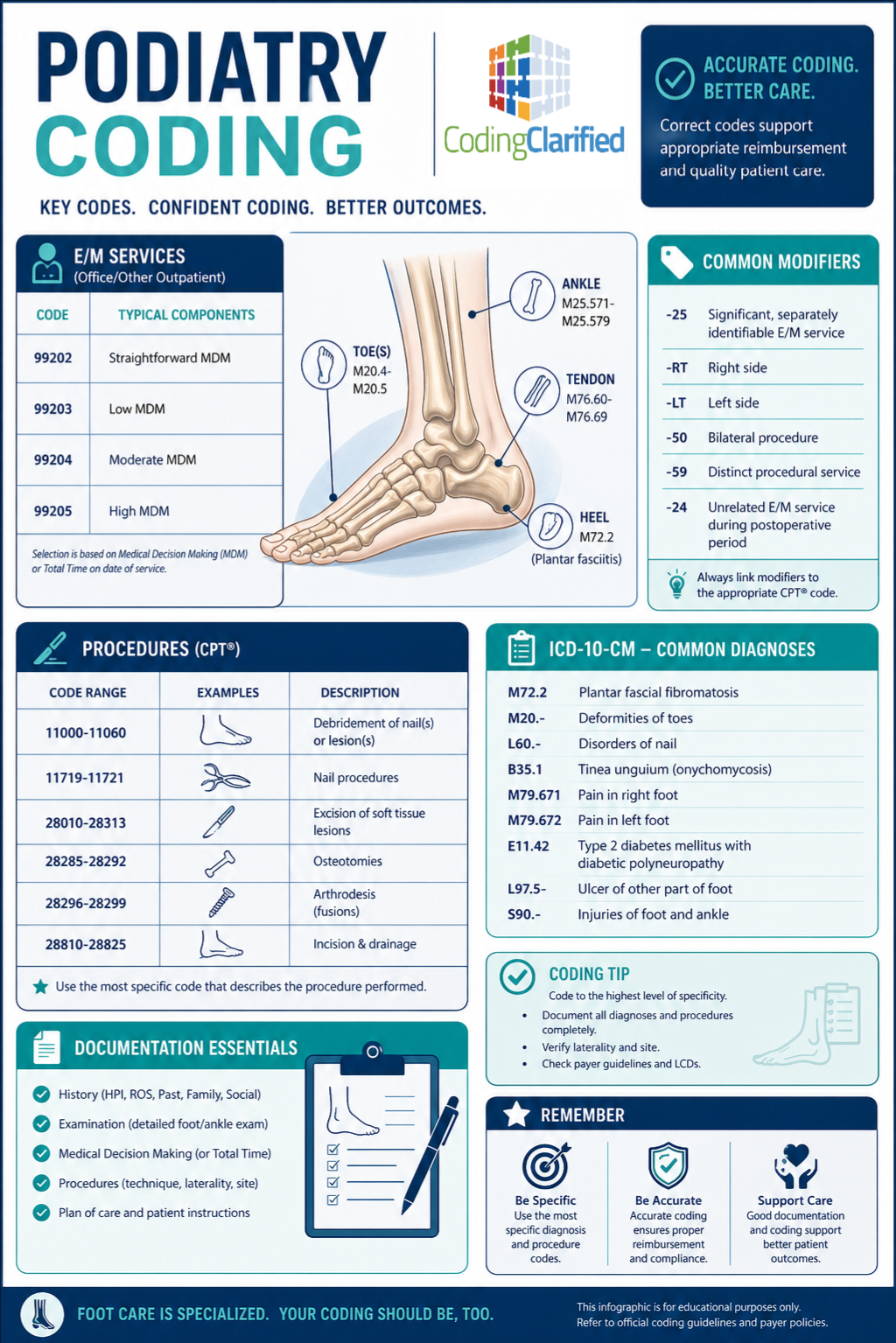
- 11720–11721 – Debridement of nail(s)
- 11055–11057 – Paring/cutting of benign hyperkeratotic lesions (corns/calluses)
- 11730–11732 – Avulsion of nail plate
- 28285 – Correction of hammertoe
- 28080 – Excision of neuroma
Tip:
Always verify:
- Number of lesions or nails treated
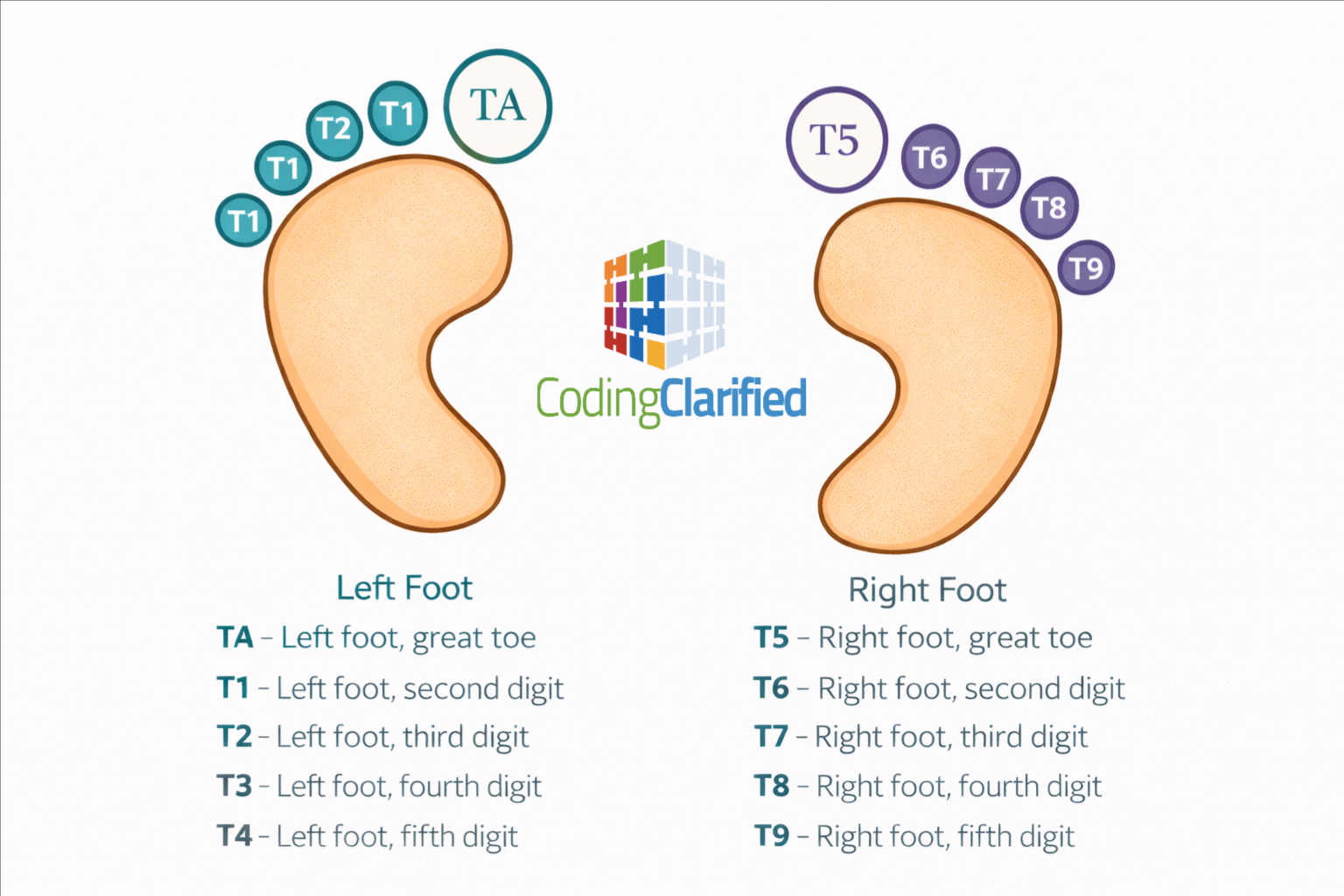
- Laterality (RT, LT, TA, T1–T9 modifiers when applicable)
ICD-10-CM Coding Considerations
Diagnosis coding must support medical necessity. Common podiatry diagnoses include:
- Onychomycosis (B35.1)
- Corns and Callosities (L84)
- Ingrown Nail (L60.0)
- Diabetes Mellitus with foot complications (E08–E13 with additional codes)
Tip:
For routine foot care, diagnosis selection is critical—many services are non-covered unless systemic conditions are present.
Routine Foot Care: The Biggest Coding Challenge
Routine foot care (trimming nails, removing calluses) is generally not covered by Medicare unless the patient has a qualifying systemic condition such as:
- Diabetes
- Peripheral vascular disease
- Neuropathy
Required Documentation Includes:
- Class findings (Class A, B, or C)
- Supporting systemic condition
- Physician involvement (when required)
Key HCPCS Modifiers:
- Q7 – One Class A finding
- Q8 – Two Class B findings
- Q9 – One Class B and two Class C findings
Modifier Usage in Podiatry
Modifiers are critical in podiatry coding due to frequent bilateral and multiple procedures.
Common Modifiers:
- -RT / -LT – Right/Left foot
- -59 – Distinct procedural service
- -XS – Separate structure
- Toe Modifiers:
- T1–T5 (left foot toes)
- T6–T9 (right foot toes)
Tip:
Use modifiers only when supported by documentation—incorrect modifier use is a top audit risk.
Nail Debridement vs. Routine Nail Care
Understanding the difference is essential:
- Debridement (11720–11721)
Requires thickened, dystrophic nails with pain or infection - Routine trimming (G0127)
Typically non-covered unless criteria are met
Tip:
Do not confuse cosmetic or hygienic trimming with medically necessary debridement.
Wound Care and Ulcer Coding
Foot ulcers are common, especially in diabetic patients.
Coding Tips:
- Use L97- codes for non-pressure ulcers (include site and severity)
- Link to diabetes codes when applicable
- Document:
- Depth (skin, fat, muscle, bone)
- Location
- Laterality
Medical Coding for Pressure Ulcers
Common Podiatry Coding Mistakes
Avoid these frequent errors:
- Coding routine foot care without medical necessity
- Missing or incorrect modifiers
- Not documenting number of lesions/nails
- Using unspecified diagnosis codes when more detail is available
- Failing to link systemic conditions to foot care services
CPC Exam Tips for Podiatry Questions
If you see podiatry on the exam, focus on:
- Counting lesions or nails correctly
- Identifying whether the service is routine vs. medically necessary
- Applying modifiers appropriately
- Watching for keywords like:
- “painful,” “infected,” “thickened”
- “diabetic,” “neuropathy,” “circulatory disorder”
Time Strategy:
- Quickly identify the type of service (paring, debridement, avulsion)
- Confirm units and modifiers
- Don’t overthink—most answers hinge on counting and documentation clues
Coding Clarified Final Thoughts
Podiatry coding requires attention to detail, strong documentation review, and a clear understanding of payer policies—especially for routine foot care.
For CPC students and new coders, mastering this specialty can give you a major advantage, as many struggle with its nuances.
Key takeaway:
If documentation does not clearly support medical necessity, the service is likely non-covered—and coding it incorrectly can lead to denials or audits.
American College of Foot and Ankle Surgeons