
Medical Coding for Dementia: Guidelines and Tips
Dementia is a progressive neurological condition that affects memory, thinking, behavior, and the ability to perform daily activities. Accurate medical coding for dementia is critical for proper reimbursement, quality reporting, and continuity of care. This blog explains ICD-10-CM dementia coding guidelines and provides practical tips to help medical coders ensure accuracy and compliance.
What Is Dementia?
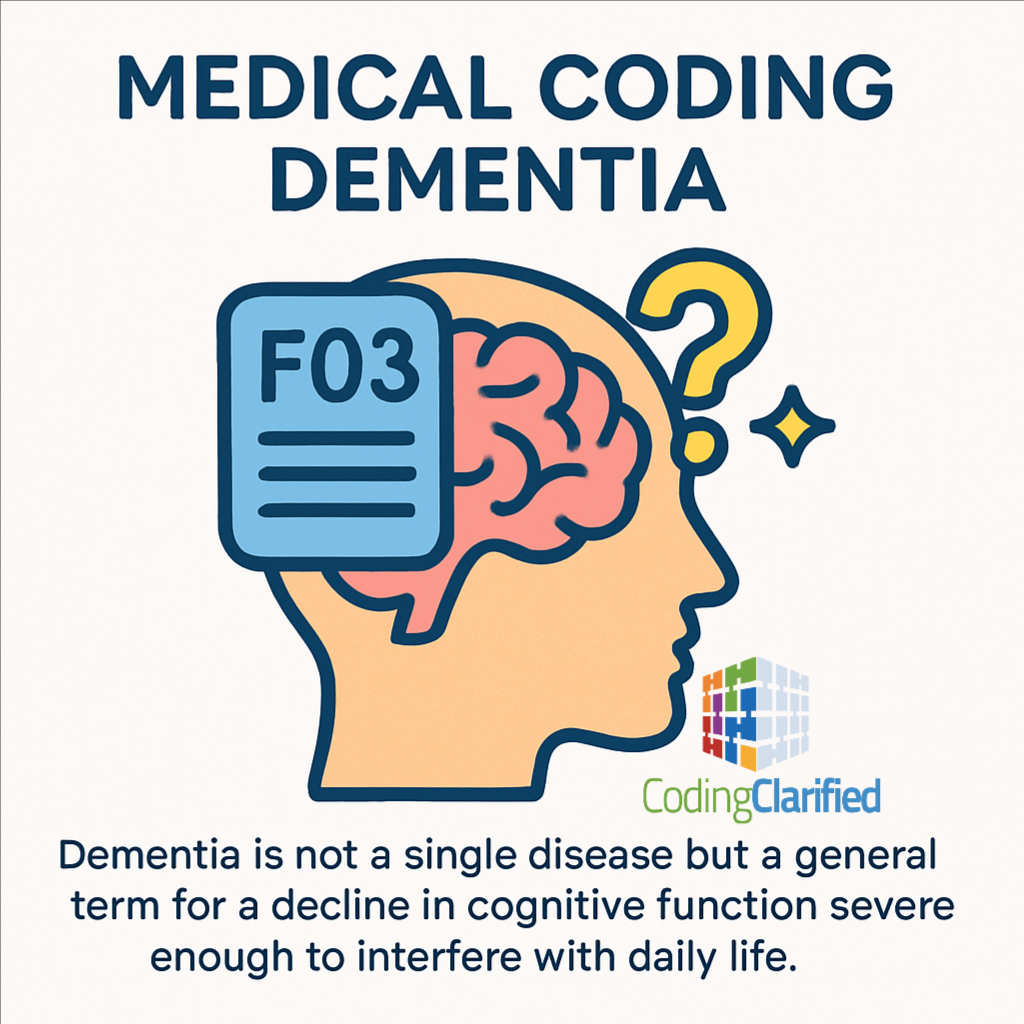
Dementia is not a single disease but a general term for a decline in cognitive function severe enough to interfere with daily life. Common types of dementia include:
-
Alzheimer’s disease
-
Vascular dementia
-
Lewy body dementia
-
Frontotemporal dementia
-
Mixed dementia
Each type has its own ICD-10-CM code category and documentation requirements.
ICD-10-CM Code Categories for Dementia
Dementia codes are found in Chapter 5: Mental, Behavioral and Neurodevelopmental Disorders and in Chapter 6: Diseases of the Nervous System.
Common code categories include:
F01 – Vascular dementia
F02 – Dementia in other diseases classified elsewhere
F03 – Unspecified dementia
G30 – Alzheimer’s disease
Additional codes are often required to capture behavioral disturbances or the underlying condition.
Medical Coding Alzheimer’s Disease
Key Coding Guidelines for Dementia
Follow these important ICD-10-CM guidelines when coding dementia:
1. Identify the Type of Dementia
Provider documentation should clearly state the type, such as Alzheimer’s, vascular, or Lewy body dementia. Avoid using unspecified codes when more detail is available.
2. Code Behavioral Disturbances When Documented
Use combination codes or additional codes to report:
-
Agitation
-
Psychosis
-
Wandering
-
Aggressive behavior
Example:
-
Dementia with behavioral disturbance
-
Dementia without behavioral disturbance
3. Report the Underlying Condition When Required
Certain dementia codes require coding the underlying disease first (such as Parkinson’s or Huntington’s disease).
4. Use Additional Codes for Associated Conditions
Common associated conditions include:
-
Delirium
-
Depression
-
Mood disorders
-
Hallucinations
Common Dementia Coding Errors to Avoid
Avoid these frequent mistakes:
-
Using F03 (Unspecified dementia) when a specific type is documented
-
Missing behavioral disturbance documentation
-
Forgetting to code underlying or associated conditions
-
Failing to follow “code first” instructions
Documentation Tips for Accurate Coding
Encourage providers to document:
-
Exact type of dementia
-
Severity and stage (mild, moderate, severe)
-
Presence or absence of behavioral disturbances
-
Any underlying neurologic or systemic diseases
-
Impact on daily function
Better documentation leads to more accurate coding and fewer claim denials.
Pro Tips for Medical Coders
Here are practical tips for success:
-
Always review the physician’s progress notes, assessments, and care plans
-
Watch for keywords like with behavioral disturbance or without behavioral disturbance
-
Use the ICD-10-CM coding book notes and instructional symbols
-
Stay updated on annual ICD-10-CM guideline changes
Why Accurate Dementia Coding Matters
Correct coding supports:
-
Appropriate reimbursement
-
Risk adjustment and quality scoring
-
Better patient care tracking
-
Legal and regulatory compliance
Dementia coding requires close attention to detail and complete provider documentation. Understanding dementia types, behavioral symptoms, and ICD-10-CM rules helps medical coders reduce errors and improve compliance.
By following official coding guidelines and using the tips outlined above, coders can confidently code dementia diagnoses and support better healthcare outcomes.