
Care Plan Oversight (CPO) in Medical Coding
Guidelines, Documentation Requirements, and Coding Tips
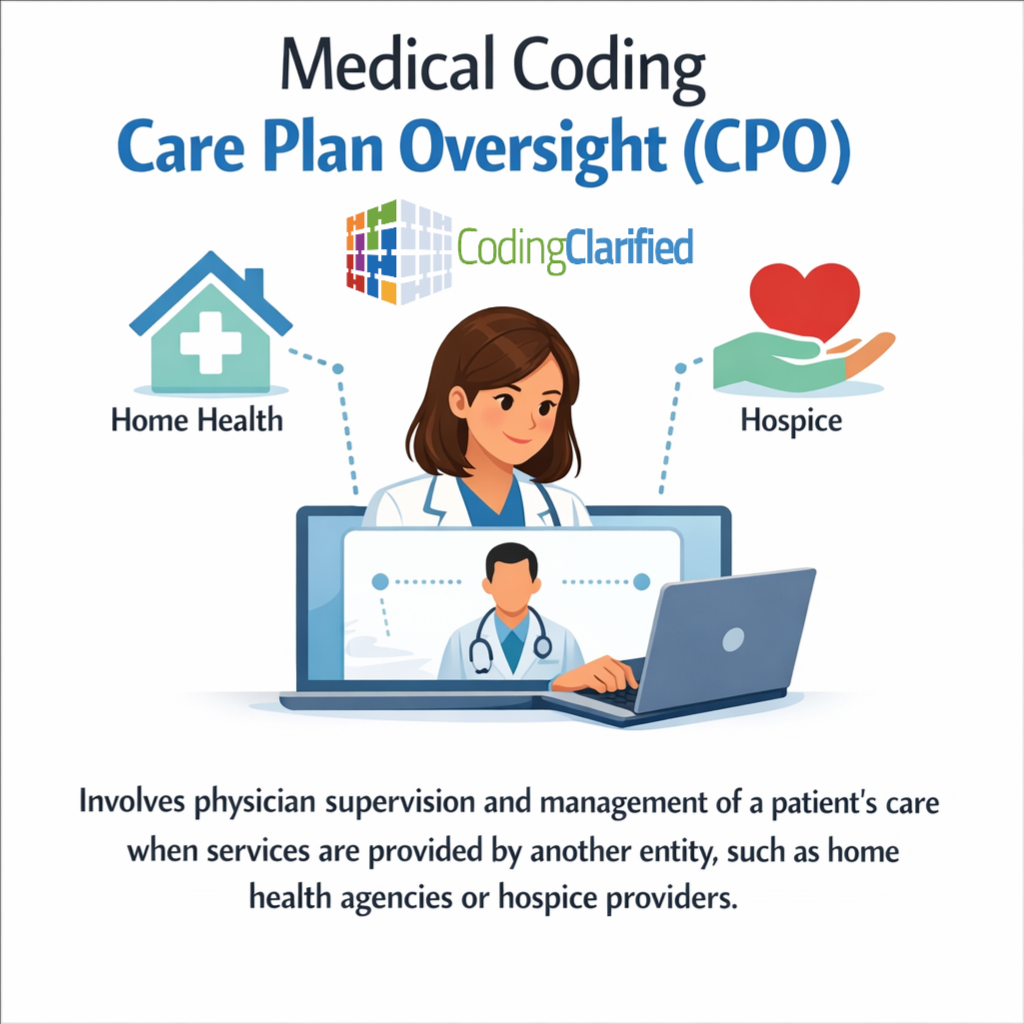
Care Plan Oversight (CPO) is a critical but often misunderstood area of medical coding. It involves physician supervision and management of a patient’s care when services are provided by another entity, such as home health agencies or hospice providers.
Understanding how to properly code CPO services ensures accurate reimbursement and compliance with payer guidelines—especially for Medicare.
What is Care Plan Oversight (CPO)?
Care Plan Oversight refers to the physician’s ongoing involvement in managing a patient’s care plan when the patient is not physically present.
CPO is primarily used by primary care, internal medicine, cardiology, pulmonology, and oncology specialties are billed by physicians and NPPs (NPs, PAs, CNS) managing patients under home health or hospice care, requiring complex oversight.
This includes:
- Reviewing reports from home health or hospice providers
- Adjusting treatment plans
- Communicating with other healthcare professionals
- Monitoring patient progress
These services are typically provided to patients receiving:
- Home health services
- Hospice care
CPT Codes for Care Plan Oversight
The primary CPT codes used for CPO include:
- 99374 – Care plan oversight for a patient receiving home health services
- 99375 – Care plan oversight for a patient receiving hospice care
These codes represent 30 minutes or more per month of physician time.
- Medicare (HCPCS):
- G0181: Home Health Agency (HHA) supervision (30+ min/month).
- G0182: Hospice supervision (30+ min/month).
- G0180/G0179: Physician certification/recertification for HHA.
- CPT® Codes (Commercial/Other):
- Home Health: 99374 (15–29 min), 99375 (30+ min).
- Hospice: 99377 (15–29 min), 99378 (30+ min).
- Nursing Facility: 99379 (15–29 min), 99380 (30+ min).
Key Billing Requirements
To report CPO services, the following criteria must be met:
Time Threshold
- Must total at least 30 minutes per calendar month
- Time must be non-face-to-face
Physician Involvement
- Services must be provided by a physician or qualified healthcare professional
- Oversight must involve active management, not passive review
Established Patient Relationship
- The patient must already be under the provider’s care
Service Setting
- Applies only to patients in:
- Home health
- Hospice
- Does not apply to inpatient or skilled nursing facility care
Documentation Requirements
Proper documentation is essential for CPO reimbursement and audit protection.
Documentation should include:
- Total time spent during the month
- Dates of each activity
- Description of services performed
- Confirmation that the patient is under home health or hospice care
- Evidence of communication with other providers
What Counts Toward CPO Time?
Time can include:
- Reviewing patient charts and reports
- Phone calls with nurses or therapists
- Adjusting medications or treatment plans
- Coordinating care with interdisciplinary teams
What Does NOT Count?
Do NOT include:
- Time spent on separately billable services (e.g., E/M visits)
- Administrative tasks without clinical decision-making
- Time spent by clinical staff (must be provider time)
Medicare-Specific Guidelines
For Medicare billing:
- The patient must be under a certified home health or hospice plan of care
- The billing provider must not be employed by the home health or hospice agency
- Services must be medically necessary and directly related to patient care
Common Coding Mistakes to Avoid
- Not meeting the 30-minute time requirement
- Failing to document cumulative monthly time
- Billing CPO for patients not in home health or hospice
- Double-counting time with other services
- Insufficient documentation of care coordination
Practical Coding Tips
- Track time throughout the month—not at the end
- Use a log or EMR tracking tool for accuracy
- Ensure documentation clearly reflects active management
- Verify payer-specific policies before billing
- Always separate CPO time from E/M services
Why CPO Matters for Medical Coders
Care Plan Oversight plays a key role in:
- Supporting continuity of care
- Reflecting physician workload
- Ensuring proper reimbursement
- Avoiding audit risks
For medical coders, understanding CPO ensures accurate reporting and helps providers capture the full scope of services they deliver.
American Academy of Family Physicians Foundation