CPT, ICD-10-CM, and HCPCS Coding With Rationales and CPC Exam Tips
Quick Summary
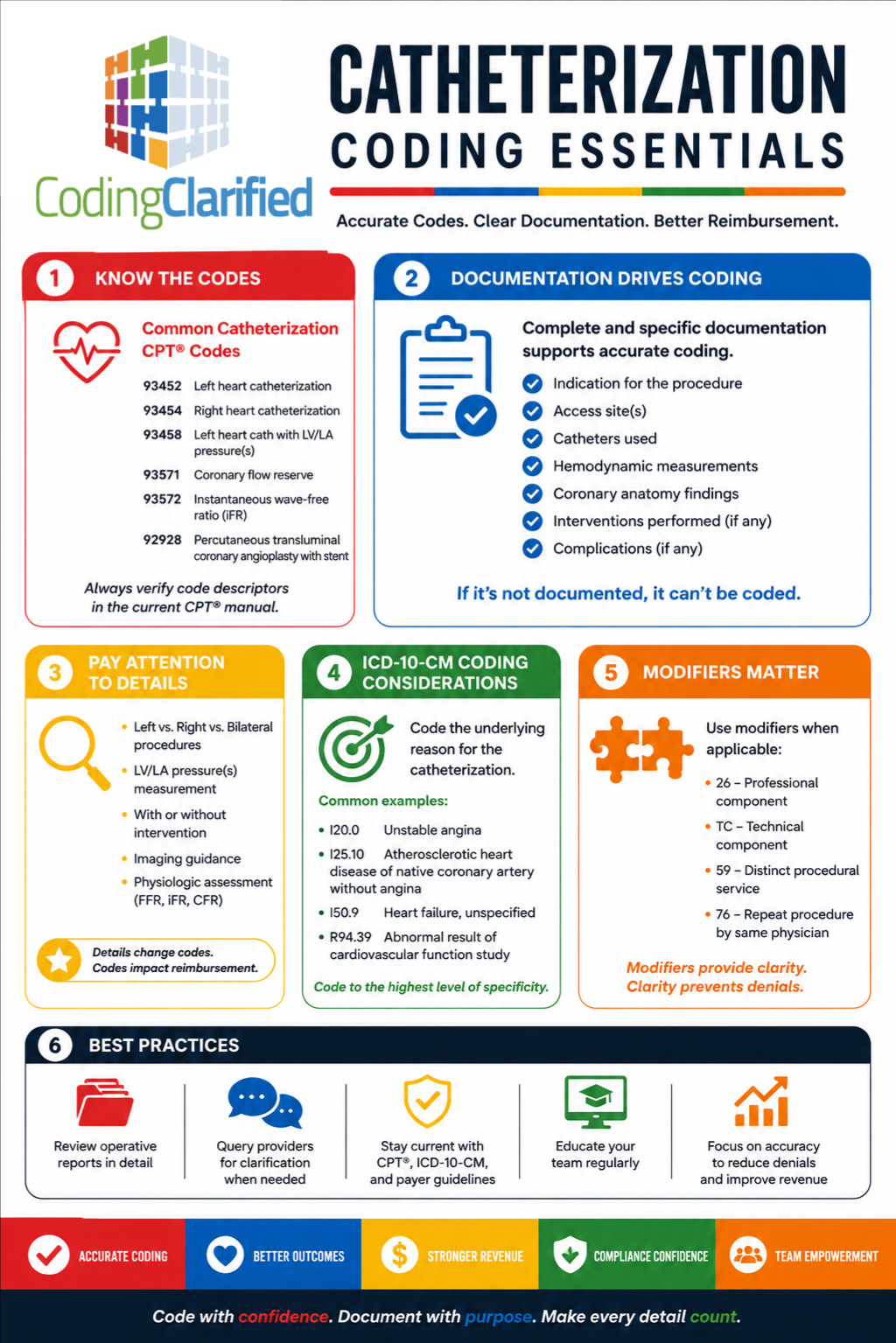
This angiography coding scenario walks through a cardiac catheterization with coronary angiography. Cardiac catheterization coding requires careful review of the operative report to determine whether the provider performed left heart catheterization, right heart catheterization, coronary angiography, ventriculography, or interventional services. In this case, the physician performed a combined right and left heart catheterization with bilateral selective coronary angiography and left ventriculography. Therefore, the correct CPT code assignment is based on the bundled cardiac catheterization code family rather than assigning separate codes for each component.
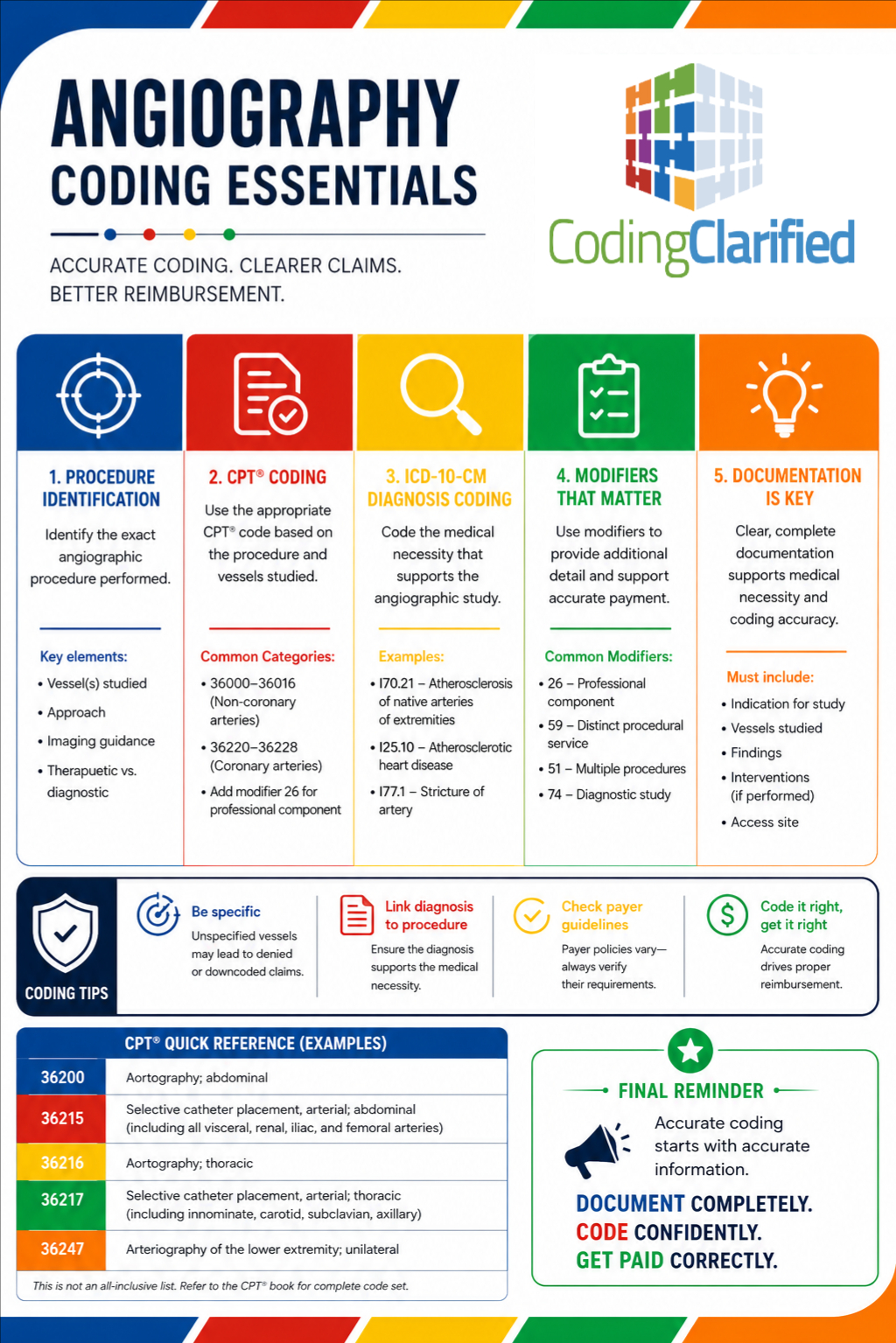
Understanding Angiography Coding
Additionally, coders must understand when left ventriculography is included, how coronary angiography affects code selection, and which diagnosis codes support medical necessity. Most importantly, CPC students should learn how to identify bundled services so they can avoid common coding errors on the exam and in real-world coding scenarios.
Operative Scenario Overview
In this operative report, the patient underwent several cardiovascular diagnostic procedures, including:
Learn more in our guide to lower extremity revascularization coding.
- Left heart catheterization
- Bilateral selective coronary angiography
- Left ventriculography
- Right heart catheterization
Furthermore, the physician documented that the indication for the procedure was:
- Positive nuclear stress test
- Reversible ischemia involving the lateral wall and anterior wall
- Suspected left anterior descending (LAD) artery lesion
Consequently, these findings supported the medical necessity for invasive cardiac diagnostic testing.
Step 1: Identify the Main Cardiac Catheterization Service
First, coders should determine the primary cardiac catheterization service performed. In this case, the documentation clearly confirms:
- Right heart catheterization
- Left heart catheterization
- Selective coronary angiography of both coronary arteries
- Left ventriculography
Because both right and left heart catheterization were performed along with coronary angiography, the coder must move into the combined cardiac catheterization CPT code family.
Correct CPT Code
CPT 93460
Catheter placement in coronary artery(s) for coronary angiography, including intraprocedural injection(s) for coronary angiography, imaging supervision and interpretation; with right and left heart catheterization including intraprocedural injection(s) for left ventriculography, when performed
Importantly, this single CPT code accurately captures:
- Right heart catheterization
- Left heart catheterization
- Bilateral coronary angiography
- Left ventriculography
As a result, separate procedure codes are not assigned for these individual services.
Why CPT 93460 Is Correct
The operative note specifically documents:
- Hemodynamic measurements
- Coronary artery imaging
- Left ventriculography
- Swan-Ganz catheter placement
- Right-sided pressure measurements
Moreover, CPT 93460 already includes:
- Coronary angiography
- Imaging supervision and interpretation
- Left ventriculography when performed
Therefore, coders should not separately report ventriculography or radiology supervision codes.
In addition, the report does not document any coronary intervention such as angioplasty or stent placement. Consequently, only diagnostic cardiac catheterization coding is appropriate.
CPT Coding Breakdown
| Procedure Performed | Included in 93460? | Separate Code Needed? |
|---|---|---|
| Left heart catheterization | Yes | No |
| Right heart catheterization | Yes | No |
| Bilateral coronary angiography | Yes | No |
| Left ventriculography | Yes | No |
| Hemodynamic measurements | Yes | No |
| Fluoroscopic guidance | Yes | No |
ICD-10-CM Coding
Next, coders must review the documented indication and final findings to determine the most accurate diagnosis codes.
The physician documented:
- Positive nuclear stress test
- Reversible ischemia
- Suspected LAD lesion
However, the operative report does not definitively diagnose coronary artery disease. Therefore, coders should avoid assigning CAD codes unless the physician clearly confirms the condition elsewhere in the medical record.
Primary ICD-10-CM Code
Myocardial Ischemia
I25.9 — Chronic ischemic heart disease, unspecified
This diagnosis appropriately supports the medical necessity for coronary angiography and cardiac catheterization.
Additional ICD-10-CM Option
Abnormal Cardiovascular Function Study
R94.39 — Other abnormal results of cardiovascular function studies
Additionally, this diagnosis supports the abnormal nuclear stress test findings documented by the physician.
Final Code Assignment
CPT
| Code | Description |
|---|---|
| 93460 | Combined right and left heart catheterization with bilateral coronary angiography and left ventriculography |
ICD-10-CM
| Code | Description |
|---|---|
| I25.9 | Chronic ischemic heart disease, unspecified |
| R94.39 | Other abnormal results of cardiovascular function studies |
HCPCS Coding
At this point, coders should determine whether any separately reportable HCPCS Level II codes apply.
In this operative report, no separately billable HCPCS Level II supplies or medications were documented.
Although contrast material, catheters, guidewires, and sheaths were used throughout the procedure, these items are generally bundled into the cardiac catheterization service when performed in the hospital setting.
Therefore:
| HCPCS | Description |
|---|---|
| None separately reportable | Supplies bundled into procedure |
CPC Exam Tips for Cardiac Catheterization Coding
1. Always Determine Whether Coronary Angiography Was Performed
First and foremost, this is one of the most important distinctions in cardiac catheterization coding.
If coronary angiography is performed, coders must move into the coronary catheterization code family rather than coding a standalone heart catheterization procedure.
Therefore, always identify whether selective coronary imaging occurred.
2. Do Not Separately Code Left Ventriculography
Many CPC students mistakenly report ventriculography separately.
However, for CPT codes 93458–93461, left ventriculography is already included when performed.
Consequently, assigning an additional ventriculography code would result in unbundling.
3. Review Whether Right Heart Catheterization Was Also Performed
In this scenario, the physician documented:
- Right atrial pressure measurements
- Pulmonary artery wedge pressures
- Swan-Ganz catheterization
Therefore, a combined right and left heart catheterization CPT® code is required.
4. Watch for Bundled Supervision and Interpretation
Additionally, modern cardiac catheterization CPT codes already include:
- Imaging supervision
- Interpretation
- Contrast injections
As a result, coders should not separately report radiology supervision and interpretation services.
5. Know the Difference Between Diagnostic and Interventional Procedures
Importantly, this case involved diagnostic services only.
Specifically, the physician did not perform:
- Angioplasty
- Stent placement
- Atherectomy
- Thrombectomy
Therefore, interventional coronary procedure codes are not appropriate.
Key Documentation Elements Coders Should Verify
Before assigning cardiac catheterization codes, coders should always verify documentation of:
- Catheter placement location
- Coronary artery imaging
- Right heart pressures
- Left ventriculography
- Hemodynamics
- Contrast injections
- Diagnostic versus interventional intent
Ultimately, these details directly affect CPT code selection and reimbursement accuracy.
Common Coding Mistakes
| Mistake | Why It Is Incorrect |
|---|---|
| Coding left and right heart cath separately | Combination code already exists |
| Separately billing ventriculography | Included in 93460 |
| Reporting fluoroscopy separately | Bundled into procedure |
| Assigning CAD without physician confirmation | Requires documented diagnosis |
| Missing right heart cath documentation | Can lead to undercoding |
Final Coding Answer
CPT
93460
ICD-10-CM
I25.9 – Chronic ischemic heart disease, unspecified
R94.39 – Other abnormal cardiovascular function study findings
HCPCS
No separately reportable HCPCS Level II codes documented.
Final CPC Takeaway
Although cardiac catheterization coding can initially appear intimidating, the process becomes significantly easier once coders learn how to identify the major procedural components.
For example, coders should always ask:
- Was coronary angiography performed?
- Was right heart catheterization performed?
- Was left ventriculography performed?
- Was the procedure diagnostic or interventional?
Once those questions are answered, selecting the correct CPT® code becomes much more straightforward.
Furthermore, understanding bundled services is essential for both CPC® exam success and real-world coding compliance. Therefore, mastering the cardiac catheterization code families can help coders avoid unbundling errors, improve coding accuracy, and strengthen cardiovascular coding skills overall.