HCC Coding in 2026: CMS-HCC V28, Risk Adjustment, RAF Scores, and Documentation Guide
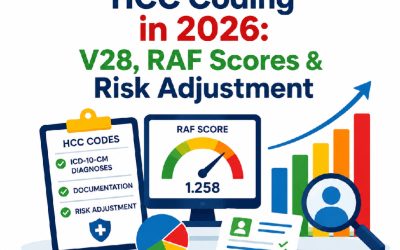
Janine Mothershed CPC, CPC-I Hierarchical Condition Category (HCC) coding remains one of the most important areas of medical coding, especially for Medicare Advantage, risk adjustment, and value-based healthcare. However, HCC coding in 2026 looks different from just a few years ago. Most importantly, 2026 marks the completion of CMS’s transition to the updated CMS-HCC risk adjustment model, commonly called V28. Therefore, medical coders, providers, auditors, CDI professionals, and CPC students need to understand how accurate ICD-10-CM diagnosis coding affects HCC assignment, Risk Adjustment Factor (RAF) scores, compliance, and reimbursement. This 2026 HCC coding guide explains how HCC coding works, what changed with V28, how RAF scores are calculated, why documentation matters, and which mistakes coders should avoid. Key Takeaways on HCC Coding in 2026 HCC stands for Hierarchical Condition Category and plays a major role in risk adjustment. CMS uses diagnosis data and demographic information to estimate expected healthcare costs for Medicare Advantage beneficiaries. In 2026, CMS calculates non-PACE Medicare Advantage risk scores using 100% of the 2024 CMS-HCC model, often referred to as V28. An ICD-10-CM diagnosis does not automatically affect an HCC or RAF score. Coders must verify current-year mappings. Chronic conditions generally need to be evaluated and … Continue reading HCC Coding in 2026: CMS-HCC V28, Risk Adjustment, RAF Scores, and Documentation Guide
